How to Check Your Naples Sewer Line After a Hurricane or Flood
The storm has passed, the street is draining, and the house looks fine. The sewer line is the part you cannot see, and floodwater is hardest on exactly that part. Here is how to check it before the next storm tests it again.
The Short Answer on Checking a Sewer Line After a Storm
After a hurricane or flood, check the lowest fixtures first: the floor drain, the guest shower, and the laundry standpipe. Flush one toilet and watch the others, listen for gurgling, and look for water standing around the cleanout cap outside. Slow drains at every fixture, sewage smells, or water rising in a shower mean the line took damage and needs a camera inspection. If sewage is already coming up, stop using water and call (239) 448-0271. Do not let the next heavy rain be the test.
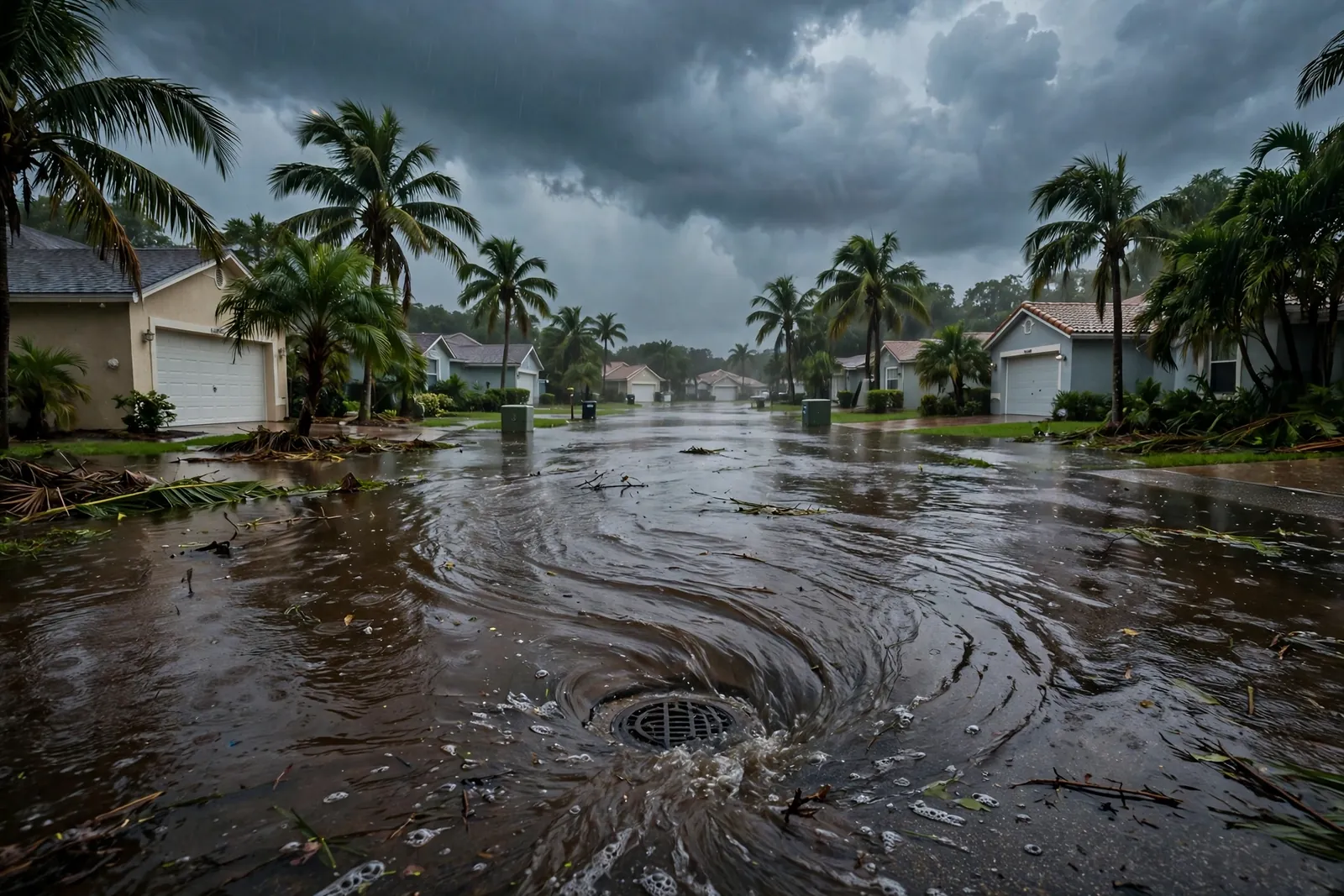
The storm has passed and the street is draining, but the part of your home that took the hardest hit is the part you cannot see. Floodwater pushes on a sewer line from every side at once: saturated sand shifts, groundwater forces into cracked joints, and the city main surcharges back toward your house.
That is why the check matters before the next rain. A line that came through the storm with a new crack or a shifted joint will usually warn you first, with slow drains, gurgling, or a smell that was not there before. Here is what to check, what not to do, and when a camera inspection is the call.
Why Hurricanes and Floods Stress Sewer Lines
Naples ground is sand over a high water table, and a hurricane soaks it through. When the soil saturates, it moves: pipes settle unevenly, joints pull apart, and shallow sections shift. Groundwater pours into every cracked joint at once, overloading the city main until it pushes back into the laterals. Our blog on why Naples sewer lines flood in heavy rain walks through that chain in full.
Older pipe takes it worst. Pre-1972 homes often still carry cast iron under the slab, and cast iron that was already thinning needs little stress to crack. Surge adds load in low areas like Old Naples and Marco Island, where floodwater sits longest. The damage is usually one of four things: a separated joint, a new crack, a sag where soil settled, or silt washed into the line. A sag that holds water is a sewer line belly, and it causes repeat backups until fixed.
Start Inside: The First Checks After the Water Recedes
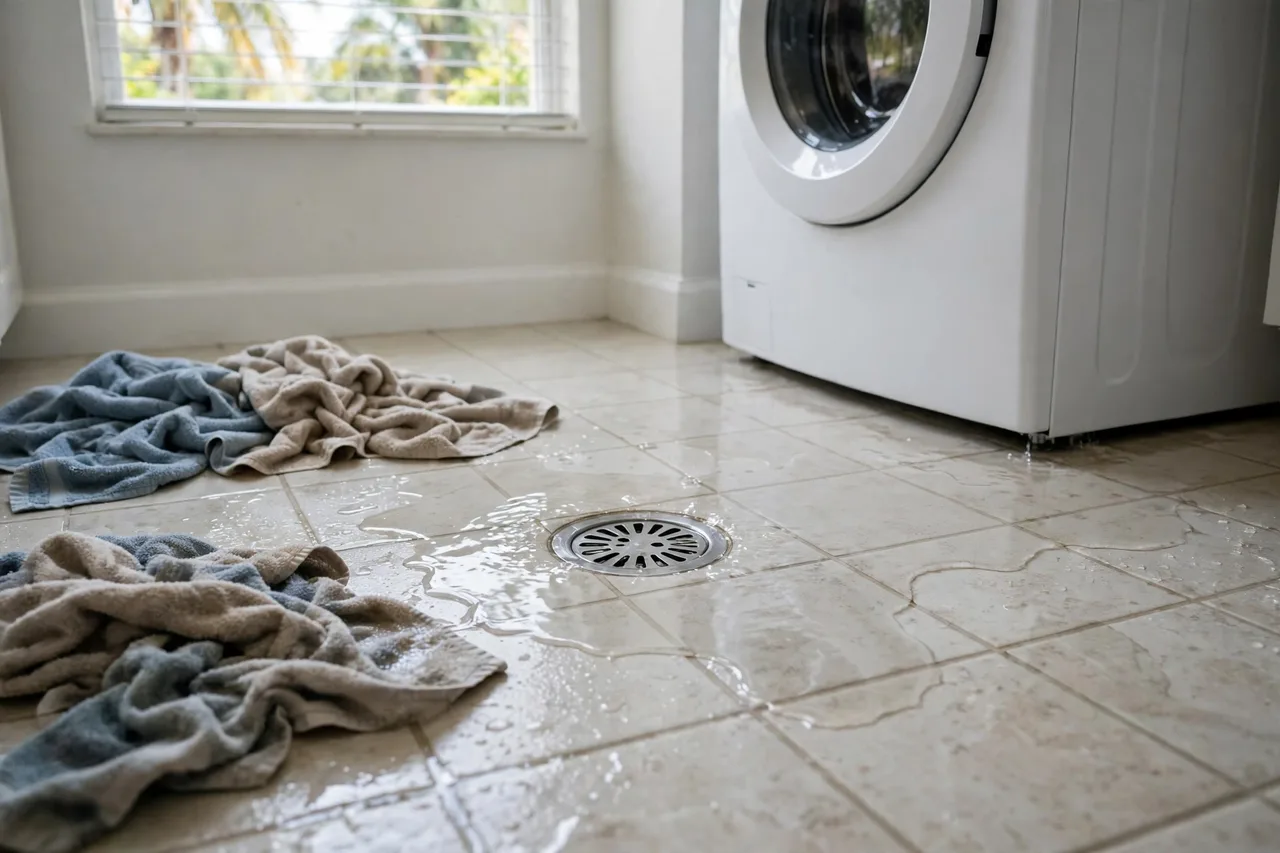
Start at the lowest fixtures, because they show trouble first: the floor drain, the guest shower or tub, and the laundry standpipe. Flush one toilet and watch the others. Run one tap and listen for gurgling. Watch for water rising where it should not.
- Water rising in a shower or tub when a toilet flushes
- Gurgling from a toilet or drain when the washer runs
- Every drain in the house running slow at the same time
- A sewage smell near a floor drain that was dry before
One slow sink is usually a local clog. Trouble at multiple drains backing up together points at the main line, and gurgling toilets and drains mean air is trapped by a partial blockage. If sewage is coming up through a tub or shower, stop using water and treat it as emergency sewer repair. Do not flush to test it again.
Check the Cleanout and the Yard
Outside, find the cleanout and look at the cap. Water standing around it, a loose or cracked cap, or sewage visible at the cap means the line is surcharged or blocked. Clear debris off the cap and keep it reachable: it is where a camera goes in. If you do not know where yours is, our guide to where the sewer cleanout sits in a Naples home shows where to look.
Walk the yard. Look for a depression along the pipe path, settled pavers, a strip that stays wet, and any smell near the driveway. A patch that will not dry is covered in our guide to wet spots in the yard. Storm-loosened trees deserve a look too, since tree roots in a sewer line grow back fast once they find an opening. Do not dig. Mark the spot for the camera visit.
Warning Signs That Mean the Line Took Damage
Some storm effects fade as the ground dries. These do not: backups that return days after the storm, gurgling that is new since the storm, a sewage smell that comes and goes with water use, and a yard strip that stays wet while everything around it dries. A drain fine before the storm and slow since belongs on the list.
Damage does not always show on day one. Soil keeps settling, silt shifts with each use, and a joint that separated slightly can open further under the next heavy rain. Check again a week later. If the signs match our guide to spotting a sewer line collapse in a Naples home, or a sewer smell in the house will not clear, get the line looked at.
What Not to Do Right After a Flood
Do not run the washer, dishwasher, and showers at once to test the line. A damaged line handles a surge load badly, and the test can become the backup. Do not pour drain chemicals into a line that may be cracked: they do not fix a separated joint, they can sit in a sag and complicate cleaning. Do not snake blindly either. A snake can jam in a collapsed section or punch through a weakened joint.
Do not open indoor cleanout caps, and treat floodwater near drains as if it carries sewage, because after a surcharge it often does. Wash hands after contact and keep children and pets away from standing water near the cleanout. The right cleaning for a silted line is professional hydro jetting, which scours silt and sand out and leaves the pipe clean enough for a camera to read.
When a Camera Inspection Is the Call
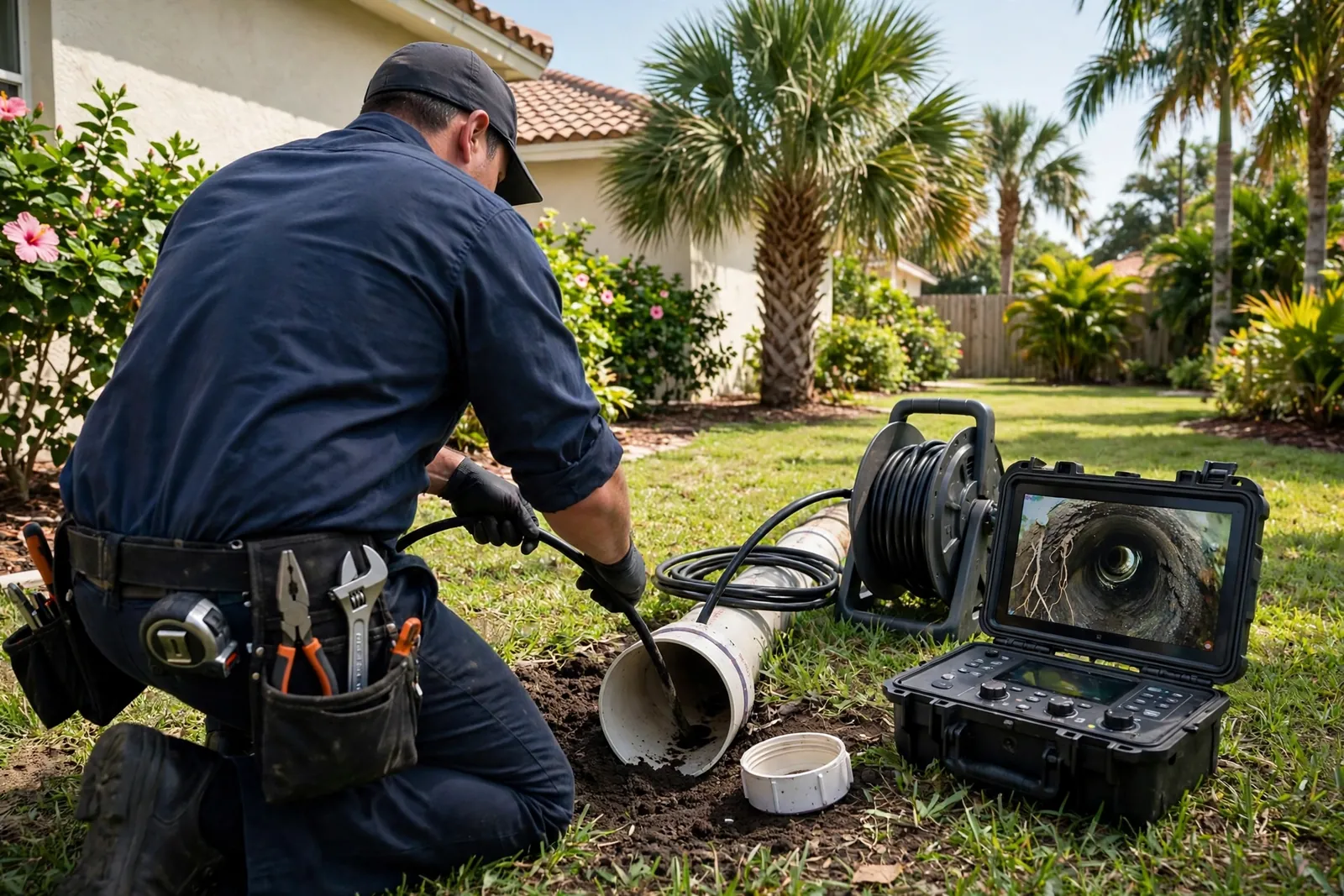
Call for a camera inspection when any of these are true: sewage backed up during or after the storm, more than one fixture is slow or gurgling, signs persist after the ground dried, the home has pre-1972 cast iron, the street flooded above the curb, or neighbors are backing up too. A sewer camera inspection shows the crack, sag, roots, or collapse on video, and a locator marks the pipe path above ground.
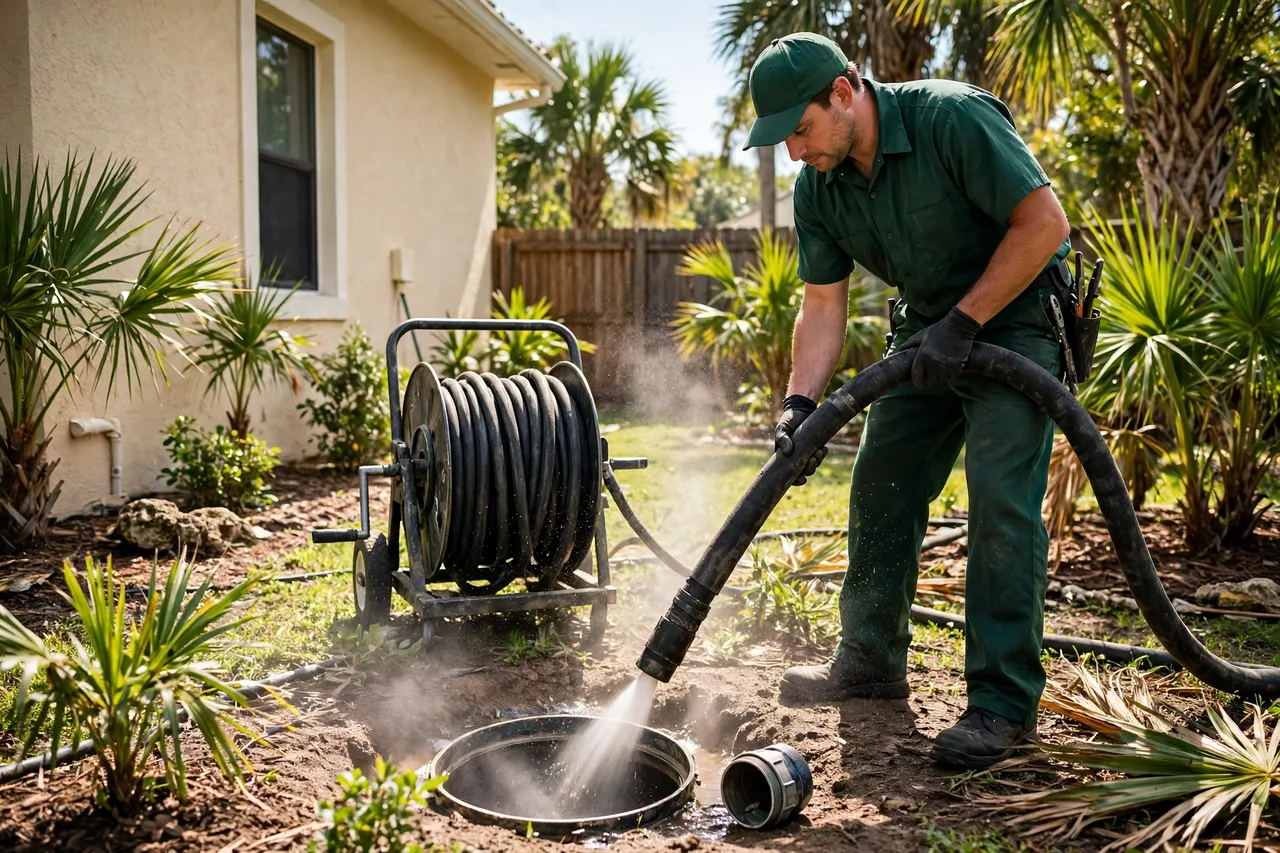
When the line is full of silt, cleaning comes first so the camera sees the pipe wall. The inspection gives you footage, a marked route for repair, and a straight recommendation. Keep the footage with your storm records: it proves what the storm did, and any repair plan should rest on it. The same camera-first approach applies when the pipe runs under a pool deck, as our blog on sewer line repair under a Naples pool deck explains.
Fixing Storm Damage Without Tearing Up the Yard
Most storm damage is fixed trenchlessly. Pipe lining seals cracked joints and stops infiltration. Pipe bursting replaces a collapsed run from pits at the ends. One separated joint can often be handled with a targeted spot repair, and a line that is done overall needs sewer line replacement. All of it falls under trenchless sewer repair in Naples, and most leaves the yard and lanai alone.
Before the next storm season, keep the cleanout cap sound and reachable, keep trees off the pipe path, and know which fixture sits lowest. That holds from Old Naples and Park Shore to North Naples and Marco Island. The storm to prepare for is the next one, not the one that passed.
Frequently Asked Questions
Should I run water to test my sewer line after a flood?
Test gently, one fixture at a time, starting with the lowest. Flush one toilet and watch the others, then run one tap and listen for gurgling. If water rises in a shower or tub, stop using water and get the line checked.
How long after a hurricane can sewer damage show up?
Days to weeks. Soil keeps settling, silt shifts with use, and a slightly separated joint can open further under the next heavy rain. Check after the storm and again a week later. One clear day is not proof the line is fine.
Is a gurgling toilet after a storm a sewer problem?
Often, yes. Gurgling means air is trapped by a partial blockage or a vent issue, and storms cause both. Gurgling at more than one fixture, or gurgling that is new since the storm, deserves a camera look.
Can floodwater damage a sewer line that worked fine before?
Yes. Saturated soil shifts pipes and separates joints, groundwater infiltrates cracked sections, and a surcharged main pushes back into laterals. A line that worked fine can come out of a storm with a new crack or sag. The camera inspection finds out which.
Do I need a camera inspection if my drains seem fine after the storm?
Not always. But consider one if the home has pre-1972 cast iron, the street flooded above the curb, or neighbors are backing up. Damage can hide until the next heavy rain, and footage taken now is the baseline.
Check the Line Before the Next Rain
If your Naples home took floodwater or your drains have not behaved the same since the storm, do not wait for the next rain to find out what changed underground. Call Trenchless Sewer Pros at (239) 448-0271 for a camera inspection, and we will show you the footage and give you a straight answer about the line.