Odor Mapped Room by Room
We track where the smell concentrates before touching a tool.
A sewer smell indoors is information. It tells you gas is escaping somewhere between a fixture trap and the city main, and in Naples the escape point is often a pre-1972 cast iron lateral rusting out under the slab. Some causes clear with a cup of water down a dry drain. Others mean the pipe itself is open to the soil. This page walks through the likely sources, the checks that separate them, and how a camera settles the question.
We track where the smell concentrates before touching a tool.
The simplest cause gets checked before the bigger ones.
If the pipe is the source, you see the crack yourself.
Local crews who know how pre-1972 laterals fail.
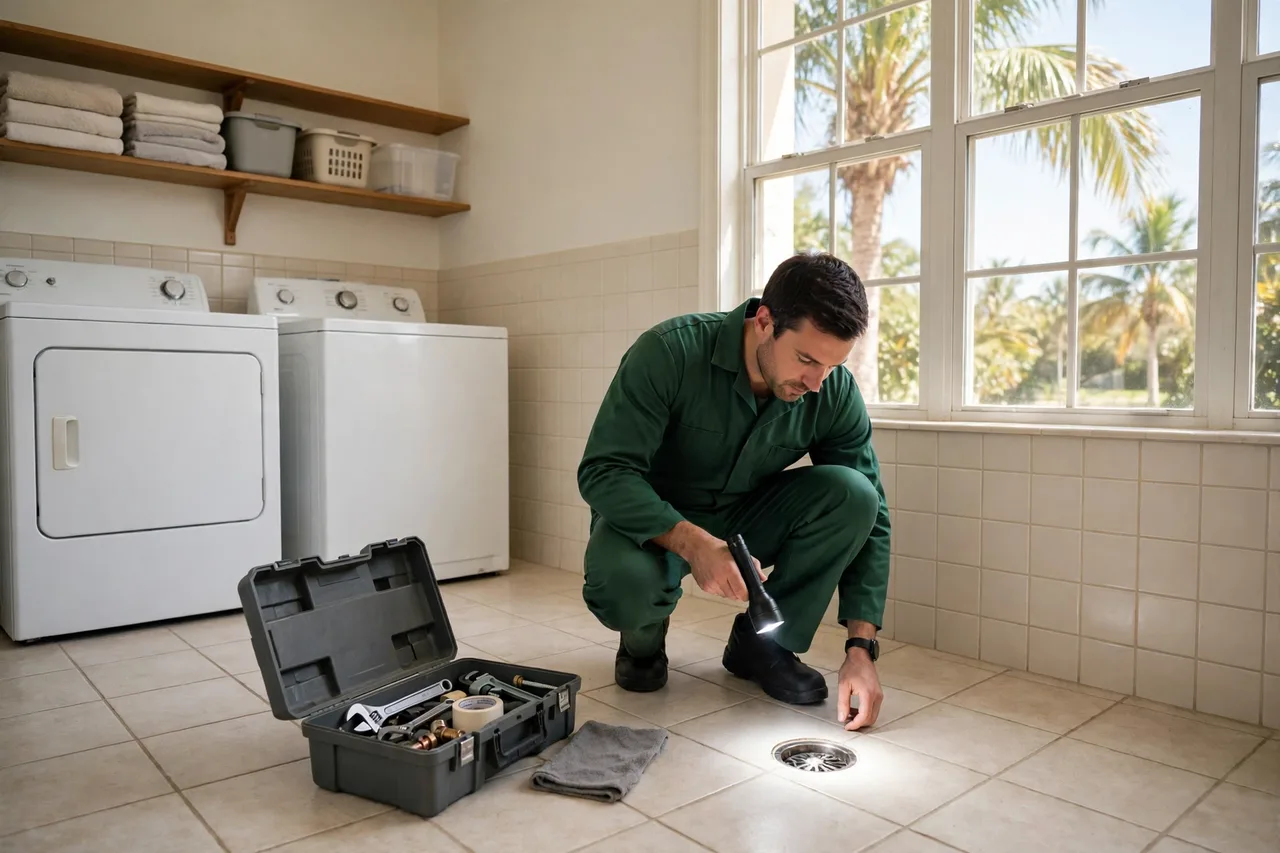
Start with the traps. A guest bathroom, floor drain, or laundry drain that has not run in weeks can dry out and let sewer gas straight into the room, and refilling it ends the smell. If every trap is wet and the odor persists, especially near the floor or one wall, suspect the pipe: a cracked or channel-rotted lateral venting gas through the slab. That is a camera diagnosis, not a guessing game. Call (239) 448-0271 and describe where the smell is strongest.
Sewer gas follows the easiest opening. In a sound system it exits through the roof vent, far above the living space. When it shows up at nose level instead, something in that path has dried out, loosened, blocked, or broken. The five sources below cover nearly every odor call we run in Collier County, and they split cleanly into fixture problems, which are small, and pipe problems, which are not.
Naples adds two local twists. Seasonal homes sit closed for months with air conditioning pulling moisture out of the air, so traps evaporate faster here than almost anywhere. And thousands of homes built before 1972 still drain through original cast iron under the slab, pipe that rusts from the bottom channel upward until the channel is open to the soil and the gas has a direct route indoors.
Every drain holds a U-shaped trap full of water, and that water is the only barrier between your room and the sewer. Guest baths, floor drains, and spare laundry sinks can go weeks between uses, and in an air-conditioned Naples home the water evaporates quietly. The fix is simple, but the same symptom can hide a real pipe failure, so a dry trap is a first check, not a final answer.
Cast iron fails from the inside out. Decades of flow carve a channel along the bottom of the pipe until the metal opens, and sewer gas rises through the soil and the hairline cracks in the slab above it. This odor tends to hug the floor, concentrate along one wall, and persist no matter how much water you run. It is the most common serious cause we camera-confirm in older Naples neighborhoods.
The vent stack carries gas up and out while letting drains flow freely. Bird nests, palm debris, and storm damage can choke it, and a cracked vent inside a wall leaks gas into the living space instead of the sky. Vent trouble usually brings gurgling drains along with the smell, which is a useful clue that separates it from a dry trap.
When a lateral runs slowly, waste and grease linger in the pipe instead of clearing to the main, and they ferment where they sit. The odor then pushes back through the weakest trap in the house and worsens right after showers, laundry, or a dishwasher cycle. This cause pairs smell with slow drains, and it means the line itself needs attention.
None of these checks needs tools beyond a flashlight and a cup of water, and together they sort most odor calls into fixture or pipe before anyone schedules a repair.
Run water for thirty seconds at every sink, tub, and shower, then pour a cup of water into each floor drain, including the laundry and garage. If the smell fades over the next day and stays gone, a dry trap was the source. Note which drain mattered, because a trap that dries out monthly is worth a longer conversation.
Walk the house slowly, morning and evening, and rank the rooms. One bathroom points to that fixture or its seal. A whole-house odor that hugs the floor points under the slab. A smell that is worse outdoors near a wall points to the yard cleanout or the lateral itself. Your map directs the camera work later.
The cleanout in your yard should have a tight cap. A cracked, loose, or missing cap vents gas at ground level, where a breeze or the air conditioner intake can pull it indoors. If the cap is damaged, say so when you call. It is a small part with an outsized effect on odor.
Smell plus gurgling, smell plus slow drains, or smell plus a wet patch in the yard changes the picture from fixture to pipe. Write down which symptoms travel together and when they started. That history, paired with camera footage, is how the real source gets proven instead of guessed.
One boundary: treat strong sewer gas with respect. If the odor is overpowering, open windows, get people and pets out of the room, and call rather than hunting for the source yourself. Never seal a drain shut with tape or a plug as a fix; a blocked vent path pushes the gas somewhere worse.
Odor alone rarely needs an emergency call, but odor with sewage rising in a tub or floor drain, or several drains slowing at once, means the main line is failing and wastewater has nowhere to go. Stop running water, keep the family out of any room with standing sewage, and call (239) 448-0271 for emergency sewer repair. The smell is then a side effect of a backup in progress, and the backup is the emergency.
The visit starts with your map: where the smell concentrates, which traps were dry, what the cleanout cap looks like. Fixtures get checked first, traps refilled, the suspect toilet tested for movement at the base, and the roof vent inspected. If the odor survives those checks, the sewer camera inspection goes in through the cleanout and reads the lateral directly: channel rot along the bottom, a cracked hub, an offset joint breathing gas into the soil.
Fixes follow the footage. A venting crack in an otherwise round pipe is a candidate for CIPP pipe lining, which seals the gas path along with the water path. A single failed section near the house can be handled with a sewer spot repair. Widespread channel rot is cast iron sewer pipe repair territory, lining the sound runs and bursting the collapsed ones. Every option is written out from the video before work begins, so the repair matches the proven source.
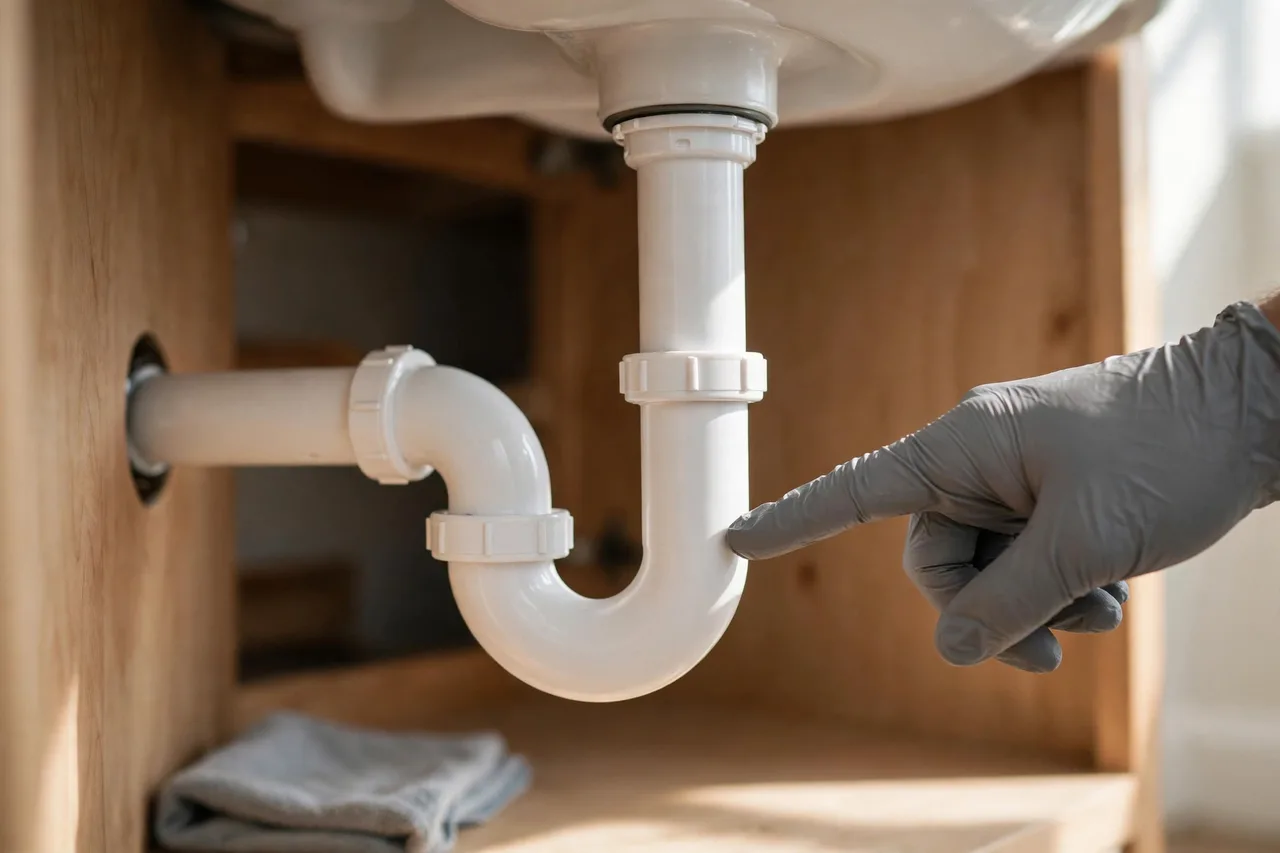
A one-room smell almost always has a local source: a dry trap in that bathroom, a failed wax ring at that toilet, or a cracked vent section in that wall. Whole-house odor points deeper, usually under the slab. The room-by-room pattern is the fastest sorting tool you have, so note it before you call and the visit starts in the right place.
Yes. A floor drain trap holds very little water, and in an air-conditioned home it can evaporate dry in a few weeks, leaving an open pipe between the room and the sewer. Laundry rooms and guest baths are the usual culprits in Naples. Refill the trap and wait a day; if the smell returns within weeks, ask about a trap primer or a deeper check.
Heavy rain saturates the soil around your lateral, and waterlogged ground traps gas that would normally disperse, pushing it through pipe cracks and slab penetrations instead. Rain also raises flow in the city main, which pressurizes weak points in older laterals. A smell that reliably follows storms is a strong hint the pipe, not a fixture, is the source.
Only when a dry trap caused it. Refilling traps is the right first step and it genuinely solves the seasonal-home cases we see across Collier County. But if the odor returns in days with every trap wet, water is not the answer, because the gas is entering somewhere else. Recurring smell after the trap check earns a camera inspection.
It can, and in pre-1972 Naples homes it often does. A channel-rotted cast iron lateral leaks gas into the soil pocket under the slab, and the gas migrates up through plumbing penetrations and hairline slab cracks. The camera confirms it from inside the pipe: a dark open channel along the bottom of the run, exactly where the metal has rusted through.
Not seeing your question? Our local team can help you understand urgency, scheduling, and what to expect when the problem is sewer smell in the house.
Ask the local team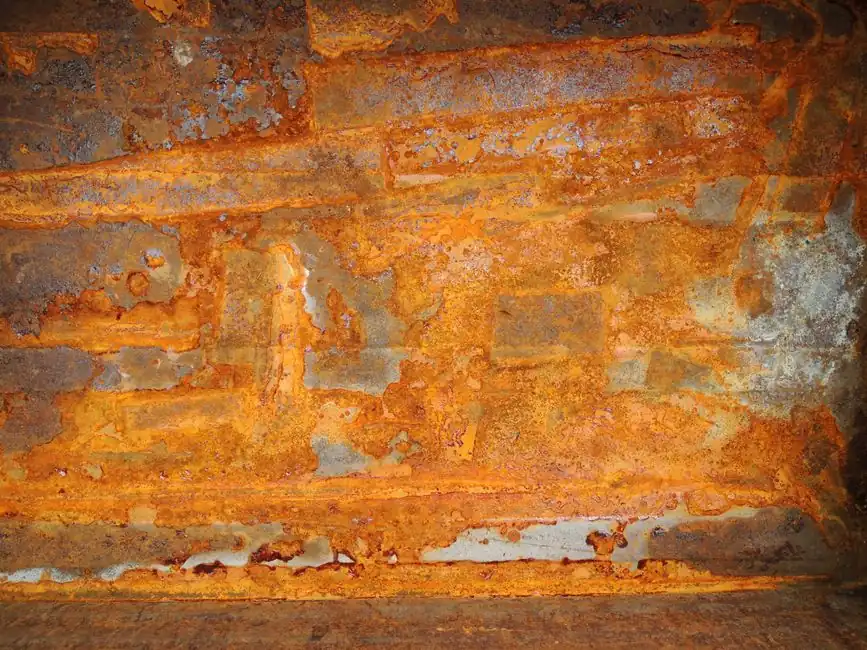
Channel-rotted cast iron is the most common serious odor source in pre-1972 Naples homes, and it is repairable without a full dig.
Read the guide
Smell plus rising sewage means the line is backing up now. Emergency crews restore flow first, then handle the repair.
Read the guideGurgling alongside odor points at vent trouble or a partial blockage pushing air back through your fixtures.
Read the guideWhen several drains slow down together, the problem has moved from one fixture to the main line itself.
Read the guideOne call starts the sorting process. Reach us at (239) 448-0271 weekdays between 8am and 6pm, describe where the smell concentrates and whether drains are slow, and we will bring the right checks and the camera. Based at 1274 13th St N in Naples, with routes across Collier and Lee counties.