Whole-House Pattern Reading
We map which fixtures fail to locate the blockage zone.
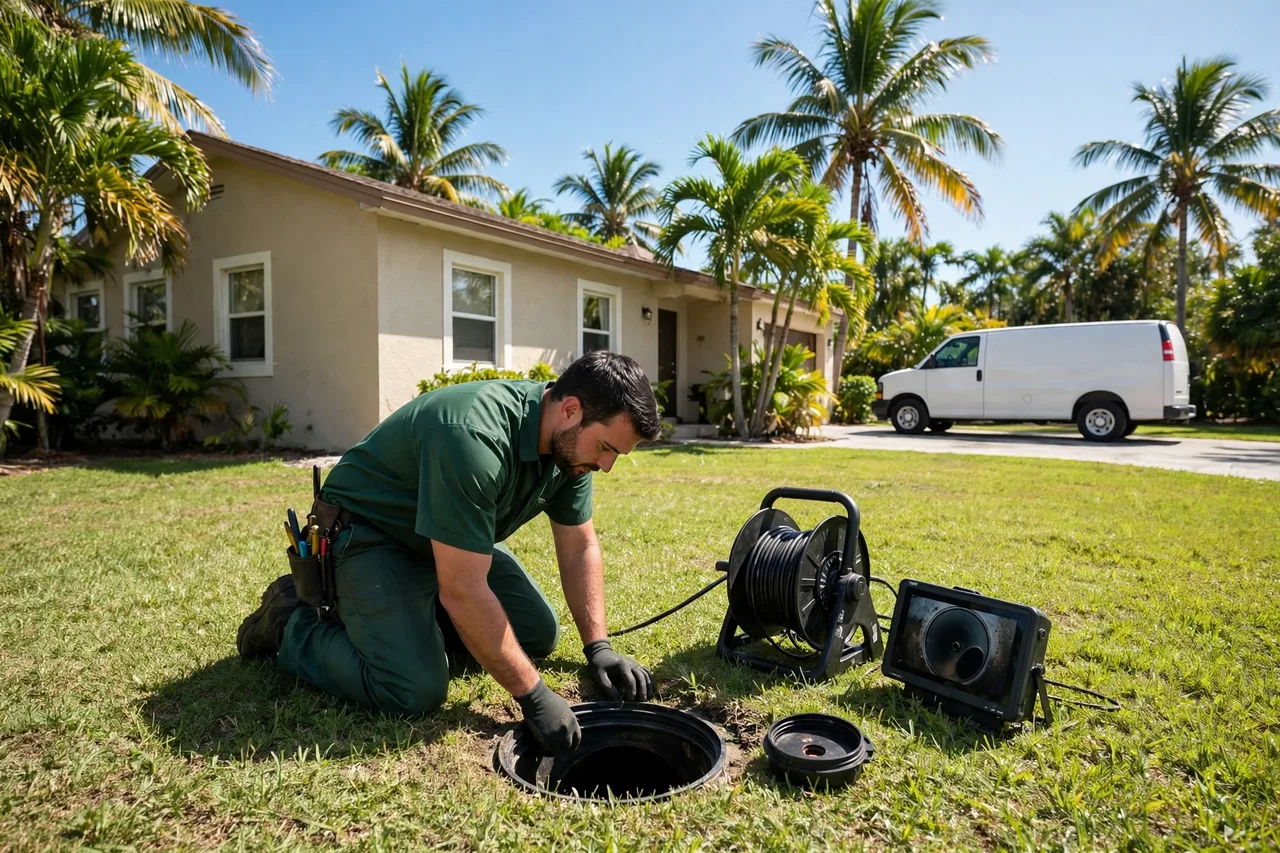
One slow sink is a fixture problem. A tub, a toilet, and a floor drain failing together is the house telling you the shared exit is blocked. Every drain in a Naples home funnels into one lateral, and when that lateral chokes, the lowest fixtures complain first and the rest follow. This page explains what blocks a main line here, the checks that confirm it safely, and how the line gets cleared and proven fixed.
We map which fixtures fail to locate the blockage zone.
The yard cleanout tells us main line versus house clog.
Flow gets restored before anyone discusses the fix.
A final camera pass proves the line runs clear.
When two or more drains back up together, stop thinking clog and start thinking main line. In Naples the usual causes are a root mass in the lateral, a section of channel-rotted cast iron that has caved in, or a belly in the line holding waste until it seals shut. Stop running water, check the lowest fixtures, and call (239) 448-0271. A camera from the cleanout finds the blockage and shows whether the pipe around it is worth saving.
A main line blockage is rarely bad luck. The lateral under a Naples yard spends decades in warm, wet, sandy soil, with tree roots hunting its joints and its own material aging out. By the time several drains complain together, the restriction has usually been building for years, narrowing the pipe a little at a time until one heavy laundry day finishes the job.
The pattern of the failure points at the cause. Backups that creep in over months suggest growth or gradual collapse. A sudden total blockage after a storm suggests the line was already nearly closed, or that the city main surcharged and pushed back. Either way, the camera reads the pipe and names it.
Roots enter at joints and grow into feathery masses that strain the flow like a filter. Toilet paper and grease collect on the mass until the pipe seals. Homes with ficus, banyan, or mature oaks over the line path in Naples see this pattern on a cycle: clear it, and it returns within a year or two unless the entry points get sealed.
Pre-1972 laterals rust along the bottom channel until the pipe loses its floor, and then its shape. Soil migrates in, the bore narrows to a slit, and one day the slit closes. Camera footage of a collapse is unmistakable: the round pipe flattens into a dark, soil-filled pinch that no jetting can reopen.
A belly is a sag where the pipe lost its slope, common where sandy Collier County soil settled or a driveway crossing compressed the line. Waste settles in the sag permanently, so the pipe runs at partial capacity for years. The backup seems sudden, but the belly has been collecting its plug all along.
Where scale or an offset joint roughens the wall, grease and so-called flushable wipes snag and braid into a mat. The mat grows across the bore until flow stops. Jetting clears the mat, but the rough joint that caught it is still there, which is why these homes back up on a schedule until the joint gets repaired or lined.
These checks take minutes, need no tools, and tell the crew a great deal before they arrive. The theme is simple: observe, do not open anything under pressure, and stop adding water to a system that cannot drain.
Note which drains are slow or rising and which still work. Failure that starts at the lowest tub or floor drain and climbs upward is the signature of a main line blockage. Failure in one bathroom only, with the rest of the house fine, points to a branch clog, which is a different and simpler job.
Until the line is cleared, every flush and laundry cycle raises the water looking for an exit, and the exit will be your lowest fixture. Pause the dishwasher and washing machine, keep showers short or skip them, and do not try to flush a blockage through. You are buying the crew a dry, manageable job.
Find the cleanout cap between the house and the street. If the ground around it is wet or the cap is weeping, the blockage is on the house side of that point or the line is full. Do not unscrew a cap on a line that may be holding back sewage under pressure. Note what you see and report it when you call.
Did the backup follow a heavy rain, a houseful of guests, or a big laundry day? Or has it been creeping for months? Sudden versus creeping, and storm-linked versus load-linked, narrows the cause list before the camera ever goes in. Write it down while it is fresh.
One boundary: a main line holding sewage is not a DIY clearing job. Rental snakes pushed blind into a collapsed or root-packed lateral get stuck, snap, or punch through a weak pipe wall, turning a repair into a replacement. The safe homeowner moves are stopping water and gathering information; the clearing belongs to a camera-guided crew.
If water or sewage is actively rising in a tub, shower, or floor drain, the backup is live and every gallon you add arrives in the room. Stop all water use in the house, keep children and pets away from the water, and call (239) 448-0271 for emergency sewer repair. Rising sewage is a health hazard, not a housekeeping problem, and it should be handled with protective equipment, not bare hands and towels.
The crew starts at the cleanout with a sewer camera inspection, traveling from the yard toward the house and then the full run to the street. The footage locates the blockage to the foot and shows its nature: root mass, grease mat, belly, or collapse. That distinction decides everything, because three of those four clear and repair well, and one of them does not.
For roots, grease, and scale, hydro jetting restores the full bore, and the camera runs again to judge the pipe that was hiding behind the blockage. Sound pipe with bad joints gets sealed with CIPP pipe lining so the blockage cannot regrow. A collapsed or deformed section is planned as a sewer spot repair or a bursting run. You approve a written plan built on footage, and a final camera pass proves the line runs clear end to end.
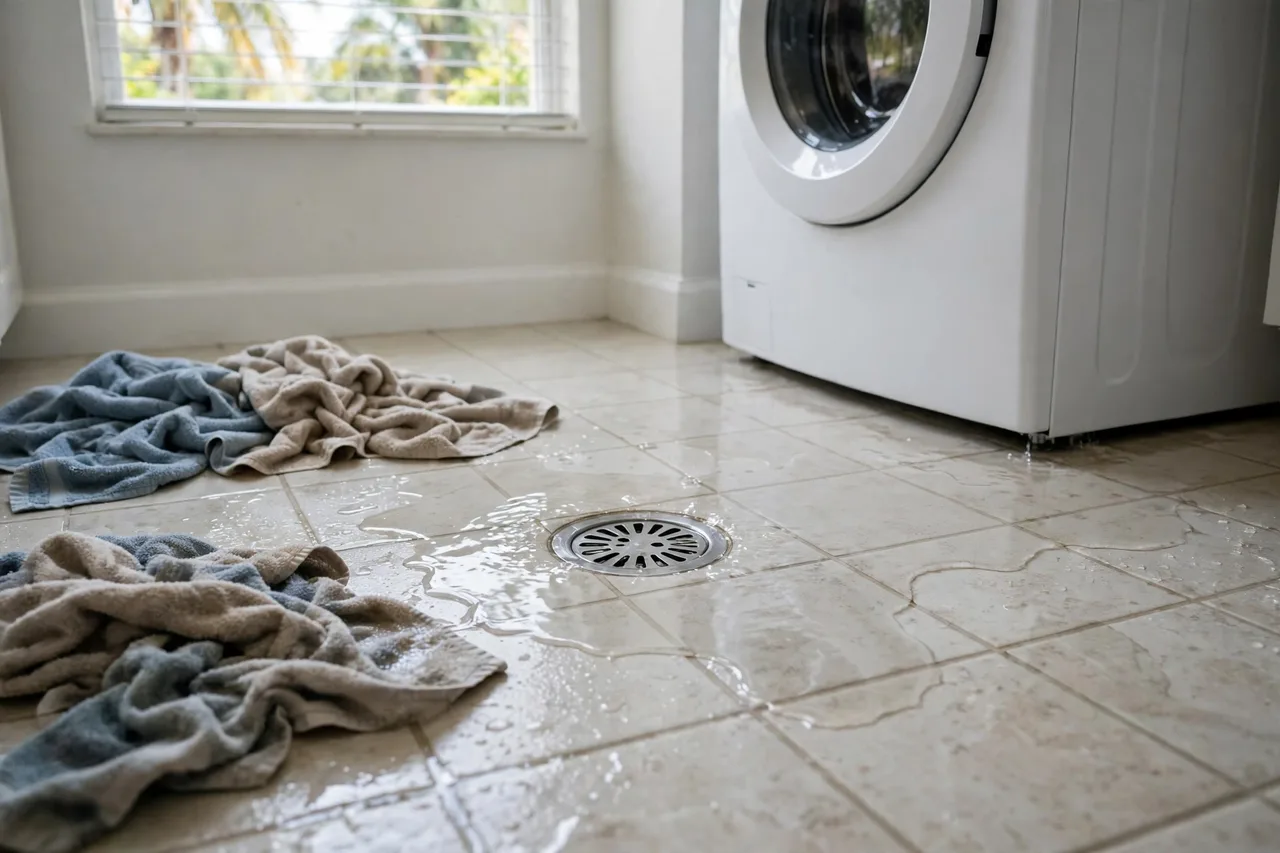
It means the shared pipe they all drain into is restricted or blocked. Each fixture has its own small branch, but every branch joins the one lateral that leaves the house. A clog in a branch affects one fixture; a blockage in the lateral affects everything, starting with the lowest drains. That pattern is the most reliable symptom in sewer work.
No. Water that cannot drain out of the house will rise at the lowest opening, which is how a slow drain becomes sewage on a bathroom floor. Pause laundry, dishwashing, and showers until the line is cleared. If water is already rising somewhere, that fixture is telling you the line is full, and adding more only spreads the damage.
Gravity. A blocked lateral fills from the blockage backward, like a bottle filling from the bottom. The lowest fixtures, usually a first-floor tub, shower, or floor drain, sit at the bottom of that bottle, so they show water first. As the line fills further, higher fixtures join in, which is why a spreading pattern means the problem is getting worse, not better.
It can, two ways. Saturated soil and a surcharged city main can push back into a low lateral during the worst downpours, and rain-swollen roots and soil shift already-narrow pipes. Storm-linked backups that clear when the rain stops still deserve a camera run, because a healthy line shrugs off weather that a root-narrowed or bellied line cannot.
Completely. A clogged drain is a local plug in one fixture or branch, and it affects that fixture alone. A main line blockage sits in the shared lateral, affects the whole house, and usually has a structural cause behind it: roots, a belly, scale, or a collapsing pipe. Clearing it without a camera is how the same backup gets cleared three times.
Not seeing your question? Our local team can help you understand urgency, scheduling, and what to expect when the problem is multiple drains backing up.
Ask the local team
High-pressure water clears root masses, grease mats, and scale, restoring the full bore of the line.
Read the guide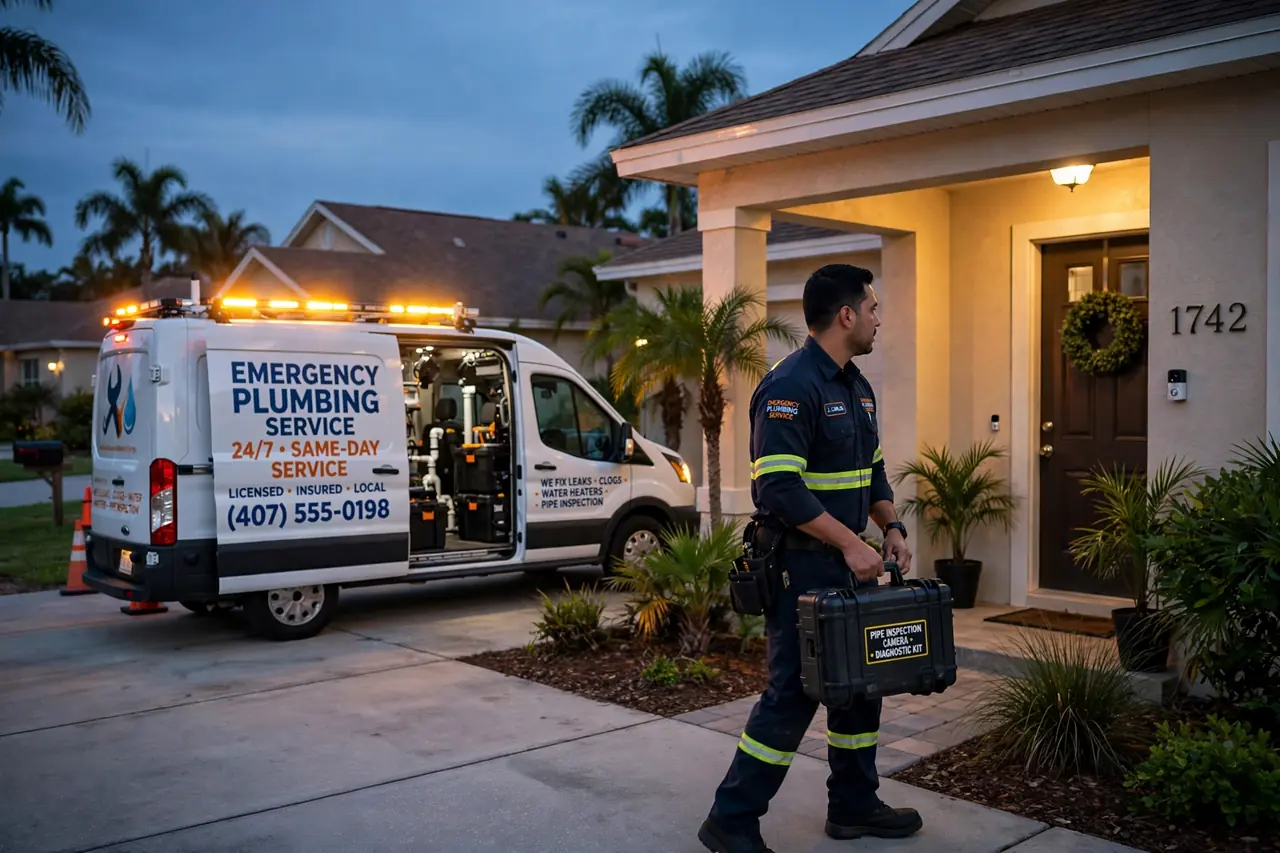
Water rising in your lowest fixtures cannot wait. Emergency crews restore flow first, then handle the repair.
Read the guideThe tub is where a full main line blockage surfaces. Here is what to do in the first hour.
Read the guideGurgling is the early warning that usually arrives weeks before drains start backing up together.
Read the guideOne call covers the whole house. Reach us at (239) 448-0271 weekdays between 8am and 6pm, describe which drains are affected and whether water is rising anywhere, and we will prioritize the visit accordingly. Based at 1274 13th St N in Naples, with crews running Collier and Lee counties daily.