Containment Advice on the Call
The first instructions come over the phone, before arrival.
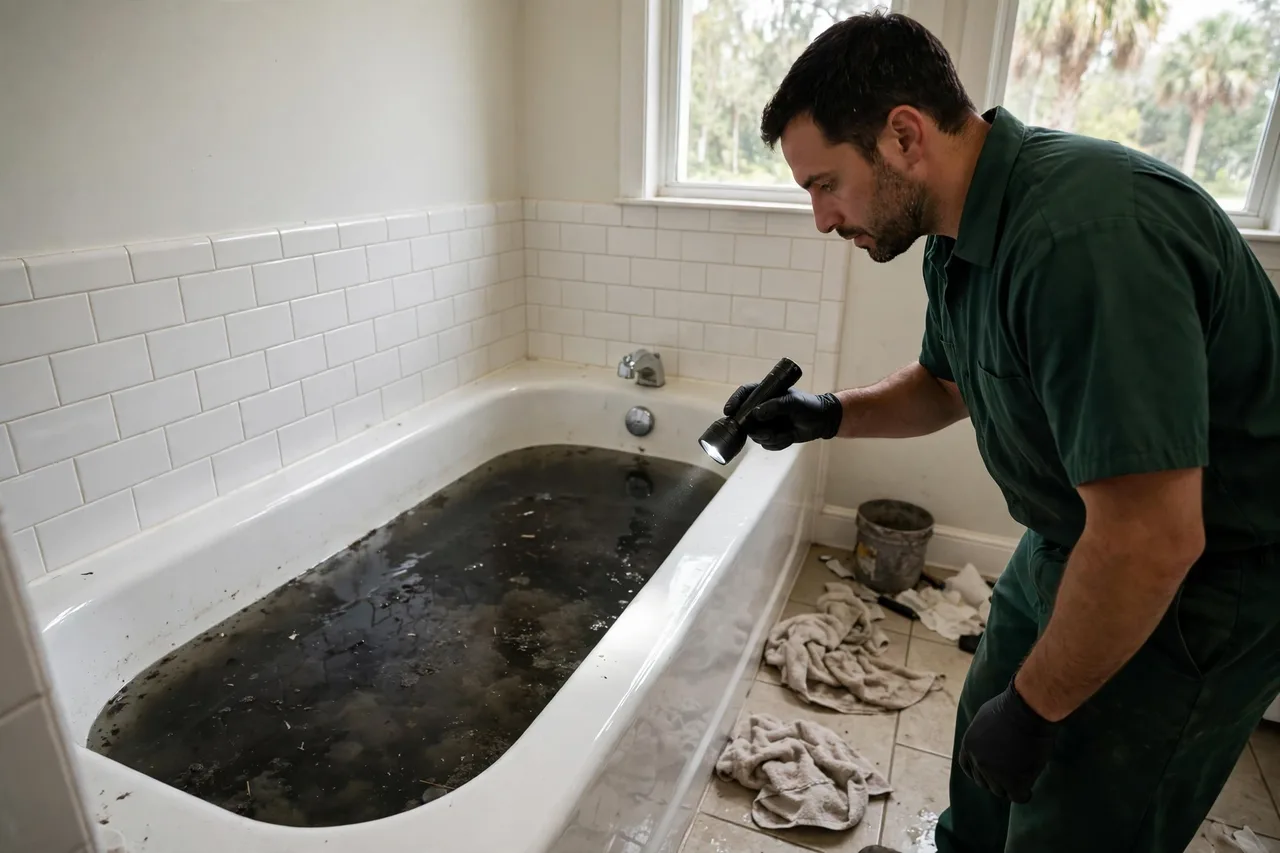
Sewage in the bathtub is the moment a sewer problem stops being a plumbing issue and becomes a household emergency. It means the main line out of the house is blocked, the wastewater has filled the pipe, and the tub, usually the lowest fixture in a Naples home, is where it surfaces. This page is written for that first hour: what to stop, what to protect, what not to pour down the drain, and what the crew will do when they arrive.
The first instructions come over the phone, before arrival.
Pressure is relieved outside so the house stops filling.
Once flow is back, the cause gets filmed and planned.
Clear direction on what can be disinfected and what cannot.
Stop using water everywhere in the house, right now: no flushing, no laundry, no dishwasher, no showers. Keep people and pets out of the affected bathroom, and do not pour anything into the tub. Sewage in the tub means the main lateral is blocked, and only clearing the line fixes it. Call (239) 448-0271 for emergency sewer repair. While you wait, note which other fixtures are affected and whether the yard cleanout area is wet; that is the information the crew needs first.
The tub is not where the problem is; it is where the problem becomes visible. Your lateral has been filling from a blockage backward toward the house, and the lowest open drain is the pressure release. In single-story Naples homes that is almost always a tub or shower, because they sit inches above the slab while toilets seal with water and sinks sit higher.
By the time sewage reaches the tub, the blockage is total or nearly so. The causes are the usual main line failures, caught at their final stage rather than their warning stage, which is why the response has two parts: relief now, and a camera afterward so this is the last time.
The classic Naples ending to a long root story. The mass in the lateral strains flow for months, collecting paper and grease, until one heavy-use day the mat seals the bore. The backup seems sudden, but the camera will show an old, established intrusion with years of growth rings in the debris behind it.
Channel-rotted iron eventually loses the bottom of the pipe, the walls slump, and soil enters until the passage closes. Nothing the house does causes this final failure, and nothing poured into a drain will change it. The tub is simply reporting that the pipe has reached the end of a decay that started decades ago.
Where scale or an offset joint roughens the wall, grease and wipes braid into a plug that can close a line in days rather than years. These backups often follow a stretch of heavy cooking or a houseful of guests. Jetting clears the plug, and the camera then shows the rough section that caught it, which is the part worth repairing.
A sagged section holds waste permanently, and its stored plug thickens until it dams the line completely. Homes with this cause often recall months of occasional slowness and gurgling that never quite became a problem. The tub backup is the belly graduating, and the fix involves the grade of the pipe, not just the plug.
In this situation, checks mean containment and observation, not diagnosis. Everything below protects people and limits damage while adding nothing to the line.
Every fixture drains to the same blocked line, so every gallon used arrives in the tub or the next-lowest drain. Halt laundry, dishwashing, showers, and flushing until the crew clears the line. If a toilet must be flushed, understand it will add to the tub; that is a trade to make rarely and knowingly.
Keep children and pets out of the bathroom, and avoid walking through the water and tracking it through the house. Sewage carries bacteria that do not belong on skin, floors, or carpets. Put on gloves and boots if you must enter, lay old towels at the doorway as a dam, and treat everything the water touched as contaminated until it is cleaned properly.
Check the other tubs, showers, and floor drains without running any water. Water standing in several of them confirms the main line, and a dry second bathroom tells the crew the blockage sits closer to one branch. Look, do not test with running water; the line has already given its answer.
From outside, note whether the ground around the cleanout is wet, whether the cap is lifted or weeping, and whether any yard spot smells or bubbles. Do not open the cleanout yourself: on a full line, the cap can be holding back sewage under pressure, and opening it barehanded at close range is exactly the exposure you are trying to avoid.
One boundary, stated plainly: do not pour chemical drain cleaner into a tub of standing sewage. It will not clear a main line blockage, it turns the standing water into a chemical hazard for you and for the technician, and it can damage pipe the camera still needs to read. The useful moves are stopping water, closing the room, and making the call.
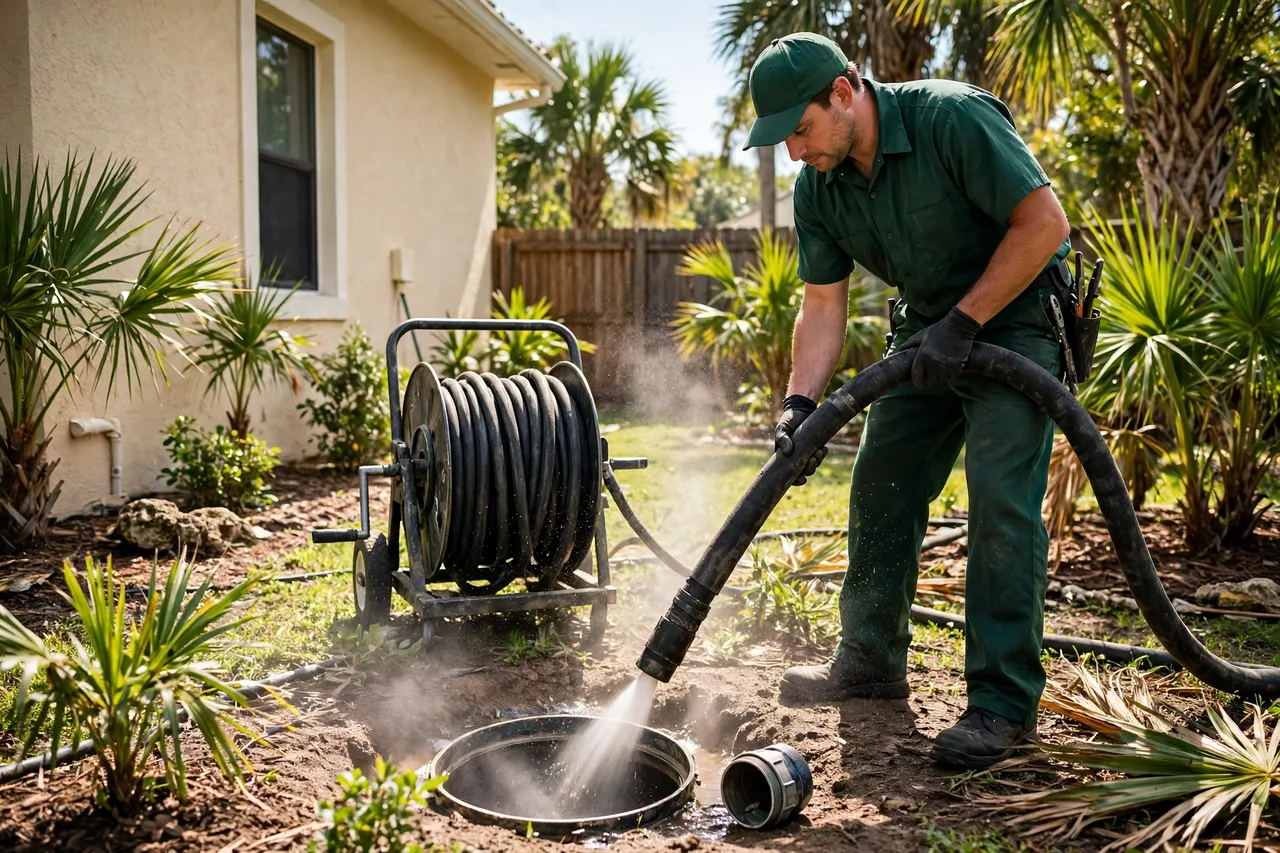
Sewage inside living space is the emergency category, full stop. It is a health exposure, it spreads with every added gallon, and it damages flooring and walls by the hour. Call (239) 448-0271 as soon as you have stopped the water. Emergency sewer repair for a tub backup starts by relieving the line at the cleanout, restoring flow with jetting where the pipe allows, and then filming the cause so the repair, not just the relief, gets planned before the crew leaves.
The crew works from outside in: the cleanout is opened with proper protection, the standing line is relieved, and flow is restored with hydro jetting once the pipe is judged able to take it. Only after the house is draining does the sewer camera inspection go in, because footage of a flooded pipe shows nothing. The camera then reads the now-clear line and finds the cause the backup interrupted: root mass, collapse, plug site, or belly.
The repair follows that footage. Plugs at rough sections and root entries are answered with CIPP pipe lining once cleared, which leaves a smooth, jointless bore that gives waste nothing to catch on. Collapsed cast iron is planned for bursting or sectional replacement, and the whole plan is written out from the video before work starts. The visit closes with cleanup guidance: hard surfaces can be disinfected, porous materials that soaked sewage cannot be made safe and should be discarded, and large affected areas warrant a professional remediation company, which we will say plainly if yours qualifies.
Because the tub drain is usually the lowest open point in the house. When the main line blocks, wastewater fills the pipe backward from the blockage, and it surfaces at the lowest exit it can find. Toilets resist a little, because their traps hold water and their bowls sit higher; tubs and showers sit lowest, so they report the backup first and worst.
Generally yes, with the affected room closed off and water use stopped, but treat the water itself as hazardous. Keep bare skin, children, and pets away from it, ventilate the room if you can do so without entering the water, and wash thoroughly after any contact. If sewage has spread across multiple rooms or reached heating and cooling returns, say so when you call, because that changes the cleanup picture.
No. A main line blockage sits far beyond the tub drain, and cleaner cannot reach it in any strength that matters. What it does do is turn standing sewage into a chemical mixture that endangers anyone who later works in it, including the technician with the jetter. Skip the bottle entirely; the fix is mechanical clearing from the cleanout, followed by a camera.
Porous items that soaked in the water: bath mats, cardboard storage, upholstered pieces, and any carpet padding in the affected area. Hard, nonporous surfaces, tile, porcelain, sealed stone, can be cleaned and disinfected properly. The rule is simple: if sewage soaked into it and it cannot be scrubbed and disinfected through, it goes. When in doubt, ask the crew on site; they will tell you plainly.
If the cause is in the pipe, yes. A cleared plug at a rough joint will re-form, a root mass will regrow through its open joint, and a belly will refill its sag. Jetting buys time; it does not change geometry. The camera run after the relief is what turns a recurring emergency into a one-time repair, because it shows the exact section that needs lining or replacement.
Not seeing your question? Our local team can help you understand urgency, scheduling, and what to expect when the problem is sewage backing up into the tub.
Ask the local team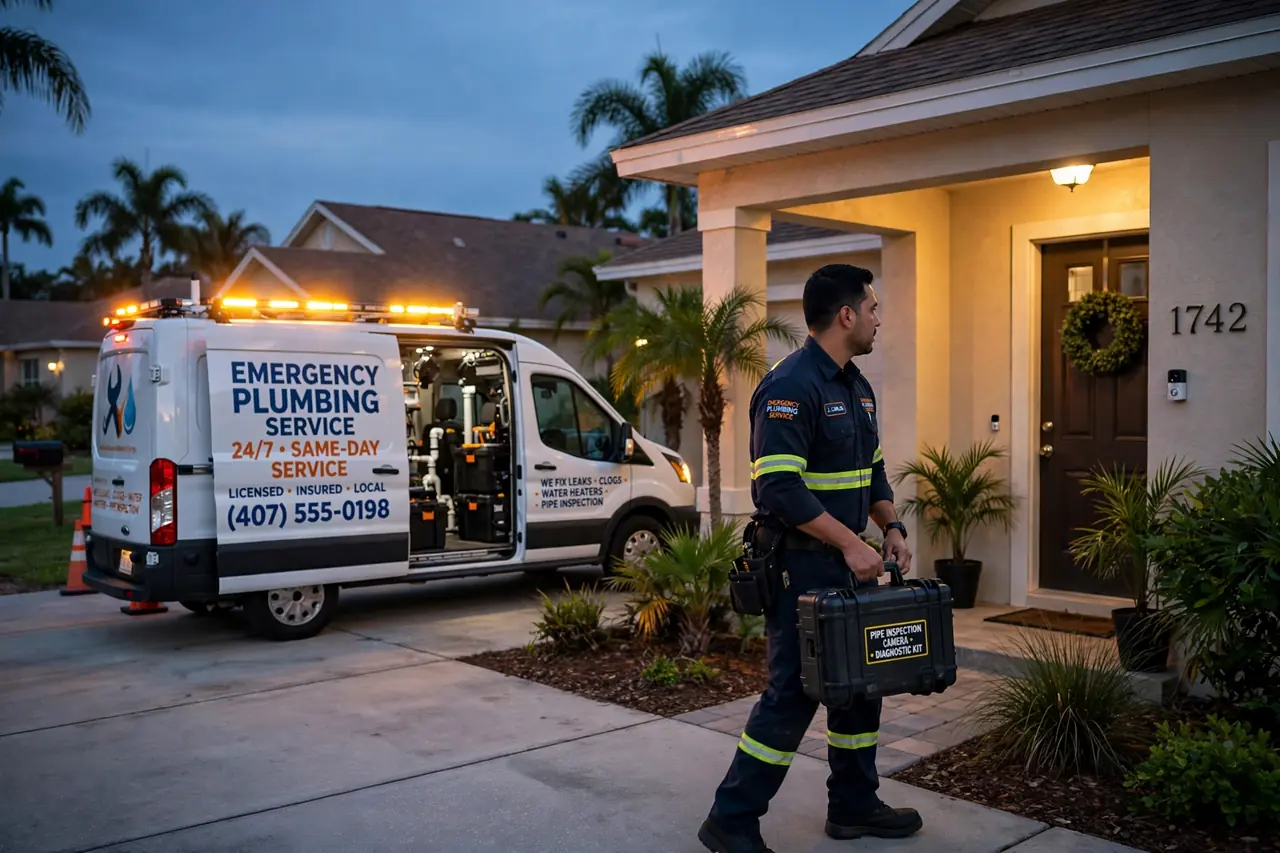
Sewage in living space is the same-day category. Crews relieve the line, restore flow, and film the cause.
Read the guide
High-pressure water is how a blocked main line gets cleared once the crew confirms the pipe can take it.
Read the guideThe wider pattern this symptom belongs to: several drains failing together means the main line is closed.
Read the guideThe warning this stage usually gives first. Worth knowing for the other bathroom, and for next time.
Read the guideThis call jumps the queue. Reach us at (239) 448-0271 weekdays between 8am and 6pm, say the words sewage backup, and describe which fixtures are showing water. Based at 1274 13th St N in Naples, with crews across Collier and Lee counties, we will talk you through containment while the truck rolls.