Sound Patterns, Mapped
Which fixture gurgles, and when, locates the restriction.
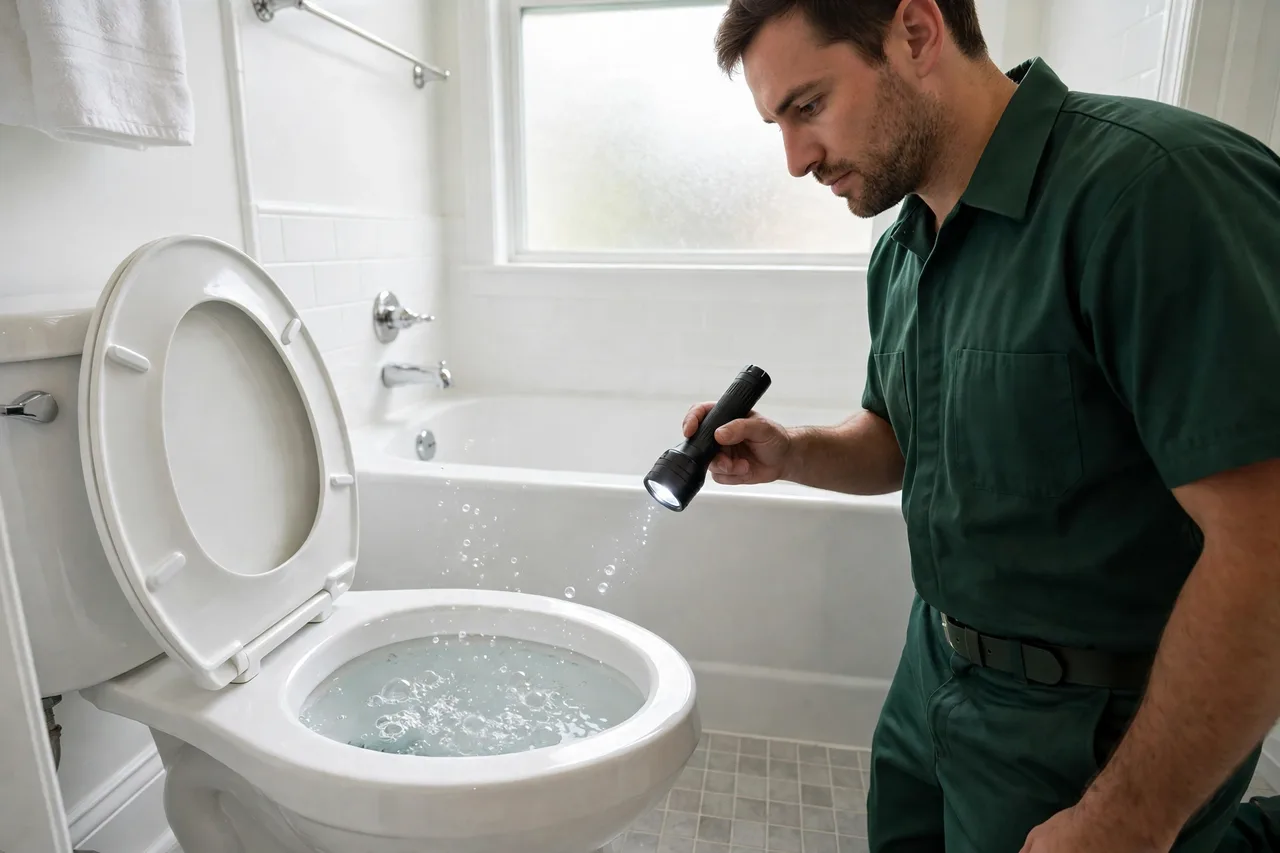
A gurgling toilet is your plumbing talking. The sound is air being pushed or pulled through trap water because it cannot move freely through the vent or the drain, and in Naples homes it most often means the lateral is partially blocked and shrinking. Gurgling almost always arrives before the backup, sometimes by weeks. This page explains what makes the sound, the listening checks that locate the problem, and why acting on the warning is so much simpler than acting on the flood.
Which fixture gurgles, and when, locates the restriction.
Roof vent blockages get ruled in or out on the visit.
A camera at the gurgle stage prevents the backup stage.
You hear the explanation while you watch the video.
Gurgling means air is moving through water where it should not have to. Either the roof vent is blocked, so drains pull air through traps, or the sewer line is partly blocked, so draining water pushes air back up through fixtures. In Naples laterals, the second cause is far more common, and it gets worse on its own. If gurgling shows up at more than one fixture, call (239) 448-0271 for a camera run while the fix is still a clearing and not a cleanup.
Drainage is a balance of water going down and air coming in behind it. Gurgling is the sound of that balance failing. Water rushing past a restriction shoves air ahead of it, and the air escapes through the nearest trap, bubbling through the water standing there. The fixture that gurgles is rarely the fixture at fault; it is just the nearest exit for displaced air.
Naples laterals give air plenty of reasons to misbehave. Root masses and scale narrow the bore gradually, bellies trap air pockets that burp back, and the same storms that test the line drop palm debris into roof vents. The causes separate by pattern, which is why the listening checks below matter.
The leading cause. A root mass, grease buildup, or scale shelf narrows the lateral, and every large discharge, a tub draining or a washer pumping out, pushes a slug of air ahead of the water. The air bubbles up through a toilet or floor drain, and the gurgle follows the big water uses. Left alone, the narrowing continues until the air has nowhere to go because the water has nowhere to go.
Roots deserve their own mention because they gurgle early. A young root intrusion does not block the line; it combs it. Flow passes, but air catches and releases around the mass, and drains sound throaty for months before the first slow day. Homes under ficus and banyan canopies in Naples hear this stage long before they see a backup.
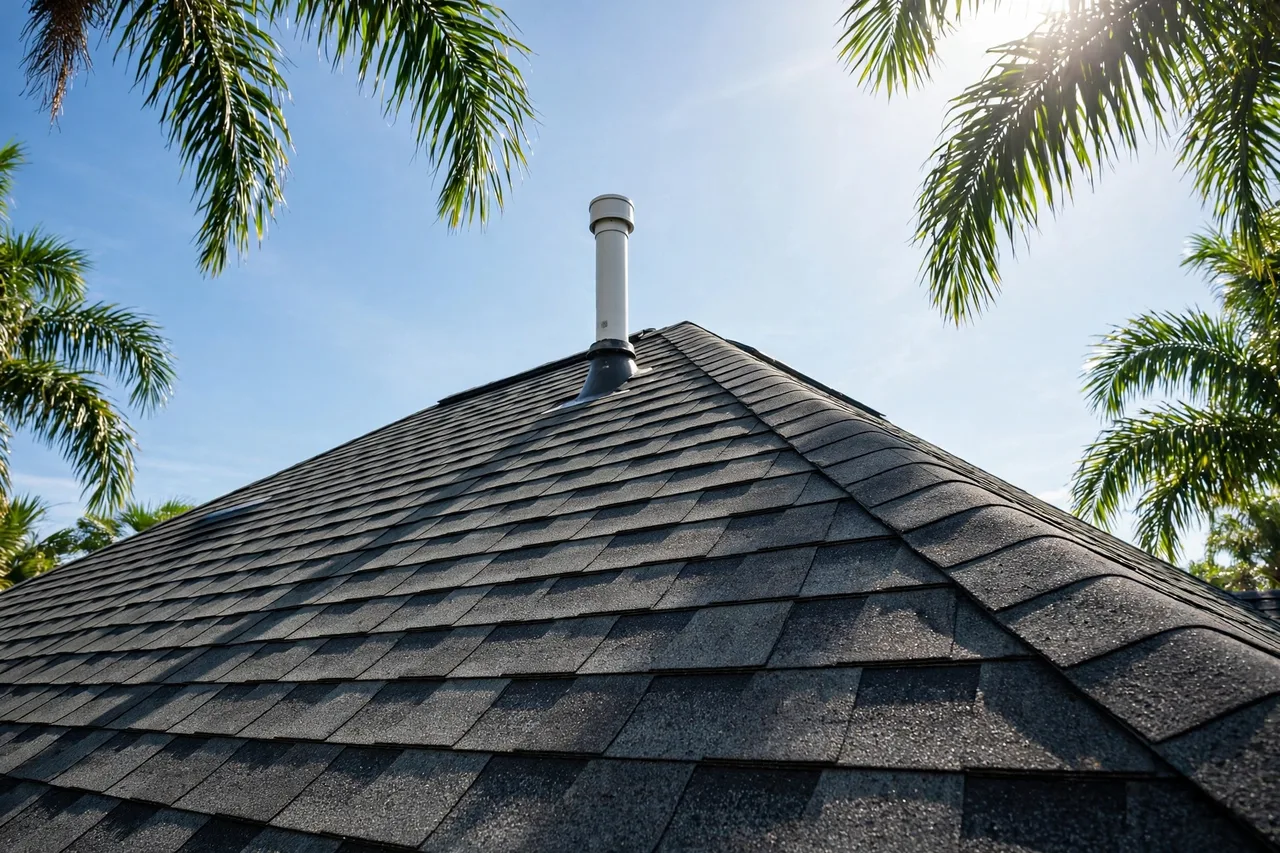
When the vent stack is choked with nests, leaves, or a fallen palm frond, drains cannot draw air from above, so they siphon it through traps, sometimes emptying a trap enough to add sewer smell to the soundtrack. Vent gurgling tends to affect one bathroom group and comes with slow fixture draining even though the main line is clear.
Original cast iron roughens and narrows from the inside as it corrodes, and a bore that started at four inches can run at half that. Water accelerates through the tight section and drags air with it, producing a harsh, raspy gurgle that worsens year over year. This is the sound of a pipe in its failure window asking to be filmed.
Gurgling diagnosis starts with your ears. These listening checks scope nothing, take ten minutes, and the pattern they reveal is the same pattern the crew would build on site.
Stand in the bathroom farthest from the street, flush its toilet, and listen at the other fixtures. A toilet that gurgles when another flushes, or bubbles rising in a nearby tub, means the shared line downstream is restricted. One fixture gurgling alone points closer to home: its own branch or vent.
Fill and drain the tub, or run the washing machine, while a helper listens at floor drains and the lowest toilet. Laundry discharge is the classic trigger, because the pump pushes water fast. Gurgling that answers big discharges, but not small ones, marks a partial blockage with room still left in the pipe.
Gurgling with no odor usually means air displacement in the line. Gurgling with sewer smell means traps are being siphoned or the gas path is wrong, which adds the vent system and dry traps to the suspect list. The combination is worth reporting exactly as you notice it when you call.
From the yard, check whether the vent pipe above the suspect bathroom is visibly capped with debris or a nest. Do not climb up to clear it: roof work in Florida heat, on tile, is a fall risk that belongs to a crew with ladders and harnesses. A clear view of a blocked vent from the ground is still useful information.
One boundary: do not pour chemical drain cleaner into a gurgling line. The gurgle is an air problem caused by a narrowing, and chemicals do not widen pipe; they sit in the restriction, heat up, and greet the technician as a hazard. Listening and noting patterns is the homeowner work that actually helps.
Gurgling becomes urgent when it gains company: drains slowing at several fixtures, water levels in toilet bowls bouncing or rising, or any sewage smell with standing water in a tub. That combination means the partial blockage is nearly total. Stop heavy water use and call (239) 448-0271. Caught at this stage, the line usually clears the same visit; pushed further, the next big discharge becomes a backup into the house.
The visit pairs your listening map with a sewer camera inspection. If the gurgle pattern points at the vent, the stack gets inspected and cleared first. If it points down the line, the camera travels the lateral and shows the narrowing directly: root comb at a joint, scale shelf in old iron, or the still waterline of a belly. There is no ambiguity in the footage, and no treatment gets sold before it is reviewed with you.
Soft restrictions clear with hydro jetting, which scours the bore back to full width. Root entry points and rough joints that will simply regrow or re-snag get sealed by CIPP pipe lining, and a belly that traps air and water is a grade problem answered by sewer line replacement of that section. A post-work camera pass confirms the line runs quiet, which is the real finish line for a gurgling call.
Because the shower's discharge is pushing air ahead of it down a line that cannot vent or drain freely, and your toilet trap is the nearest escape for that air. The toilet is the messenger, not the culprit. The restriction sits downstream of both fixtures, most often in the main lateral, and a camera run from the cleanout finds it directly.
By itself, no. Gurgling is a warning stage, and it can run for weeks before anything backs up. It becomes urgent when slow drainage joins it at several fixtures, when toilet water levels start bouncing, or when sewage appears anywhere. The smart move is to treat the sound as a scheduled inspection now rather than an emergency call later.
Yes. Drains need air admitted behind the water, and the roof vent supplies it. When nests, palm debris, or storm litter choke the vent, fixtures pull air through traps instead, which gurgles and can siphon a trap dry enough to add sewer smell. Vent blockages usually affect one bathroom group; house-wide gurgling points down at the line instead.
A washing machine discharges fast and all at once, the hardest test your lateral gets in a normal day. If the line is narrowed by roots, scale, or a belly, that surge acts like a piston, driving air backward through the nearest trap. The toilet bubbles because it is the closest open path. It is one of the most reliable early signs of a partial main line blockage.
There is no safe fixed window, because the causes progress at different speeds. A vent blockage may stay stable; a root mass or closing cast iron bore will not. What is certain is the direction: a gurgling line is narrower than it was, and it will not widen itself. Every Naples backup we clear had a gurgling chapter first, and the homeowners who called during that chapter got a clearing instead of a cleanup.
Not seeing your question? Our local team can help you understand urgency, scheduling, and what to expect when the problem is gurgling toilets and drains.
Ask the local team
A camera run at the gurgling stage shows the narrowing while the fix is still simple and the house is still dry.
Read the guide
Gurgling plus rising water means the blockage is closing. Emergency crews restore flow before it reaches the floors.
Read the guideThe stage after gurgling: several drains failing together because the main line has finally closed.
Read the guideGurgling that siphons traps dry lets sewer gas in behind it. The two symptoms often share one cause.
Read the guideOne call gets the pattern checked properly. Reach us at (239) 448-0271 weekdays between 8am and 6pm, tell us which fixtures gurgle and what triggers them, and we will bring the camera and the vent checks. Based at 1274 13th St N in Naples, serving Collier and Lee counties.