Why Naples Sewer Lines Flood in Heavy Rain
Sewer backups that only happen when it rains point to stormwater infiltration. Here is how rainwater gets into Naples sewer lines, how a camera finds the entry points, and how lining seals them for good.
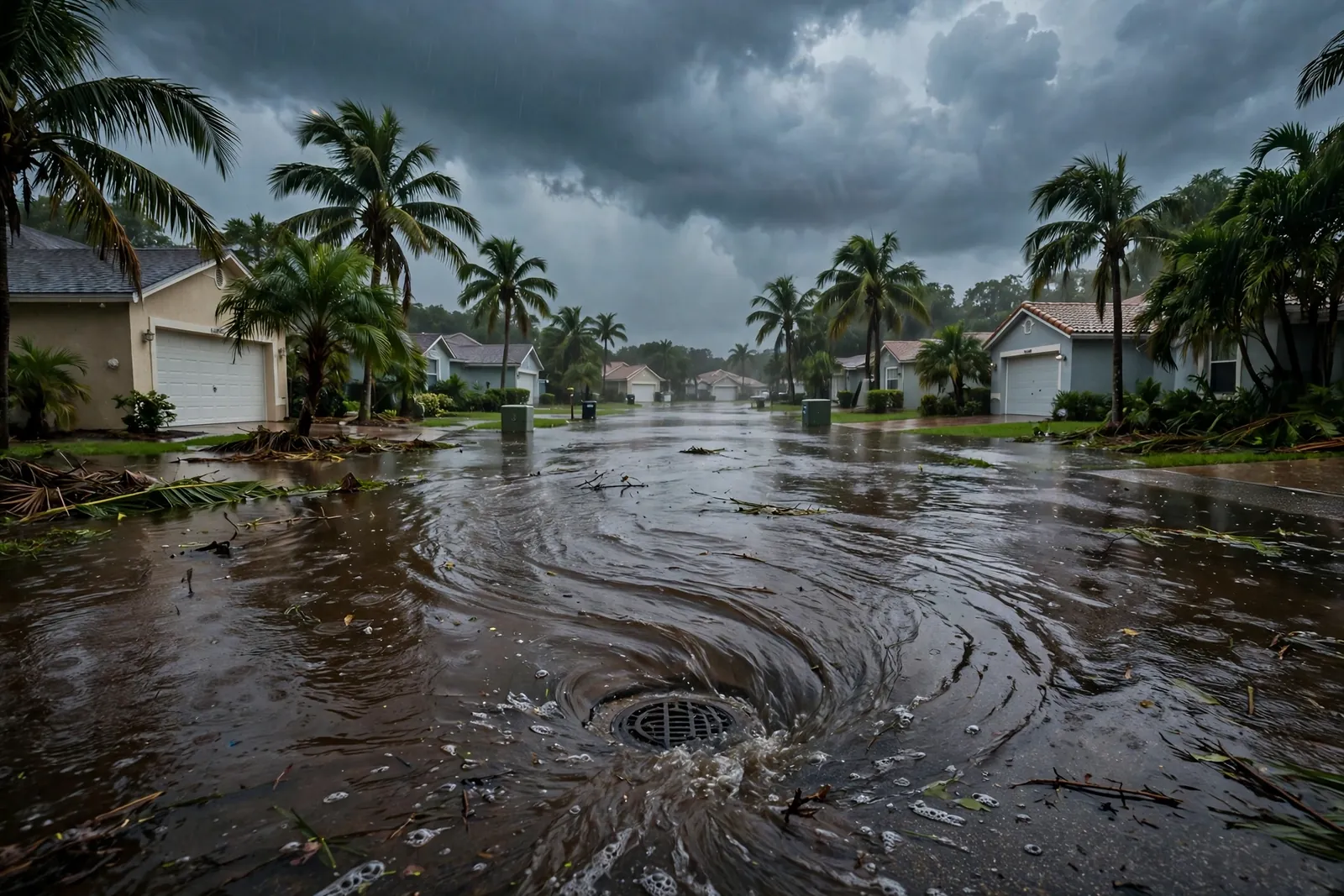
The Short Answer on Rain-Related Backups
When sewers back up only during heavy rain, stormwater is infiltrating the line through cracked joints, broken sections, or bad connections. Naples downpours overwhelm compromised pipes fast. A camera inspection finds every entry point, and trenchless lining seals them without digging up the yard.
It rained for an hour yesterday afternoon, the kind of Naples summer downpour that turns streets into rivers. This morning your shower drain is gurgling and the toilet is slow. It worked fine last week. The only thing that changed is the weather, and that tells you exactly what is wrong.
Your sewer line is taking on stormwater. Somewhere between your house and the street, rainwater is pouring into the pipe through cracks, separated joints, or a bad connection. The line cannot carry your wastewater plus thousands of gallons of infiltration, so it backs up at the lowest drain. This is one of the most common rain-related plumbing failures in Naples, and it is fixable once you find the entry points.
How Rainwater Gets Into a Sewer Line
A healthy sewer line is watertight. Water flows out, nothing flows in. But pipes age, soil shifts, and joints separate. Cast iron corrodes through. Clay joints offset. Even PVC can crack if the ground settles under it. Every opening becomes a doorway for groundwater, and during a downpour the soil around the pipe saturates fast.
The math is brutal. A single cracked joint can admit gallons per minute when the surrounding soil is saturated. Multiply that across a few bad joints and the line is carrying many times its design flow. The pipe surcharges, pressure builds, and wastewater looks for the nearest exit, which is usually a shower drain or floor drain inside your house.
Downspouts make it worse. Some older Naples homes still have roof gutters tied directly into the sanitary lateral, which is illegal in most jurisdictions and a guaranteed backup during heavy rain. All of your roof's runoff, thousands of gallons in a big storm, goes straight into a pipe sized for household wastewater.
Why Naples Is Especially Vulnerable
Naples gets about 55 inches of rain a year, most of it between June and September, and it arrives in violent bursts rather than gentle all-day soakers. Two inches in an hour is not unusual. That intensity matters because infiltration is driven by how fast the soil saturates, not just how much falls.
The high water table means the soil around your sewer line is already wet much of the year. There is very little buffer. When a downpour hits, groundwater rises to the pipe level almost immediately, and every crack starts taking on water at once. Homes in low-lying neighborhoods near the Gordon River or the canals feel this first.
Age is the third factor. Much of Naples' housing stock sits on original clay or cast-iron laterals from the 1960s through the 1980s. Those materials have spent decades in corrosive, shifting soil. If your line has never been inspected, assume it has openings. Our guide on sewer line bellies in Naples covers another common failure in the same aging pipes.
Signs Your Line Is Taking On Stormwater
The signature symptom is timing. Backups, slow drains, or gurgling that appear during or right after heavy rain and clear up when things dry out point straight at infiltration. If the problem were a simple clog, it would not care about the weather.
Watch the lowest fixtures first. The shower or tub on the ground floor, a floor drain in the laundry room, the downstairs toilet. Those sit closest to the lateral's elevation, so they show the backup before anything upstairs. Gurgling from multiple drains at once is another strong clue, since it means pressure is building in the main line rather than a single branch.
Outside, look for unusually lush grass or soggy spots over the sewer line's path after rain. Wastewater leaking out fertilizes the lawn in a very visible stripe. If you see that, the line has openings in both directions: water gets in during storms, sewage gets out between them.
How Camera Inspection Finds the Entry Points
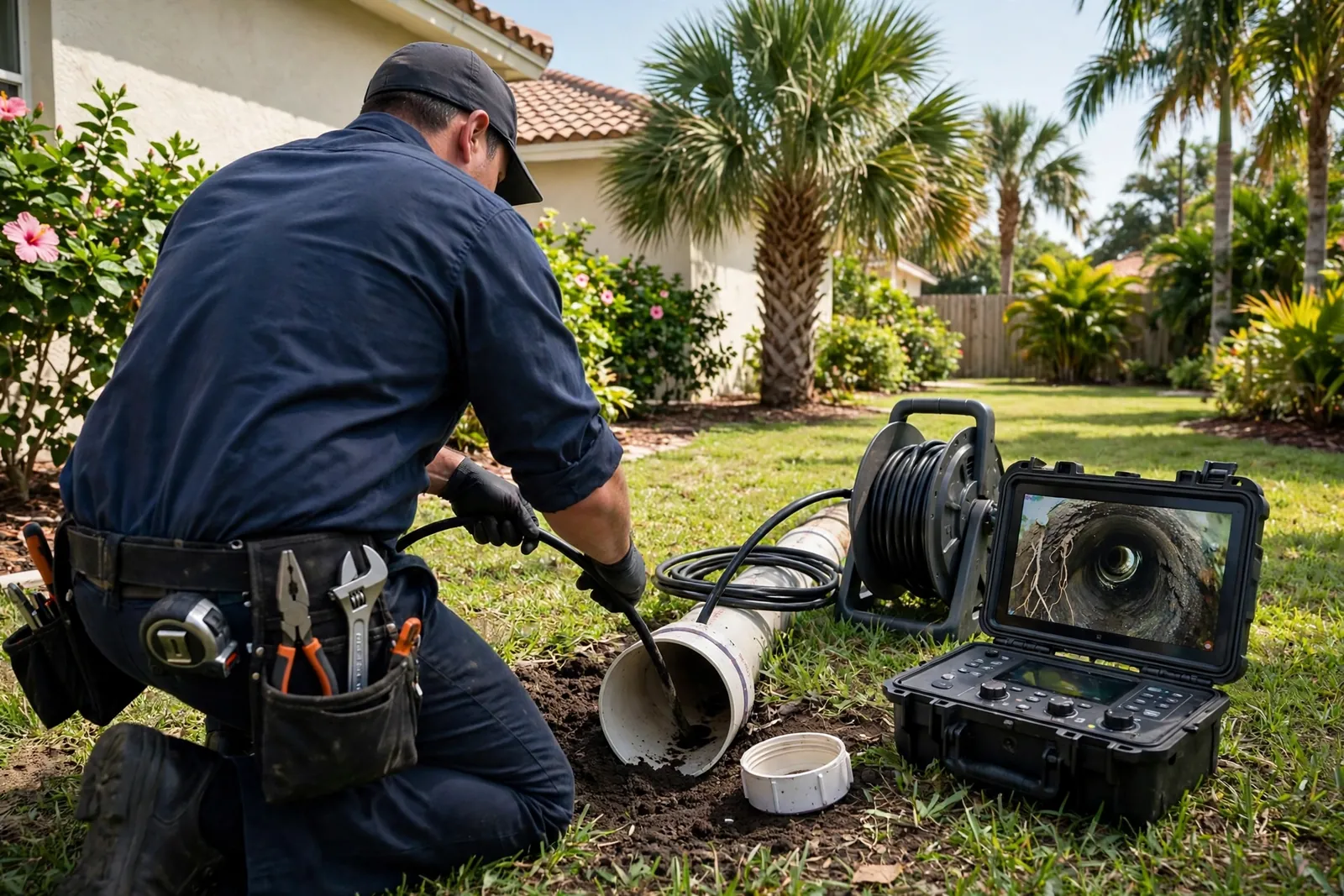
Guessing at infiltration is risky. Digging up the yard on a hunch is worse. A sewer camera inspection in Naples shows every crack, separated joint, and bad connection on a live video feed, with the exact distance from the cleanout marked on screen.
The best time to inspect is during or just after heavy rain. Active infiltration shows on camera as water streaming into the pipe, which makes the entry points impossible to miss. Even in dry weather, the camera reveals the cracks and offsets that will admit water when the soil saturates. Either way, you get a map of every defect instead of a guess.
That map decides the fix. A few isolated cracks might mean spot repairs. Widespread joint separation or cracking along the whole run points to lining. The camera takes the debate off the table.
Sealing the Line With Trenchless Lining
For infiltration, CIPP pipe lining is usually the ideal fix. A resin-saturated liner goes in through the existing cleanout, cures in place, and becomes a seamless new pipe inside the old one. Every crack, joint, and pinhole gets sealed in a single watertight tube. No digging, no torn-up landscaping, no new driveway.
Lining works because infiltration is a watertightness problem, not a structural collapse. As long as the pipe still holds its shape, the liner has something to form against. Severely collapsed or bellied sections need a different approach, which is why the camera inspection comes first. Our trenchless sewer repair page explains how lining compares to other methods.
The result is a line that carries only what it should: your household wastewater. The next downpour saturates the soil, the water presses against a sealed pipe, and nothing gets in. Backups stop because the extra thousands of gallons never enter the system.
What Homeowners Can Do Before the Next Storm
Do not wait for rainy season to think about this. A camera inspection takes under an hour and most lining jobs finish in a day or two. Getting it done in the dry months means the line is sealed before the first summer downpour tests it.
Meanwhile, walk your property. Make sure downspouts discharge well away from the house and not into any drain connected to the sewer. Keep the area over your lateral clear so a crew can access the cleanout. And if you have ever had a rain-related backup, mention the timing when you call. That one detail tells us where to look.
Stormwater infiltration only gets worse. Cracks widen, joints separate further, and each rainy season adds stress. The fix gets no simpler with waiting.
Stop the Rain From Backing Up Your Sewer
If your drains only misbehave when it pours, you already know the diagnosis. Get the line on camera, find every entry point, and seal them before the next storm: Call (239) 448-0271 and we will show you exactly where the water is getting in.