Sewer Line Bellies in Naples: Why Sagging Pipes Cause Repeat Backups
Backups that return within weeks of a cleaning are the signature of a bellied sewer line. Here is why Naples soil sags pipes, how a camera inspection shows the sag, and why only re-grading the section ends the cycle.
The Short Answer on Sewer Line Bellies
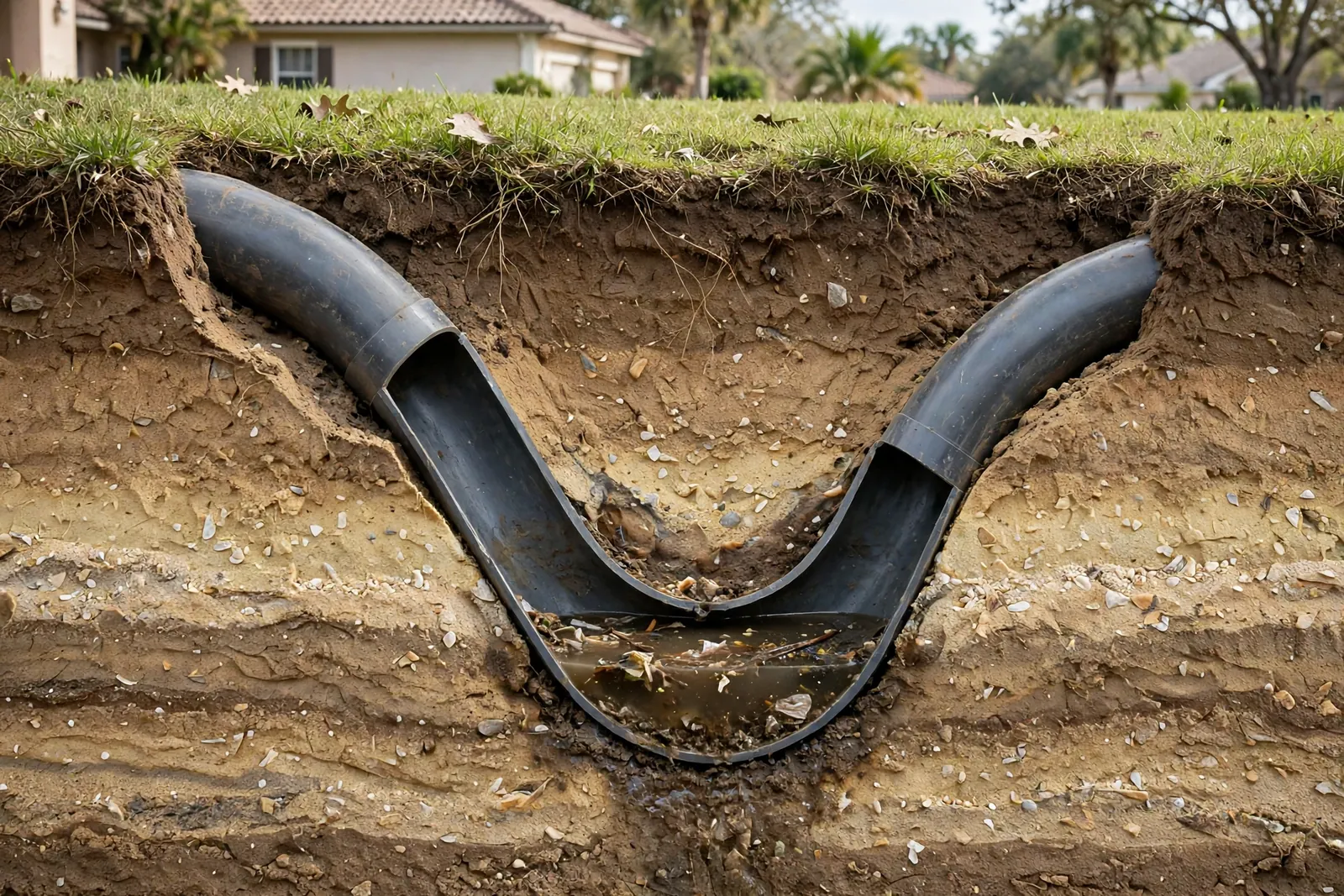
A sewer line belly is a low spot where wastewater and paper collect instead of flowing through. In Naples, settling sandy soil and a high water table make bellies common. They cause backups that return even after cleaning. A camera inspection measures the sag's depth and length, and that decides the fix.
Here is a pattern we see all over Naples. Your drains back up. Someone snakes the line. Everything flows again. Then, four or six weeks later, the same backup, the same drain. That repeat loop is the signature of a sewer line belly, and snaking will never end it: the problem is the shape of the pipe, not what is stuck inside it.
A belly is not a clog, a crack, or a root. It is a geometry problem, and until you fix the geometry you keep clearing a line that keeps refilling its own low spot. Below: what bellies are, why Southwest Florida grows them, how we confirm one on camera, and which repairs actually work.
What Is a Sewer Line Belly, Exactly?
A sewer line is supposed to slope steadily downhill from your house to the street, about a quarter inch of drop for every foot of pipe. A belly is a section that dips below that slope and forms a low spot, like a valley in a road. Wastewater runs downhill into the valley and sits there. Solids and paper settle out of the standing water, and each new flush has to push over that pile before anything moves. Repeat that thousands of times and the low spot becomes a permanent trap for waste.
Most bellies run a few feet to a couple dozen feet long, and the dip is often only an inch or two. That sounds like nothing until you picture water having to flow uphill to escape. Gravity does not negotiate.
Why Naples Soil Makes Bellies So Common
Southwest Florida is built on sand. Pipe trenches get backfilled, the pipe gets bedded on that fill, and over time the fill settles. Where it settles under the pipe, the pipe follows it down. That is the whole story, and it happens here more than in places with clay or rock holding their pipes steady.
Two local conditions make it worse. The water table sits high across much of Collier County, sometimes just a few feet down, so the bedding around the pipe stays damp and compacts faster. Then rain season arrives and saturates everything. A pipe laid at perfect pitch in April can show a sag by September after months of wet soil shifting underneath it.
Older homes in neighborhoods like Golden Gate and Park Shore are especially prone, because their laterals were laid decades ago on fill that has had plenty of time to settle. Calls for sewer line repair in Golden Gate often start with that same story: backups that return on schedule. Newer construction is not immune. Poorly compacted backfill can let a line settle within a few years of the house going up.
Signs You Have a Belly, Not Just a Clog
A regular clog is a one-time event. A belly is a recurring one. The tell is timing: backups that return within weeks of a cleaning, at the same fixture, with the same feel. The snake clears the pile; the pile rebuilds in the low spot. Same story next month.
- Backups on a schedule: the line clears, then backs up again within weeks. Snaking buys time instead of fixing anything.
- Gurgling at the lowest drain: the shower or tub gurgles when another fixture runs, because air and water are fighting over the restricted low spot.
- Rain makes it worse: toilets flush fine in the dry months and struggle after heavy rain, when groundwater presses into the sagged section.
- Camera heads go underwater: if a past inspection showed the camera dipping into water that never drained away, that was a belly on screen.
If you are trying to sort out which of these fits your situation, our rundown of what causes sewer backups in Naples compares bellies against the other five usual suspects, from roots to grease.
How a Camera Inspection Shows the Sag
On camera, a belly is unmistakable. The camera head pushes through dry pipe and drops into standing water. The operator keeps pushing, and the water keeps going. A few feet later the head climbs back out and the pipe is dry again. That underwater section is the belly, and its length and depth decide the repair.
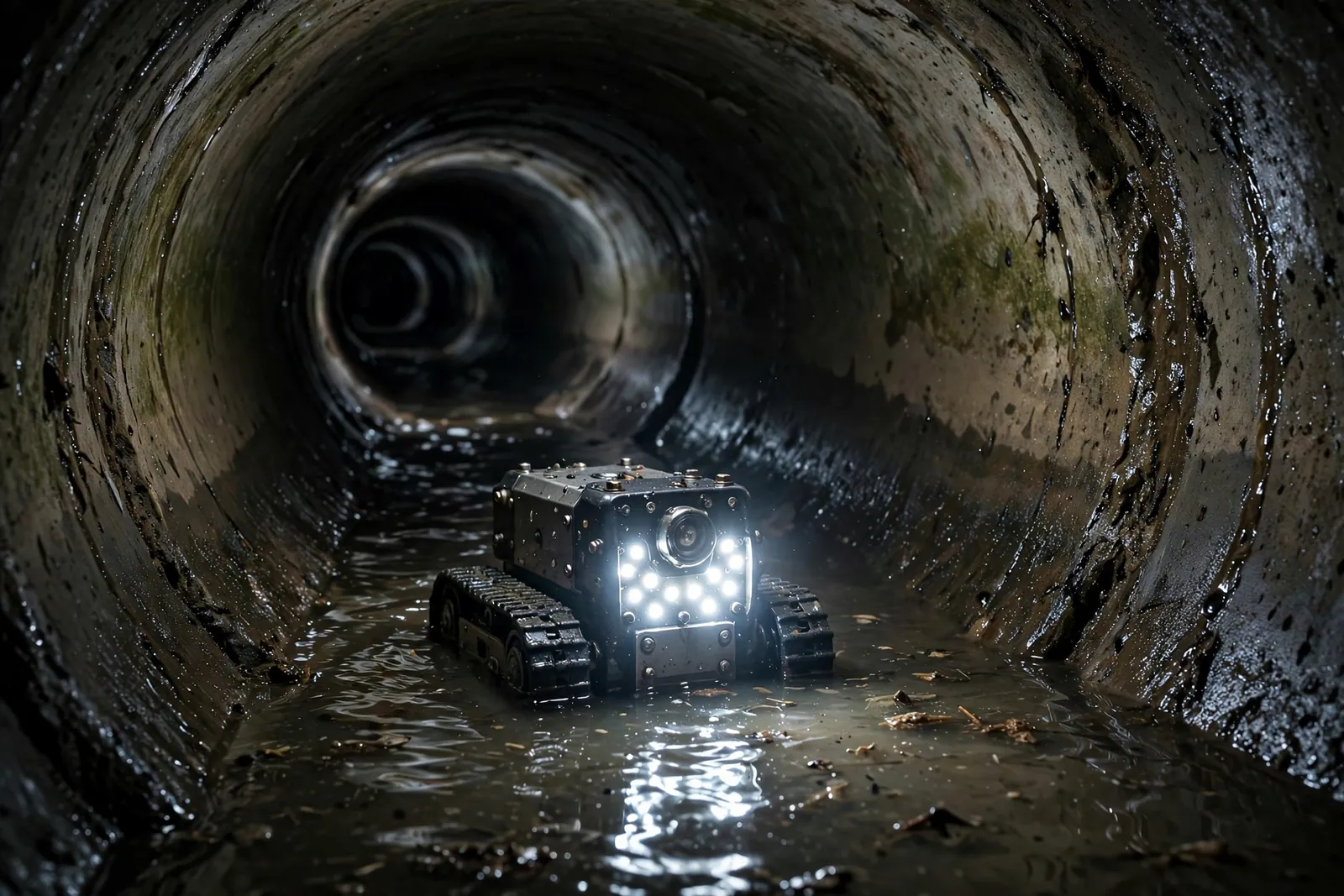
We measure the sag and mark exactly where it starts and ends at the surface. That precision matters, because the fix is surgical: you do not replace the whole line, you correct the one bad section. A Sewer Camera Inspection in Naples turns a guess into a plan, and it is the only way to separate a belly from a simple blockage without digging.
Can Trenchless Methods Fix a Belly?
This is the question every homeowner with a belly asks, and the honest answer is mostly no. Trenchless methods reshape the inside of a pipe, not its slope. A liner cures inside the existing pipe and follows the existing sag, standing water and all. The line becomes watertight, but it still holds a puddle.
Pipe bursting pulls a new pipe through the old path. It replaces the material, but the new pipe follows roughly the same trench, so the low spot comes along for the ride. Bursting suits a broken or root-invaded line that still has good grade. It is not a grade fix.
So what does fix a belly? Excavating the sagged section, re-bedding it on compacted stone at the correct slope, and laying fresh pipe. That is a sewer spot repair, done precisely where the camera marked the sag. If the rest of the line is sound, the belly is the only thing that needs digging.
Spot Repair vs. Full Replacement for Bellies
One belly in an otherwise sound line is a spot repair. The camera locates it to within a few inches, so the excavation stays small. The new section goes in at proper pitch, and the clear-it-back-up cycle ends.
Full replacement enters the conversation when the camera finds bellies in more than one place, or one long sag spanning most of the run. At that point you are digging most of the trench anyway, so laying a whole new line at a uniform grade makes more sense. Trenchless sewer repair can still do part of the job: burst the bad run at corrected grade, line the good sections, letting each method do what it is good at.
Frequently Asked Questions
How do I know if I have a belly or just a clog?
A clog clears and stays cleared. A belly produces backups that return within weeks at the same fixture. On camera, a belly shows standing water in a section that never drains, while a clog shows a blockage in an otherwise dry line.
Can a sewer line belly get worse over time?
Yes. The settling that created the sag can continue, and the collected waste presses the dip deeper in soft soil. Each backup also pushes more debris into the low spot. A belly rarely stabilizes; it usually deepens.
Why does the backup come back so soon after snaking?
Snaking clears the pile sitting in the belly, not the belly itself. The next few weeks of normal use rebuild the pile in the same low spot. Until the slope is corrected, the cycle repeats.
Will trenchless pipe lining fix my belly?
No. A liner follows the shape of the existing pipe, so it seals leaks and stops roots but keeps the sag. Lining is a strong fix for a belly-free line with cracks; for the belly itself, the section needs re-grading.
Do tree roots grow in belly sections?
They love them. Standing water attracts roots to joints near the sag, and the collected debris gives them something to grab onto. If a belly also shows roots, both problems get addressed together. Our guide to tree roots in sewer lines covers how that combined fix works.
Get the Sag on Camera
If your drains follow the clear-it, back-up, clear-it loop, stop the loop. Get the pipe on camera and see the belly for yourself: Call (239) 448-0271, and we will show you exactly where the sag is and what it takes to fix it.