Surface Signs Read Correctly
Wet, green, and sunken each tell a different part of the story.
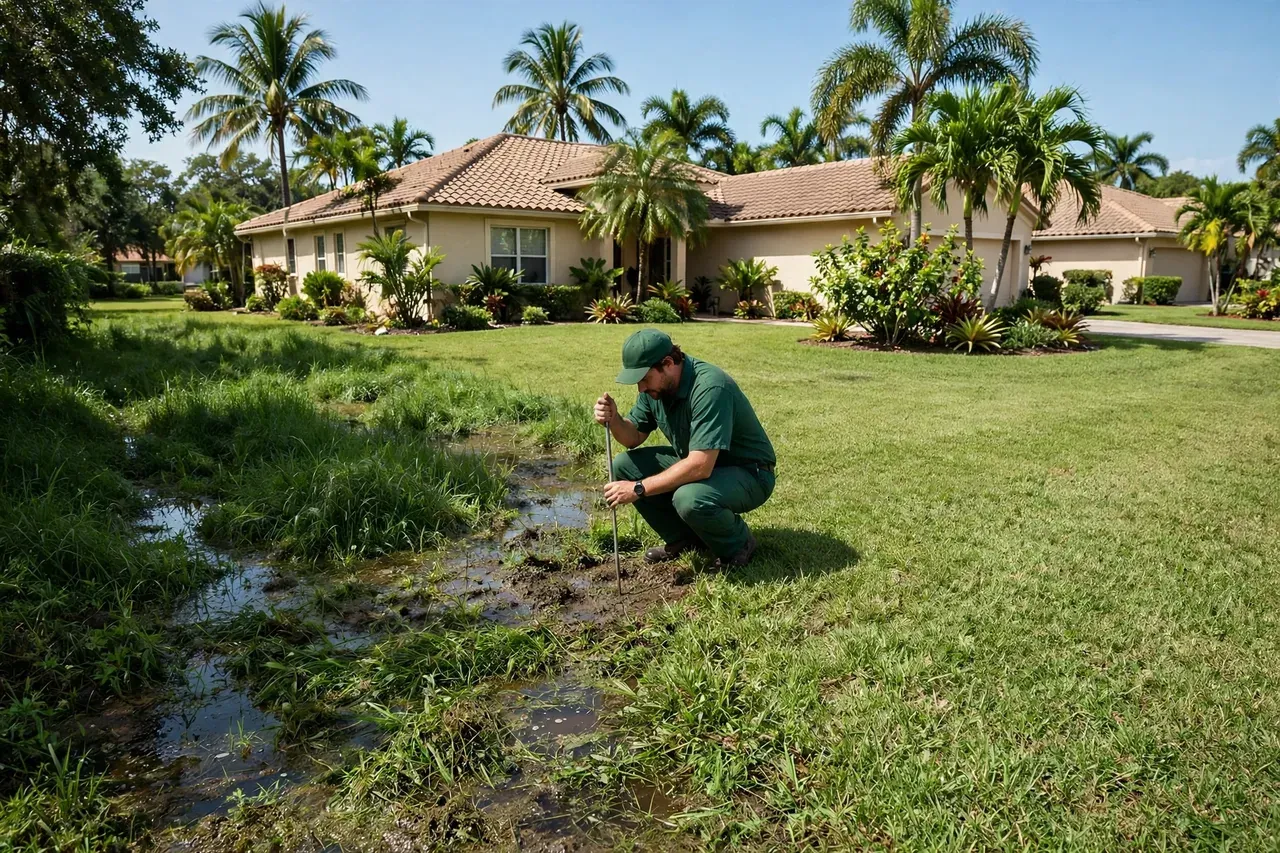
A patch of lawn that stays wet in a dry week, grows greener than everything around it, or feels spongy underfoot is the surface signature of water escaping underground, and in Naples that water often comes from the sewer lateral. Effluent feeds grass like fertilizer while it quietly washes the sandy soil out of the pipe's bedding. This page explains what leaks under a yard, how to separate a sewer leak from an irrigation leak, and how the exact break gets located without digging on a guess.
Wet, green, and sunken each tell a different part of the story.
A meter check separates water line leaks from sewer leaks.
Camera and sonde pinpoint the break before any digging.
Most leak repairs open one small access pit, not the yard.
A lone wet spot that follows the path of your sewer line, especially one that smells faintly, grows lusher grass, or stays wet when no rain has fallen and no sprinklers have run, usually marks a leaking joint or a cracked section of lateral. Irrigation and water line leaks are the look-alikes, and simple checks separate them. If the spot sits on the line path between your house and the street, call (239) 448-0271 for a locate and camera run that pinpoints the leak before the soil loss spreads.
Water underground takes the path of least resistance, and in Collier County that path is sandy soil that moves easily. A sewer lateral leaking even a little water around the clock will saturate the same pocket of ground day after day, which is why the surface sign stays fixed in one place while sprinkler wetness comes and goes.
What is leaking matters as much as where. A sewer leak carries soil away with it, grain by grain, into the pipe, which is how a damp patch becomes a depression and a depression becomes a void under a driveway. The causes below are the ones the camera confirms under Naples lawns.
Laterals are built from sections, and every joint is a future leak candidate. Decades of soil settling, root pressure, and traffic vibration walk joints apart a fraction at a time, until effluent seeps out with every flush and groundwater seeps in after every rain. Joint leaks are the most common cause we locate, and happily the most repairable, because the pipe on both sides is usually sound.
Where a pre-1972 lateral crosses the yard, its rusted bottom channel leaks along a length of pipe rather than at one point. The surface sign is an elongated damp strip following the line, sometimes with several soft spots beaded along it. This pattern tells the crew the leak is a condition of the run, not a single joint, and the fix is sized accordingly.
Roots thickening against a pipe, a fence post driven years ago, or a heavy vehicle crossing a shallow line can crack a section outright. These leaks start suddenly compared to corrosion, and the wet spot appears over one season rather than creeping in. The crack also admits roots, so the leak and the blockage often arrive as a pair.
Cleanout risers, elbows at the house exit, and old repair couplings all live underground and all age. A fitting that has cracked or a cap that has rotted below the surface leaks quietly at a fixed point, usually close to the house wall. Because these spots are shallow, they are among the fastest leaks to expose and repair once located.
These checks need no digging and no tools beyond your water meter, and they do the most valuable sorting in leak work: sewer, supply water, or irrigation.
Your lateral runs from the house toward the street or septic connection, usually in a fairly straight line from the main cleanout. Walk that path slowly. A wet or sunken strip that follows it is a strong sewer sign; a wet spot far off the path points at irrigation or a water service leak instead. Note where the dampness starts and ends.
Pick a stretch with no rain and no irrigation for two days. Sprinkler and rain wetness fades across the whole lawn together. A sewer leak spot stays wet, and often greener, while everything around it dries. That contrast, photographed on your phone over a few days, is genuinely useful evidence to hand a crew.
With no water running in the house, check whether the meter dial or leak indicator still moves. A moving meter means pressurized supply water is escaping somewhere, which is a water line or irrigation leak, not a sewer leak, because sewers are not pressurized. A still meter plus a wet spot on the line path points back at the lateral.
Press your heel along the damp strip and compare it with firm ground nearby. Spongy or visibly settling soil over a sewer line means effluent is carrying bedding soil into the pipe, hollowing the ground. Settling is the sign to stop watching and start calling, because voids grow quietly and then show up as cracked driveways and trip edges.
One boundary: do not dig down to look at the pipe yourself. Collier County soil is loose, pits slump, and a broken line area can be undermined in ways the surface hides. Probing with a rod to map softness is fine; opening the ground belongs to a crew that shores and locates properly, and the camera needs to see the line before anyone decides where to open anyway.
A damp patch is a scheduling matter; a growing depression, a hole opening along the line path, or sewage surfacing on the lawn is not. Surfacing sewage is a health hazard: keep children and pets off the area, do not mow over it, and call (239) 448-0271 the same day. Soil collapsing into a broken line can also undercut driveways and walkways, so a spot that is sinking near concrete deserves urgency even before anything surfaces.
Diagnosis starts above ground with your observations, then goes straight to proof: a sewer camera inspection travels the lateral while a sonde locator tracks it from the surface, marking the pipe path, depth, and the exact location of every crack, open joint, and rot channel. The wet spot on your lawn gets matched to a defect on video, at a measured distance, so the repair plan is built on the leak itself rather than the dampness it caused.
A single leaking joint in sound pipe is the classic case for a sewer spot repair, one small excavation at the marked point or a short point liner from inside. A run of channel-rotted iron leaking along its length is answered with CIPP pipe lining or a bursting replacement, sealing every leak in the run at once. After the fix, a final camera pass verifies the line is tight, and the yard spot dries out as the ground recovers.
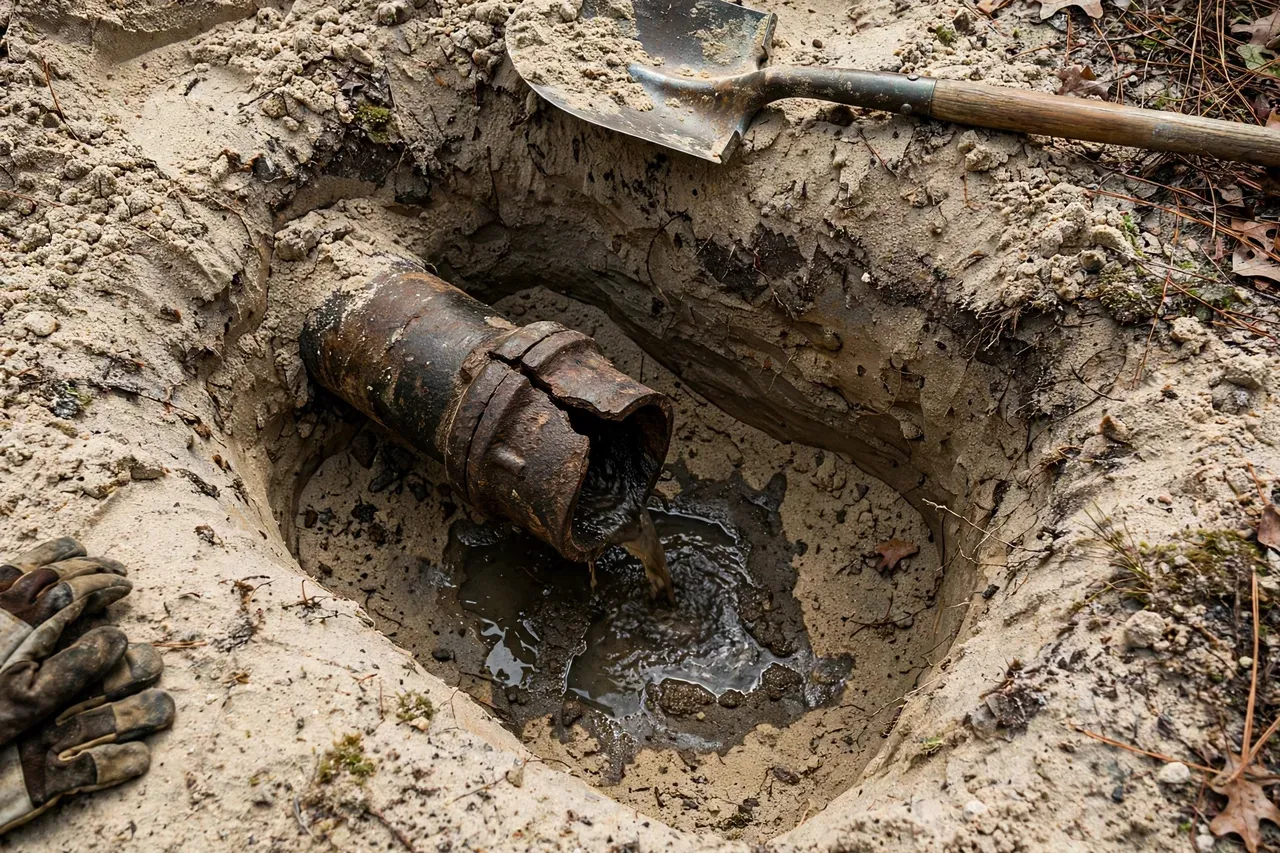
Because something under that patch waters and feeds it daily, and a leaking sewer lateral does both. Effluent carries nitrogen that greens grass noticeably, and the leak runs every time the house drains. Irrigation wets whole zones evenly and dries between cycles; a leak spot stays damp, lush, and fixed in place along the line path, which is the pattern that gives it away.
Three clues separate them. Location: sewer leaks follow the straight path from house to street, irrigation leaks cluster near heads and valve boxes. Timing: irrigation spots dry out on off days, sewer spots do not. And the water meter: with all house water off, a moving meter means a pressurized supply or irrigation leak, while a still meter with a wet line-path spot points to the sewer lateral.
Not always. Broken sprinkler lines, a leaking water service, a high water table pocket, and even a pool leak can all wet a lawn. What makes the sewer the prime suspect is the combination: the spot sits on the lateral path, it smells faintly on warm days, the grass over it grows faster, and the meter test rules out supply water. A camera run then settles the question with footage.
Because the leak is two-way traffic. Water leaving the pipe carries fine sand with it, and groundwater entering the pipe carries more. Over months the soil that should support the pipe and the lawn migrates into the line and away to the treatment plant, leaving a void. The lawn dips, then pavers tilt, then a driveway edge cracks. Sinking means the leak has been working a long time and should be located promptly.
Yes, through soil loss rather than water pressure. Voids formed along the line let slabs and pavers settle unevenly, and a leak near the house exit can soften the soil supporting the edge of the slab. The damage is slow and then suddenly visible, which is why a located, repaired leak is far simpler than the concrete work that follows an ignored one.
Not seeing your question? Our local team can help you understand urgency, scheduling, and what to expect when the problem is wet spots in the yard.
Ask the local team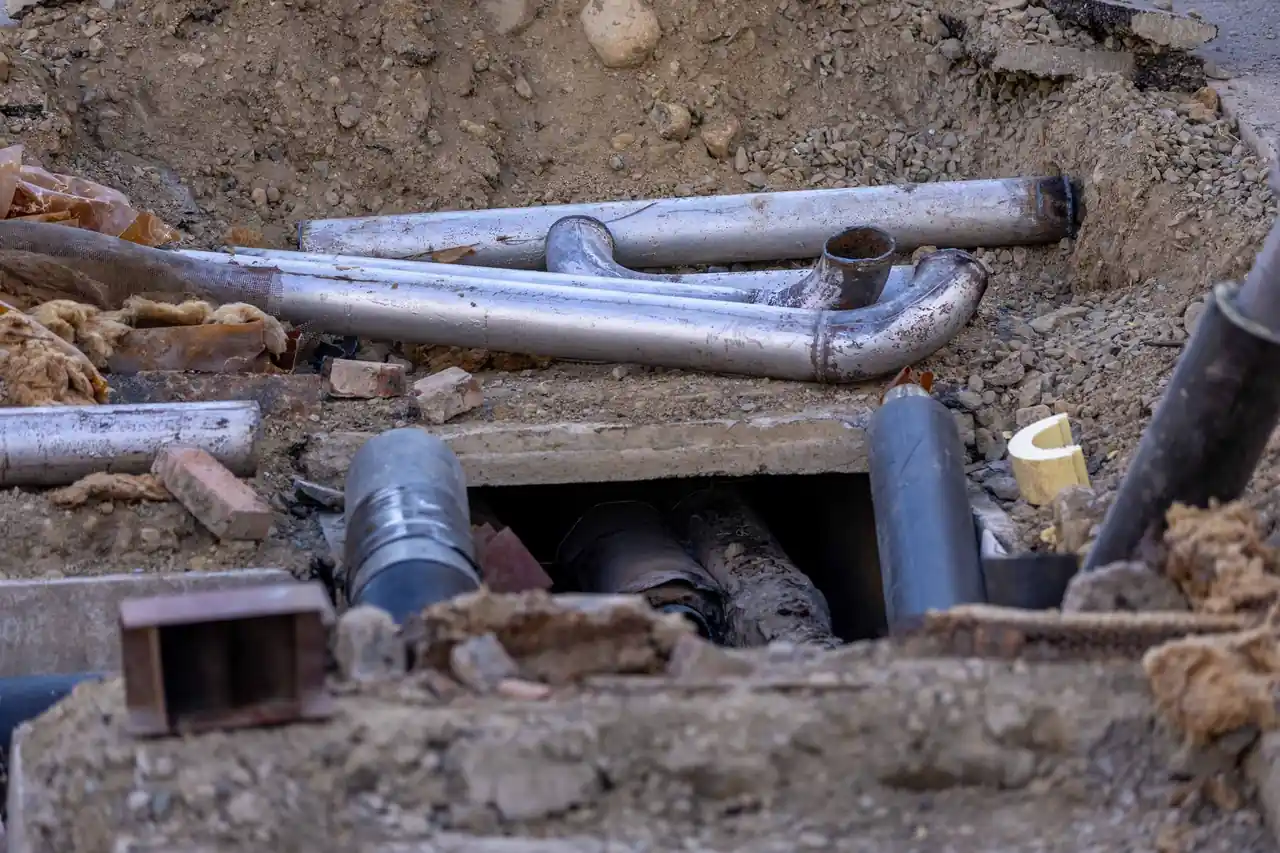
One leaking joint in an otherwise sound line gets one targeted repair, not a whole new lateral.
Read the guide
Sewage surfacing on the lawn or ground sinking along the line cannot wait for a convenient week.
Read the guideLeaks and roots travel together: the opening that lets water out is the same one that lets roots in.
Read the guideA leaking line often announces itself by odor before the yard shows anything. Both signs share one source.
Read the guideOne call gets the leak located properly. Reach us at (239) 448-0271 weekdays between 8am and 6pm, tell us where the wet spot is and what your meter test showed, and we will bring the camera and locator. Based at 1274 13th St N in Naples, with routes across Collier and Lee counties.