Where Is Your Sewer Cleanout in a Naples Home?
When sewage backs up, the first question is always where the cleanout is. Find yours now, while the drains are fine, and an emergency becomes a quick fix instead of a dug-up yard.
The Short Answer on Finding Your Cleanout
Your sewer cleanout is a capped pipe, usually outside near the house on the street side, that gives direct access to your sewer line. Find it before an emergency, keep it clear of landscaping, and a backup becomes a quick fix instead of a dug-up yard.
It is two in the morning, the guest bathroom is backing up, and the plumber on the phone asks one question: where is your cleanout? If you do not know, the visit gets longer, messier, and harder on your yard. The cleanout is the one piece of your sewer system you most want to find before an emergency, not during one.
A sewer cleanout is a capped pipe that gives direct access to your sewer line. It is how a crew clears a clog, runs a camera, or jets a line without digging up the yard or pulling a toilet. Every Naples home has at least one, but they hide in plain sight: under a bush, behind the air conditioner pad, or buried under a few inches of mulch. Here is how to find yours, what it looks like, and how to keep it reachable.
What a Sewer Cleanout Is and Why It Matters
Your sewer lateral runs from the house to the street, carrying everything your drains produce. When it clogs, wastewater has nowhere to go, and it comes back up through the lowest drain in the house. A cleanout is a vertical pipe, usually four inches across, that rises off that lateral to the surface, capped with a round plug. Open the cap and a technician can reach the whole line from one spot.
Without a cleanout, clearing a clog means pulling a toilet off the floor or digging a hole in the yard to expose the pipe. Both take time and make a mess. With a cleanout, the crew opens the cap, runs the cable or camera straight in, and the job starts in minutes. That is why plumbers ask about it first. Our emergency sewer repair page explains what happens on an emergency call, and the cleanout is almost always step one.
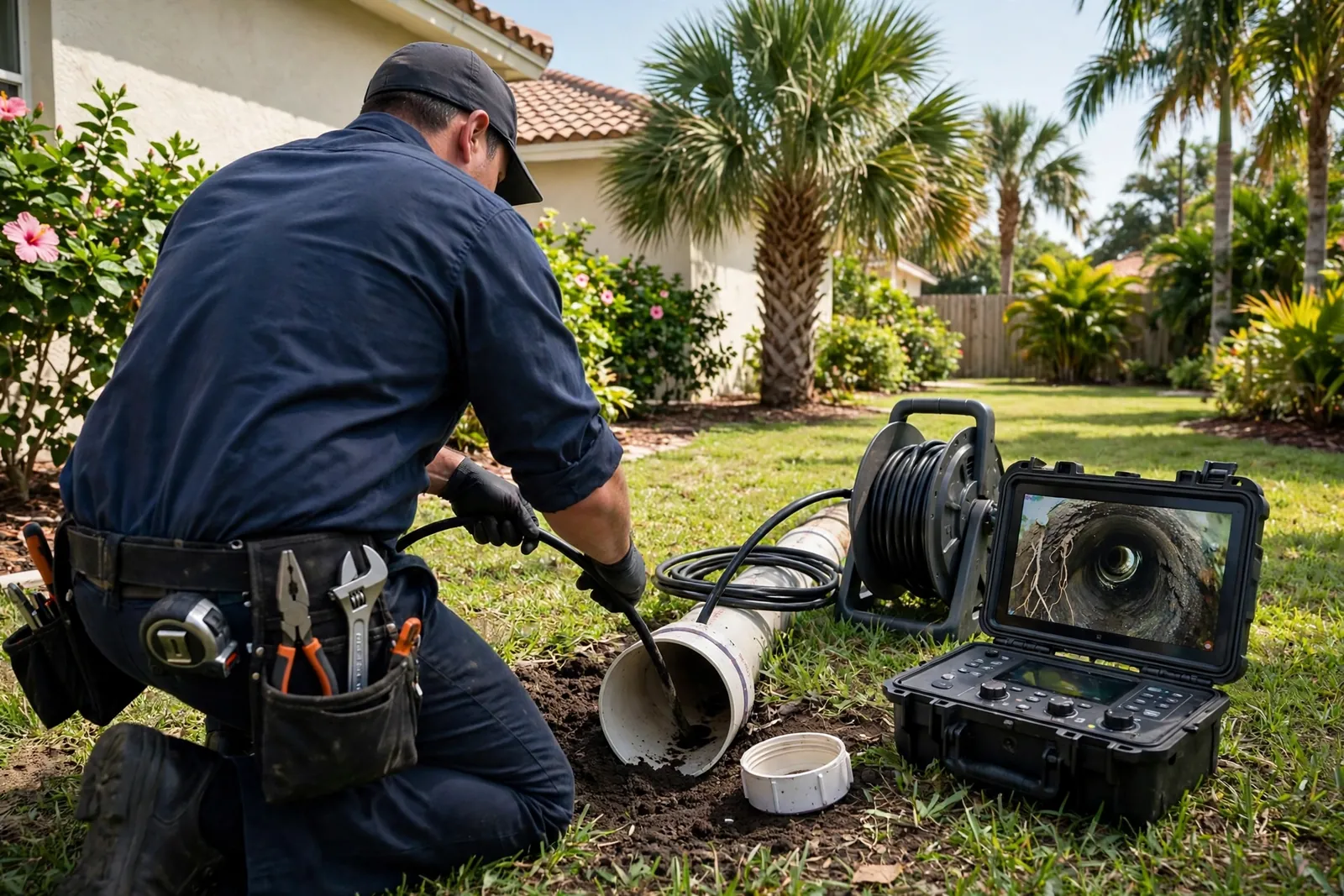
The cleanout also matters for diagnosis. A sewer camera inspection goes in through the cleanout, which means the camera can see the entire lateral, from the house to the street, in one pass. No cleanout means a partial view and guesswork about the rest.
The Usual Spots in a Naples Home
Start outside, near the house. In most Naples homes the cleanout sits within a few feet of an exterior wall, usually on the side of the house facing the street, since the lateral runs the shortest path to the city main. Look near the front corners, beside the driveway, or just outside the wall where the main bathroom sits. In many homes it is within arm's reach of the hose bib.
Check the landscaping beds. Builders and landscapers cover cleanouts with mulch, ground cover, or a potted plant, and a few years of growth can hide one completely. Look for a round white or black cap, about four inches across, sitting flush with the soil or sticking up an inch or two. It often sits near the air conditioner condenser pad, since both get placed along the same wall.
Some Naples homes have a second cleanout near the street, close to the property line, where the lateral meets the city main. Others have one inside, in a garage or laundry room, especially in homes on slabs where the builder brought the access point indoors. In Old Naples or Park Shore, where many homes date to the sixties and seventies, the cleanout may be an older cast iron cap, dark and rusty, sitting low in the grass. Our sewer line repair in Old Naples page covers what we see in those older lines.
Still not finding it? Look at the roofline. The main vent stack, the pipe that sticks up through the roof above the bathrooms, usually sits directly above the lateral's path. Walk straight out from the house toward the street, and search that line. The cleanout is often somewhere along it.
What a Cleanout Looks Like
A modern cleanout is a white PVC pipe with a round threaded cap, sometimes with a square nub in the center for a wrench. Older ones are cast iron, with a heavy round cap that may be rusted in place. Some have a brass plug. The cap may sit flush with the ground, stick up a few inches, or hide under a plastic cover box that looks like a small irrigation valve box.
Do not confuse the cleanout with the irrigation backflow preventer, the round green boxes for sprinklers, or the electrical pull boxes near the meter. The cleanout is a single round cap on a pipe, with no wires and no valves. If you find a pipe with a cap and you are not sure, do not open it. Mark the spot and let a technician confirm it.
If the cap is stuck, leave it. Cast iron caps rust in place after decades in Florida soil, and forcing one can crack the pipe below it. A technician has the tools to free it without breaking anything.
If You Cannot Find One
Some older Naples homes genuinely have no accessible cleanout, especially those built before the current code required one. In that case, the first step is a camera inspection through a toilet pull or a roof vent, which will show where the lateral runs and where a cleanout should go. Installing a new cleanout is a small job, usually a few hours, and it earns its keep the first time the line backs up.
If the house has had work done, check the permit history or ask the previous owner. A cleanout installed during a remodel is often documented, and the location may be on a sketch in the permit file. In neighborhoods like Golden Gate and East Naples, where homes changed hands many times, the paperwork trail is sometimes the fastest way to find it.
And if the yard was regraded or re-landscaped, the cleanout may be buried under new sod or a new patio edge. A plumber can trace the line with a camera and a locator. Do not dig blindly. The lateral is shallow in Naples, and a shovel in the wrong place can crack it.
Keeping Your Cleanout Reachable
Once you find it, make it easy to find again. Mark the spot with a small paver or a photo on your phone showing where it sits relative to the house. Clear mulch and ground cover away from the cap so it is visible from a few feet away. If it sits under a bush, trim the bush back.
Do not pave over it, do not build a planter on top of it, and do not let a new patio cover it. Crews in Naples waste hours on emergency calls because a cleanout is buried under a new deck or a fresh layer of sod. The cleanout needs to be reachable by a person carrying equipment, not just visible. Keep a clear path from the street or driveway to the cap.
Check the cap once a year. Make sure it is still there, still tight, and not cracked. A missing cap lets dirt, rain, and pests into the line, and a cracked cap can let groundwater in during heavy rain, which is the infiltration problem our guide on why Naples sewer lines flood in heavy rain describes.
What Happens When the Crew Uses It
On a backup call, the crew opens the cap and checks whether the line is holding water. If water is sitting in the cleanout, the blockage is downstream, toward the street. If the cleanout is dry, the blockage is upstream, inside the house. That one check narrows the search immediately, before any equipment comes out.
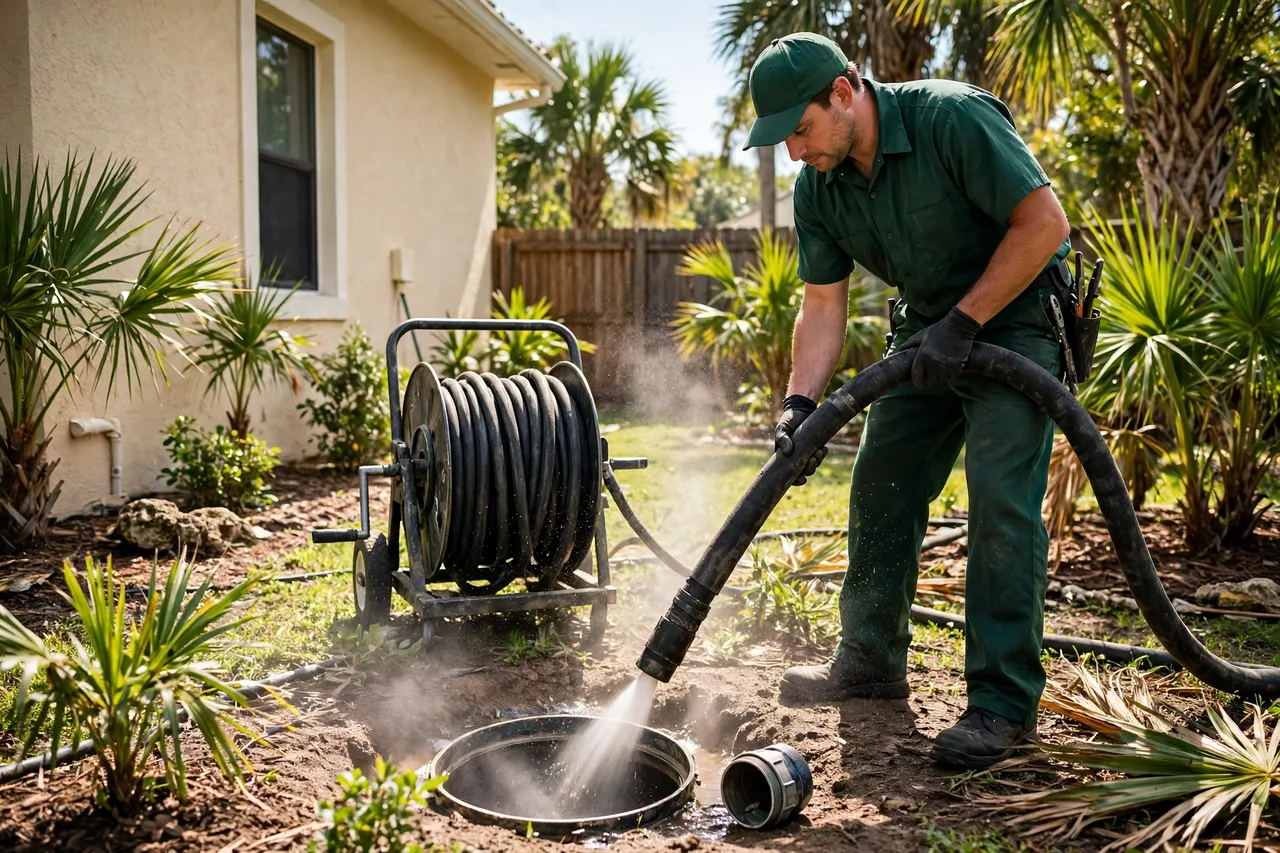
From there, the crew runs a cable to clear the clog, or a camera to see what caused it. Roots, grease, a bellied section, or a collapsed pipe all look different on camera. If the line needs hydro jetting to scour it clean, the jetter hose goes in through the same cleanout. If the line needs lining, the liner goes in through the cleanout too. One access point, used for every step.
After the work, the crew caps it back up and the yard looks untouched. Compare that to a job with no cleanout, where the crew has to dig an access hole or pull a toilet.
Find Yours Before You Need It
Take ten minutes this weekend and walk your yard. Check the usual spots, look for the round cap, and mark it when you find it. If you cannot find it, or the cap is stuck, call and have it located and checked while the drains are still working. A sewer camera inspection through the cleanout will also show the condition of the whole line.
Sewer emergencies always happen at the worst time: a holiday, a house full of guests, two in the morning. The difference between a quick fix and a dug-up yard is often a four-inch cap in the grass that someone took ten minutes to find. Find yours now.
Related guide: What Causes Sewer Backups in Naples, FL?