How to Spot a Sewer Line Collapse in a Naples Home Before It Backs Up
A sewer line collapse rarely strikes without warning. Slow drains, gurgling, and sinking spots in the yard are the early signs, and a camera inspection confirms what is happening underground.
The Short Answer on Spotting a Collapse Early
A sewer line collapse rarely happens without warning. In a Naples home, the early signs are slow drains that keep coming back after a cleaning, toilets that gurgle when the washer runs, and soft or sinking spots in the yard along the path of the pipe. Old cast iron under a slab is the usual suspect, and sandy soil with a high water table speeds up the damage. A camera inspection is the step that turns a guess into an answer, because it shows the crack, the sag, or the collapsed section on video. If you are seeing two or more of these signs, call (239) 448-0271 and get the line looked at before a backup forces the issue.
A sewer line doesn't usually fail all at once. It wears down, cracks, and sags, giving you hints for weeks or months before it closes up and sends wastewater back into the house. The trouble is that the hints look ordinary: a slow shower drain, a toilet that gurgles now and then, a soft patch of grass you blame on the sprinklers.
In Naples, those hints deserve a closer look. Many homes here still run on cast iron pipe laid before 1972, buried under a slab in warm, sandy soil that never really dries out. A collapse is often the end of a long, quiet decline. Here's how to read the signs while there is still time to act.
What a Sewer Line Collapse Looks Like Underground
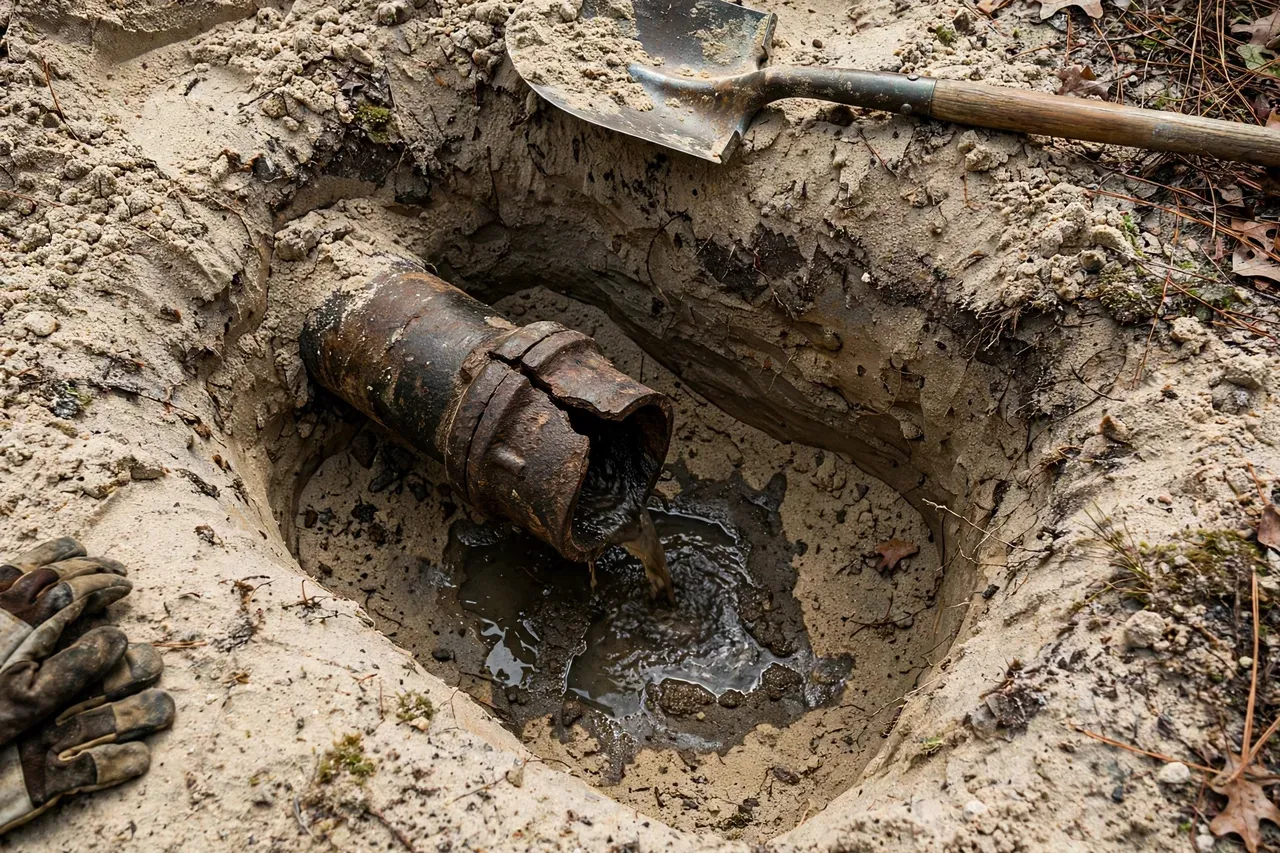
Collapse covers more than a pipe caving in completely. Sometimes the top of an old cast iron pipe rusts through and drops in flakes, narrowing the opening a little at a time. Sometimes a joint separates and one section sinks below the next, leaving a lip that catches everything passing through. Sometimes sandy soil washes in through a crack, and the ground above settles into a dip.
A collapse is not a clog, and treating it like one wastes time. A clog is material stuck in a sound pipe. A collapse is the pipe itself failing. Clearing a collapsed line may buy a few days, then the trouble comes right back, because the pipe is still broken. That pattern, a fix that never holds, is one of the clearest early warnings. A sagging sewer line causes similar repeat trouble.
Slow Drains That Keep Coming Back
One slow sink is usually a local problem, hair in the trap or buildup in that one branch. But when several fixtures slow down together, or the same drain slows again weeks after it was cleared, the trouble is usually further down the line, in the main lateral to the street.
Watch the pattern more than any single drain. The kitchen sink drains fine in the morning and struggles after a load of laundry. The shower fills around your ankles only when the dishwasher runs. The guest bathroom flushes weakly while the main bathroom seems fine. A failing section can still pass a little water, so light use looks normal and heavy use exposes it.
If the line has been cleared more than once and the relief never lasts, stop treating it as a repeat clog. Our guide on multiple drains backing up explains why whole house symptoms point to the main line.
Gurgling Toilets and Drains That Talk Back
Gurgling is air trying to get past a narrowed or damaged section of pipe. When water rushes down one fixture, it pushes air ahead of it. In a sound line, that air vents out through the roof stack. When a failing section narrows the pipe, air gets trapped and bubbles back through the nearest trap instead.
The timing tells you a lot. Gurgling that shows up only when another fixture runs points to the main line, not the fixture making the noise. One gurgling toilet alone can be a vent issue, but gurgling plus slow drains is a different story. Our page on gurgling toilets and drains walks through the vent side of it.
Sinking Spots, Soft Ground, and Greener Grass in the Yard
The yard talks too, and in Naples it often talks first. When a cracked pipe lets soil wash into the line, the ground above loses support and settles. You may notice a shallow dip or a soft, spongy patch along a straight line between the house and the street, right where the lateral runs.
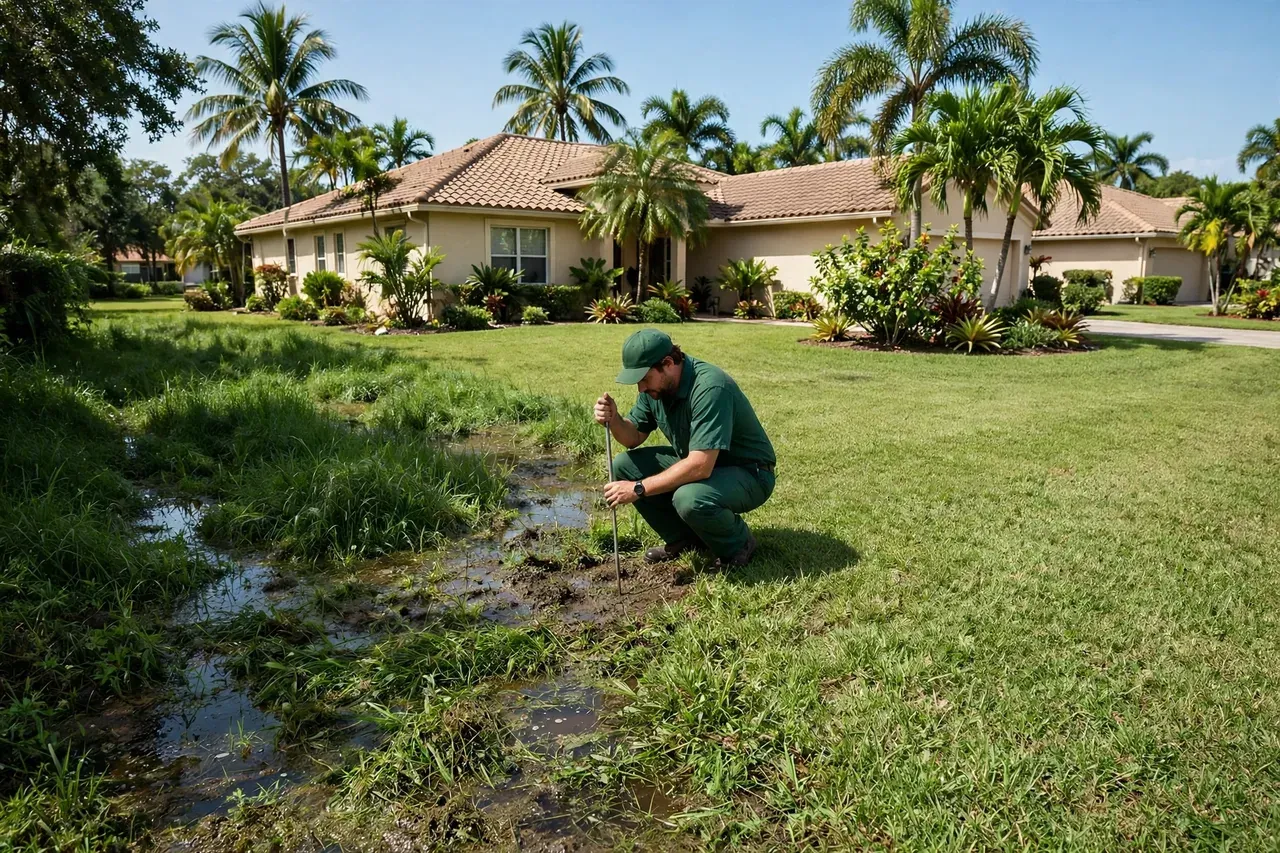
Look for grass that looks too good. A leaking line feeds the lawn, so a stripe of extra green, extra tall grass along the pipe run is a classic sign. So is a spot that keeps sinking after you fill it. Our guide on wet spots in the yard covers the other causes, and a camera run through the line separates a sewer leak from the rest.
Smells You Should Not Explain Away
A sewer smell that comes and goes is easy to dismiss, and a dry trap causes plenty of odors. But a smell that keeps returning to the same spot, or shows up near the cleanout outside, can mean wastewater is escaping through a crack or a separated joint. Our guide on sewer smell in the house helps sort traps and vents from line damage, and our guide on where to find your sewer cleanout shows where to look outside.
Why Naples Homes Are Prone to Collapse
Naples is not unlucky. It's just a hard place for old pipe. Homes built before 1972 usually have cast iron under the slab, now well past 50 years old. Warm soil, salt in the air and groundwater, and a water table only a few feet down keep corrosion working all year. Old Naples, Park Shore, Naples Park, Golden Gate, and East Naples hold the oldest stock, where a leak under concrete hides until symptoms reach the surface.
Tree roots add pressure. Live oaks, banyans, and palms send roots toward moisture in a leaking joint, and widen the opening with every growth cycle. Our guide on tree roots in sewer lines explains how they get in, and our page on cast iron sewer pipe repair covers the fix once the pipe itself is failing.
How a Camera Inspection Confirms a Collapse
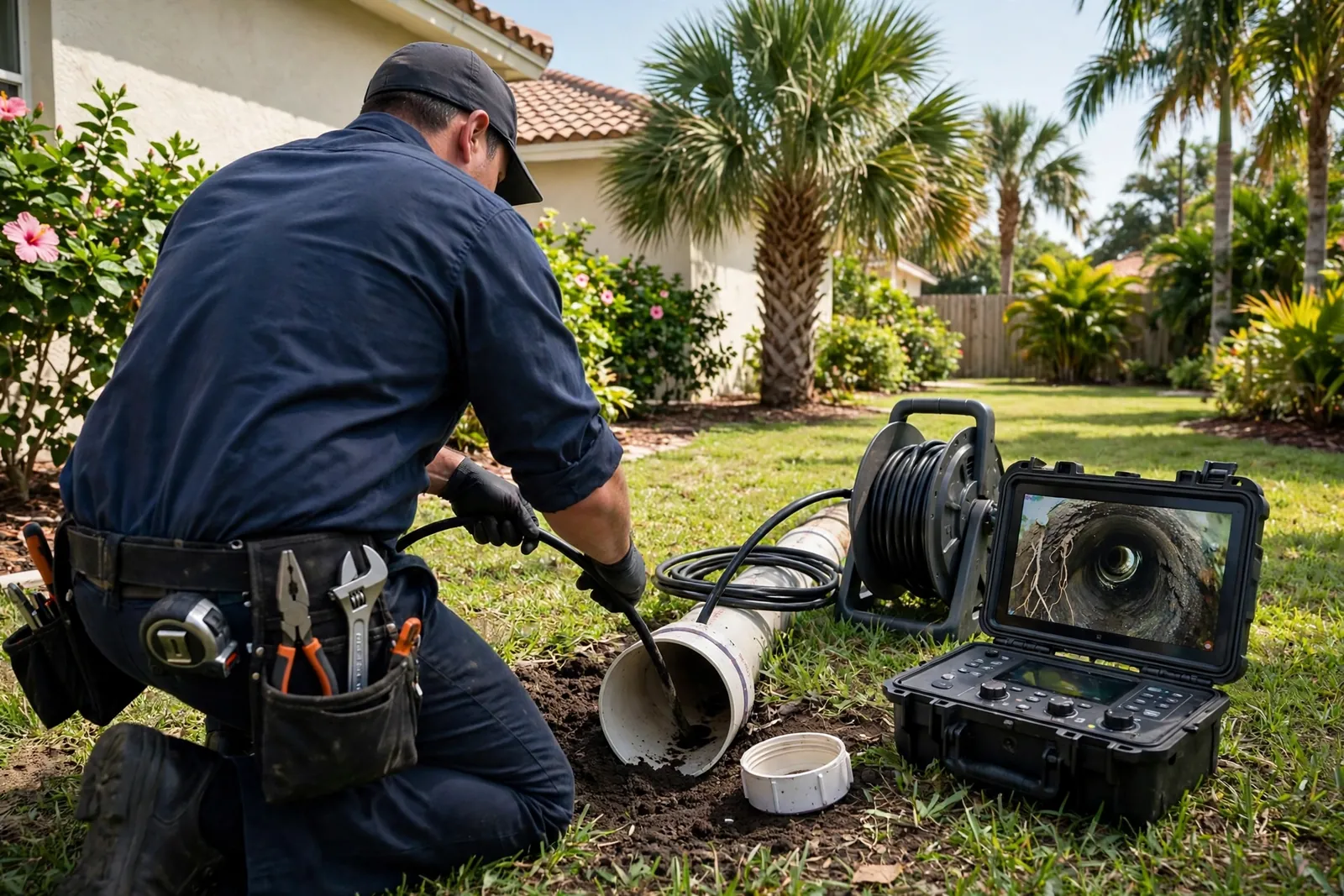
Every sign above is a clue. A camera inspection is the answer. A small waterproof camera travels through the line from the cleanout while you watch the pipe wall on a monitor. Cracks, rust flakes, separated joints, bellies, roots, and collapsed sections all look different on video.
That precision matters, because the fix depends on what the camera finds. A cracked but still round section can often be rebuilt from inside with CIPP pipe lining. A fully collapsed section usually needs pipe bursting or a spot repair at that one failed section.
Ask to see the footage and where the damage starts and ends. If the line turns out sound, you have a baseline video for next time. Our guide on sewer camera inspection for Naples homebuyers shows how buyers use the same findings before closing.
What to Do When You Spot the Signs
If two or more of these signs are showing up, don't wait for a backup to settle the question. A few simple steps now can keep a repair small.
- Cut back on heavy water use until the line is checked. Spread out laundry loads.
- Note the pattern: which fixtures are slow, when gurgling happens, where the yard is soft.
- Find your cleanout and keep it reachable. The camera goes in through the cleanout.
- Don't keep clearing a line that keeps failing. It never fixes the pipe itself.
- Get a camera inspection and watch the footage. It's the only way to know for sure.
A collapse found early is a repair you can plan. A collapse found by a backup is an emergency. If sewage is already coming back, treat it as emergency sewer repair and stop using water until help arrives.
Frequently Asked Questions
Can a sewer line collapse without any warning signs?
It can, but it usually doesn't. Most collapses follow weeks or months of slow drains, gurgling, or yard changes. Signs are easiest to miss under a slab, where a leak stays hidden.
Does a slow drain always mean my sewer line is collapsing?
No. A single slow drain is usually a local clog. The warning pattern is several fixtures slowing together, or the same drain slowing again soon after a cleaning. A camera inspection sorts a clog from pipe damage.
Will a camera inspection damage a weak sewer line?
No. A camera is a small, smooth head on a flexible cable. It travels through the line without cutting or scraping, and it's far gentler than a cutting head in a section that may already be cracked.
Can a collapsed sewer line be fixed without digging up my yard?
Sometimes. A cracked but open pipe can often be lined from inside. A fully collapsed section usually needs pipe bursting through small access pits, or a targeted repair at the failed spot. The footage decides.
How fast should I act if I see a sinking spot in my yard?
Soon, and sooner if drains are slow or toilets gurgle too. A sinking spot means soil is moving into the pipe, and that doesn't stop on its own. Get the line checked before the next heavy rain.
Get Help Before a Weak Line Backs Up
If your Naples home shows these signs, don't wait for the backup that settles the argument. Call Trenchless Sewer Pros at (239) 448-0271 for a camera inspection, and we will show you the footage and give you a straight answer.