Naples Snowbird Sewer Check: What to Do Before Leaving Your Home for Summer
Every spring, thousands of Naples snowbirds lock up and head north for the summer. The house sits empty for months, and the sewer line sits with it. A small problem in April becomes a flooded bathroom in September, and nobody is there to notice. Here is the pre-departure sewer check that protects an empty home.

The Short Answer on the Snowbird Sewer Check
Before you leave Naples for the summer, run water through every fixture, check the cleanout and the yard for wet spots or smells, and camera the line if the drains have been slow, if the home has cast iron pipe, or if roots have been a problem before. Fill every trap with water, shut off the water supply, and leave a key and a contact number with someone local who can check the house after heavy rain. A backup in an empty home can run for weeks before anyone notices, so the check before you leave is the protection.
A Naples home does not stop needing attention when its owners leave. The summer brings heavy rain, high water tables, and fast growing tree roots, and all three work on the sewer line while the house sits empty. A line that drains fine in April can back up in July, and with nobody home to hear the gurgling toilet or smell the drain, the water keeps coming until a neighbor notices the smell or the damage.
Snowbirds think about the air conditioner, the hurricane shutters, and the mail hold. The sewer line rarely makes the list, and it should be near the top. This blog covers the pre-departure checks that protect an empty Naples home all summer.
Why an Empty Naples Home Needs a Sewer Check
An occupied home gives warnings. A toilet gurgles, a shower drains slowly, and someone notices within a day. An empty home gives no warnings at all. A partial blockage that would have been a slow drain in April becomes a full backup in July, and the water has nowhere to go but out through the lowest drain in the house and across the floor.
Summer makes it worse. Naples rain falls hard and often from June to September, and the water table rises with it. A line with a belly or a crack takes on groundwater, and roots grow fastest in the warm wet months. Our guide to what causes sewer backups in Naples covers the drivers, and our post on why Naples sewer lines flood in heavy rain explains how the summer water table loads the system.
Start Outside: The Cleanout and the Yard
Start the check outside, at the cleanout. The cleanout is the capped pipe in the yard where a camera or a cable enters the line, and our guide to where the sewer cleanout sits in a Naples home shows where to find it. Pull the cap and look inside. Standing water at the cleanout means the line is already holding water downstream.
Then walk the yard along the pipe path, from the house to the street. Look for wet spots that stay wet when the rest of the lawn dries, for sunken patches where soil has washed into a broken pipe, and for lush green strips that grow faster than the rest of the grass. A lush strip over the pipe path often means the line is leaking water into the soil. In pre-1972 homes the pipe is often cast iron, and our guide to cast iron sewer pipe repair explains how that pipe fails with age.
Run Water Through Every Fixture Before You Go
Inside, run water through every fixture, one at a time, and watch what happens. Run each toilet, each shower, each sink, and the washing machine. A fixture that drains slowly, a toilet that gurgles when another fixture drains, or water that rises in a shower when the washing machine runs all point to a partial blockage downstream. Multiple drains backing up at once is the clearest sign the main line is involved, not a single fixture.
Listen while the water runs. Gurgling from a toilet or a tub drain means air is trapped behind a blockage. Note which fixtures are worst and tell the technician when you call: the pattern says a lot about where the problem sits.
Camera the Line: What to Look For
If the drains have been slow, if the home has cast iron pipe, or if roots have been a problem before, camera the line before you leave. A sewer camera inspection shows the inside of the pipe from the cleanout to the city main, foot by foot, and it answers the question no drain test can: what condition is the line actually in?
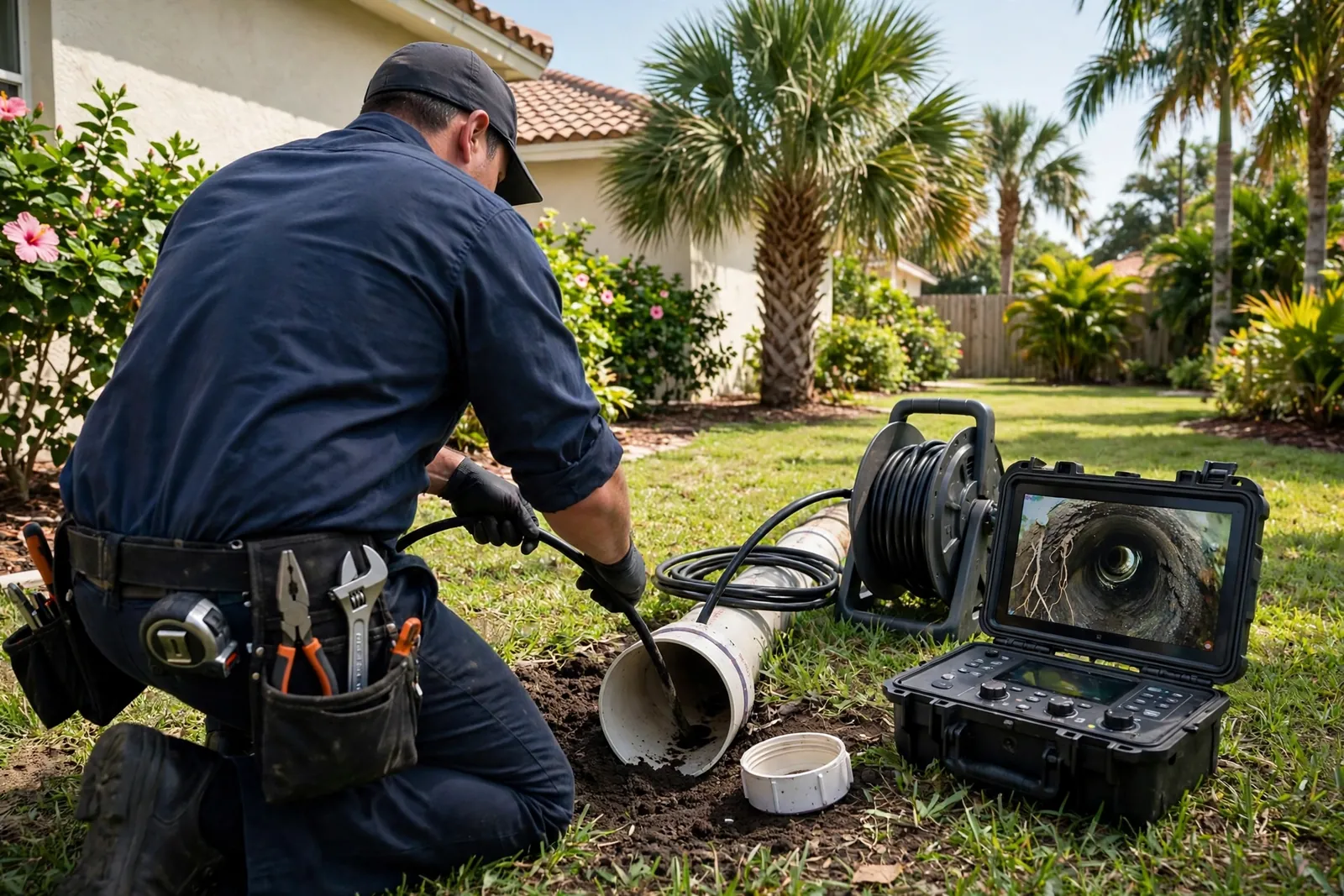
What you want to know is simple. Are there roots at the joints? Is there a belly holding water? Is there a crack, a break, or an offset joint? Our guide to what sewer camera footage reveals explains how to read each finding. Fine root strands at one joint are common and often manageable. A belly holding water, a cracked section, or several bad joints mean repair work is coming, and you want it scoped before you leave.
If the line needs cleaning, get it done before departure. Hydro jetting clears roots and scale so the camera reads the pipe wall, and a clean line is far less likely to back up over the summer. Keep the video file and the written report: they are the baseline for the line, and any problem found on your return can be compared against them.
Roots, Rain, and the Summer Storm Season
Summer is root season in Naples. Ficus, banyan, and oak roots grow fastest in warm wet soil, and they follow moisture to the pipe joints. A joint that was only slightly open in spring can be packed with roots by August. Our guide to tree roots in a sewer line covers why cutting roots without fixing the joint only buys time.
Summer storms add the second load. Heavy rain raises the water table, and a line with a belly or a crack takes on groundwater. If your street floods in summer storms, the line is under more pressure than usual. After a hurricane or a flood, the line needs checking again, which is why our guide to checking a Naples sewer line after a hurricane or flood exists.
Shutoffs, Traps, and the Little Things That Prevent a Backup
Small steps before departure prevent big damage. Shut off the water supply to the house, so a leaking supply line cannot run for months, and shut off the water heater as well. Fill every trap with water, including floor drains and guest bathroom fixtures that rarely get used. A dry trap lets sewer gas into the house all summer, and the smell on your return will tell you which traps dried out.
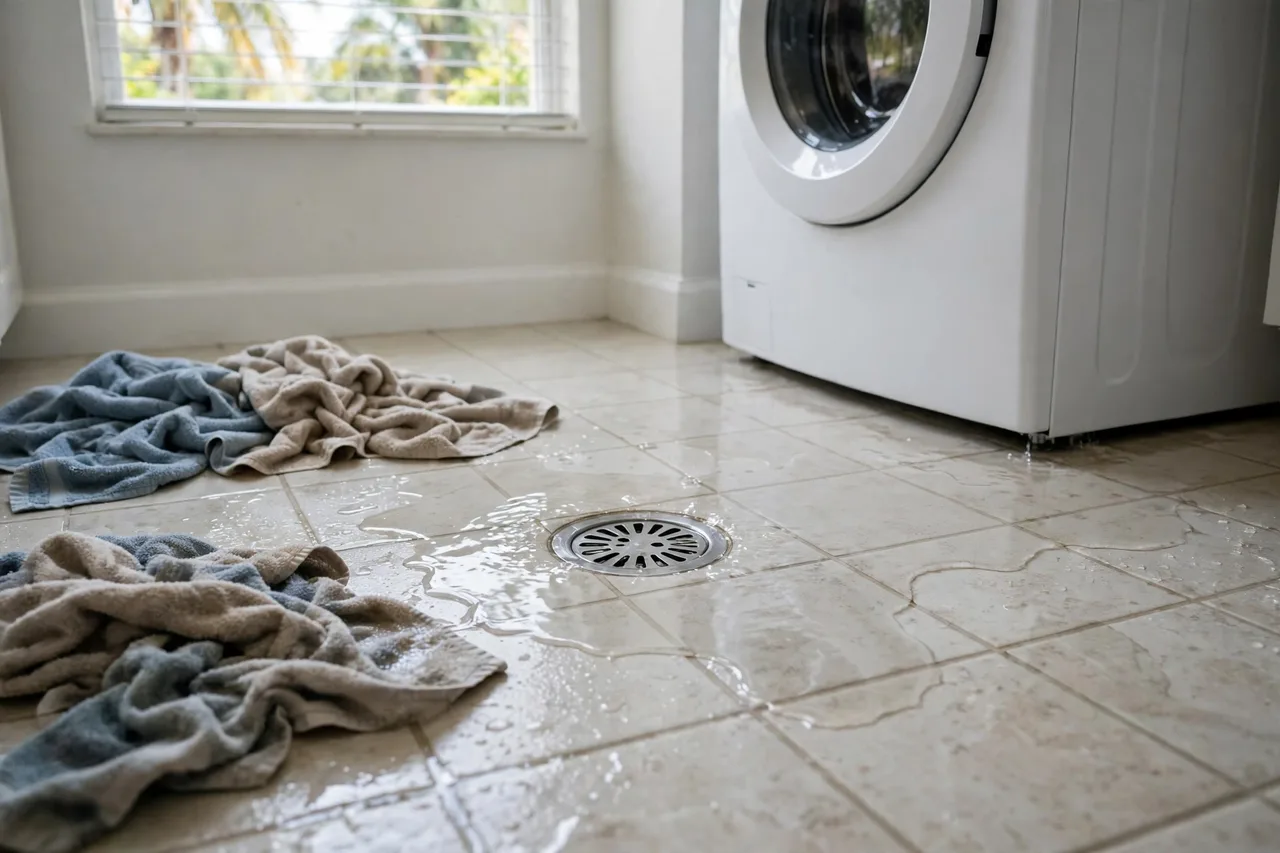
Pour a bucket of water into each floor drain and each little used fixture, and check that the water stays in the trap. If a floor drain has a history of backing up, say so when you call. Leave the air conditioner running at a sensible setting, not off, because a hot damp house grows mold fast. The early warning signs are covered in our guide to spotting a sewer line collapse in a Naples home, and where sewer smells in Naples homes come from explains what a dry trap smells like.
Who Watches the House While You Are Gone
The most important pre-departure step is not in the pipes at all. Leave a key and a contact number with someone local: a neighbor, a property manager, or a friend who lives in Naples year round. Ask them to walk through the house after heavy rain, to flush the toilets and run the taps once a month, and to call you if they smell a drain or see water where it should not be.
Give that person the name and number of a sewer company too, so they do not have to search for one in an emergency. A backup found in July costs far less than a backup found in October. If the check finds a belly, a break, or several bad joints, get the repair scoped before you leave. Most Naples repairs are trenchless: trenchless sewer repair in Naples covers lining and pipe bursting options that leave the yard alone, and a bad joint can often be handled with a targeted spot repair. That holds from Old Naples to Marco Island and Bonita Springs.
Frequently Asked Questions
Should I get a sewer camera inspection before leaving for the summer?
Yes, if the drains have been slow, if the home has cast iron pipe, or if roots have been a problem before. The camera shows roots, bellies, cracks, and offsets that a drain test cannot see, and finding them before you leave beats finding a backup when you return.
What happens if a sewer line backs up while nobody is home?
Water comes out through the lowest drain, usually a shower or a floor drain, and keeps coming until someone notices. In an empty home that can mean weeks of standing water and mold. A pre-departure check and a monthly walkthrough by someone local are the protection.
Should I shut off the water before leaving Naples for the summer?
Yes. Shut off the water supply to the house and shut off the water heater as well, so a leaking supply line cannot run for months. Fill every trap with water first, including floor drains and guest bathroom fixtures that rarely get used.
Do tree roots grow faster in the summer?
Yes. Roots grow fastest in warm wet soil, and Naples summer rain feeds them. A joint that was only slightly open in spring can be packed with roots by August, which is why a line with a root history should be checked and cleaned before departure.
Who should check my Naples home while I am away?
A neighbor, a property manager, or a friend who lives in Naples year round. Ask them to walk through after heavy rain, flush the toilets and run the taps once a month, and call you if they smell a drain or see water where it should not be.
Get the Check Done Before You Leave
If you are leaving Naples for the summer, do not let the sewer line be the one thing nobody checked. Call Trenchless Sewer Pros at (239) 448-0271 for a pre-departure sewer check, and we will camera the line, clear what needs clearing, and leave your empty home protected until you return.