Naples Sewer Line Camera Inspections: What the Footage Reveals Before You Buy a Home
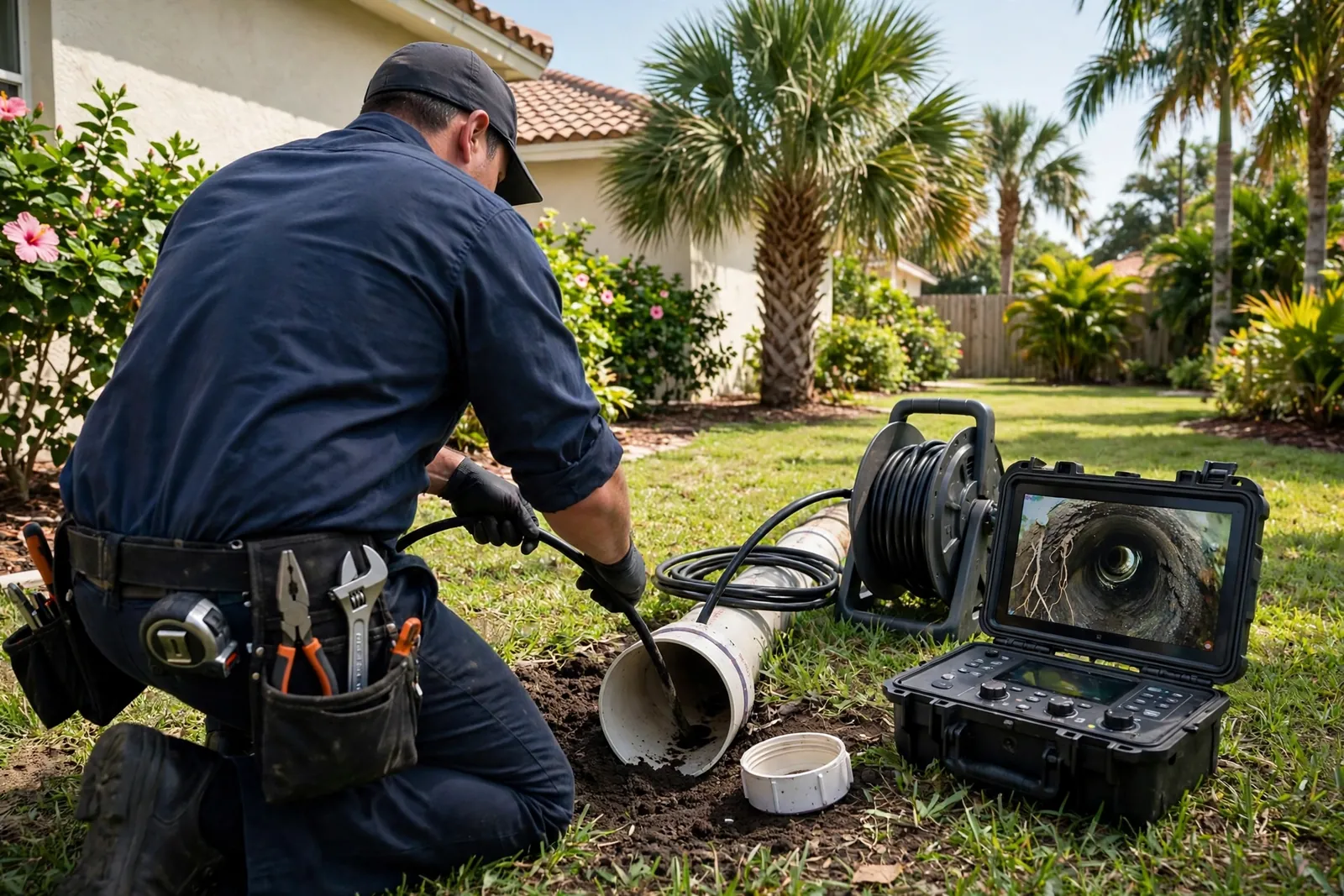
You walked the house, you read the inspection report, and everything above ground looks right. The sewer line is the part of the purchase you cannot see from the kitchen, and in Naples it is the part most likely to surprise a new owner. A camera inspection shows you the line itself, on video, before you sign.
The Short Answer on Reading Sewer Camera Footage
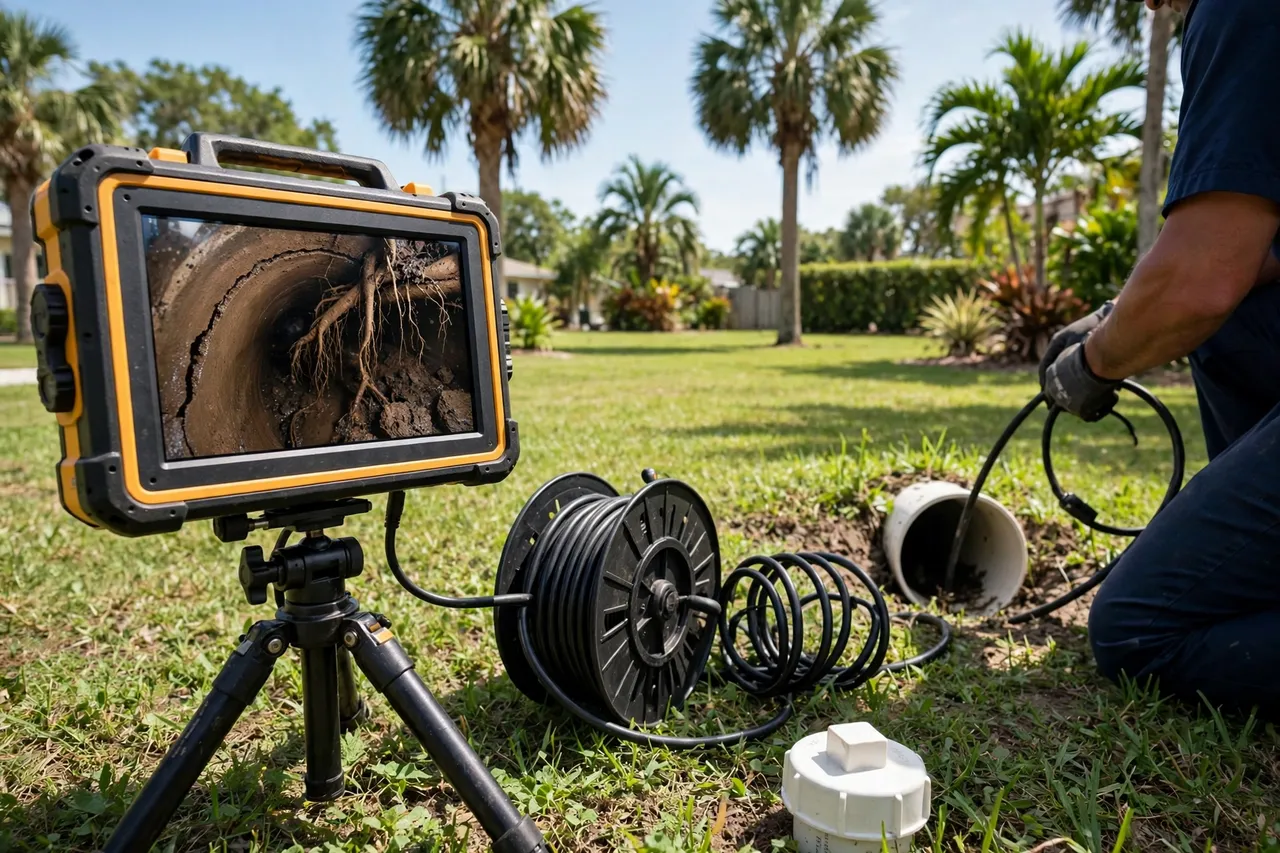
Camera footage shows the inside of the sewer line from the cleanout to the city main: roots entering joints, bellies holding water, cracks and breaks, and joints that have shifted apart. Fine root strands and light scale are common in older Naples lines and often manageable. A belly holding water, a cracked or collapsed section, or a badly offset joint means repair work is coming, and you want to know before closing, not after the first backup. Always ask for the full video file and a written report with distances, so the findings can be checked and quoted against.
A home inspection covers a lot, but it does not cover the sewer line. The general inspector runs the taps and flushes the toilets, and notes whether the drains work on the day. A line with roots growing through a joint, a sag holding water, or a crack letting sand in can pass that test easily and fail six months later, when the new owner pays for the repair.
That is what a camera inspection is for. A small camera travels the line and records what it finds, foot by foot, so you see the pipe itself instead of guessing from the drains. This blog explains how to read that footage: what roots, bellies, cracks, and offsets look like, what each one means, and what to ask for.
What Camera Footage Actually Shows You
The camera enters through the cleanout, the capped pipe outside the house, and travels toward the city main while recording. A distance counter shows how far the camera has gone, so every finding has a location measured from the cleanout. A locator above ground tracks the camera head and marks the pipe path in the yard.
Good footage is steady and lit well enough to read the pipe wall. The camera pauses at joints and anything unusual, and the operator notes the distance at each finding. If the line is full of silt, the camera sees only murk, which is why a dirty line is usually cleaned first. Our sewer camera inspection page covers how the visit works, and our guide to where the sewer cleanout sits in a Naples home shows where the camera goes in.
Roots: The Most Common Finding in Naples Yards
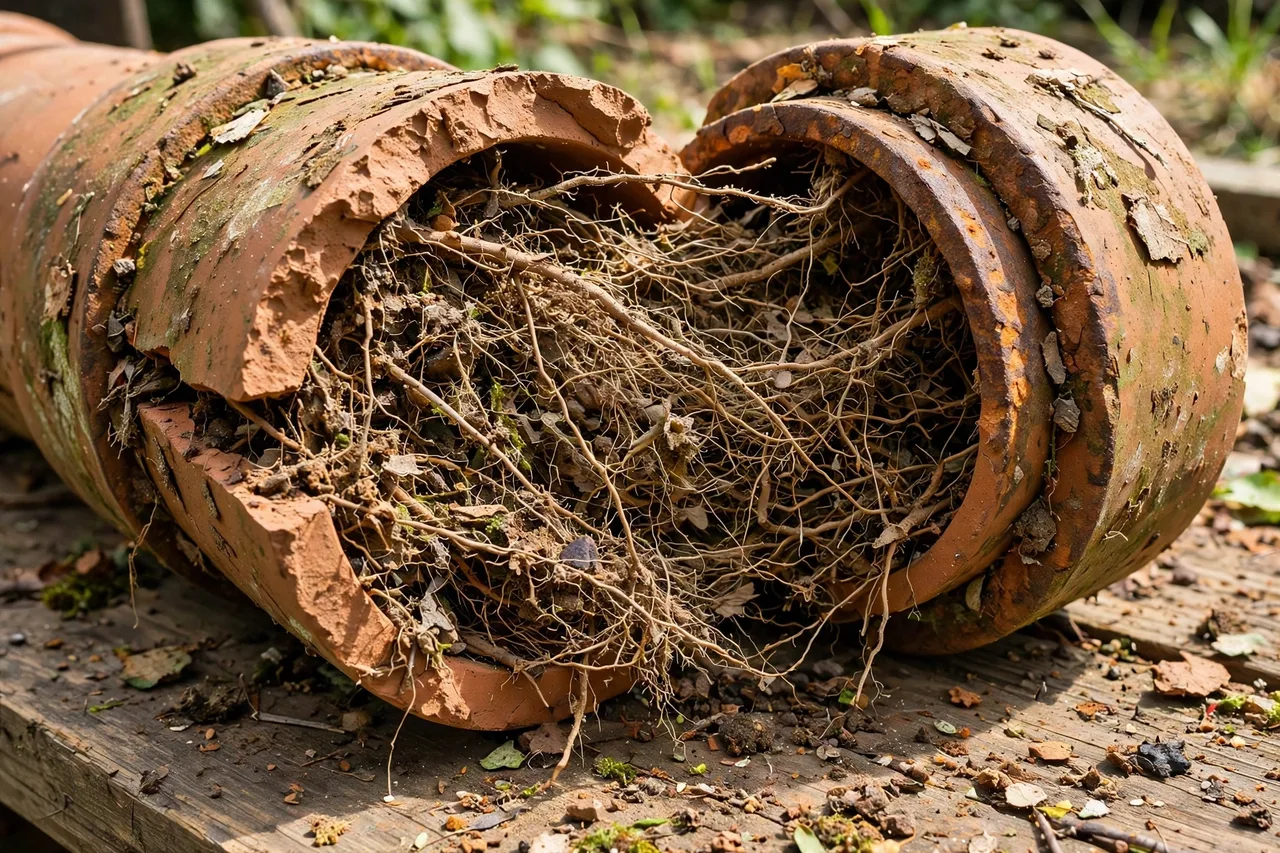
Roots are the finding Naples buyers see most. On screen they start as fine pale strands reaching in through a joint. Left alone, they thicken into a mat that catches paper and narrows the line. A heavy root mass looks like a tangled nest filling part of the pipe, and water visibly slows as it passes through.
Roots enter through joints, not through solid pipe wall. They follow moisture, and a joint that has opened slightly in sandy soil gives them an entry. Ficus, banyan, and oak trees are the usual culprits in older Naples yards. Fine strands at one joint are common and often manageable. A root mat at several joints, or roots paired with a cracked joint, means the line needs repair, not just cleaning. Our guide to tree roots in a sewer line covers why the problem keeps returning until the joint is fixed.
Bellies: When the Pipe Holds Water
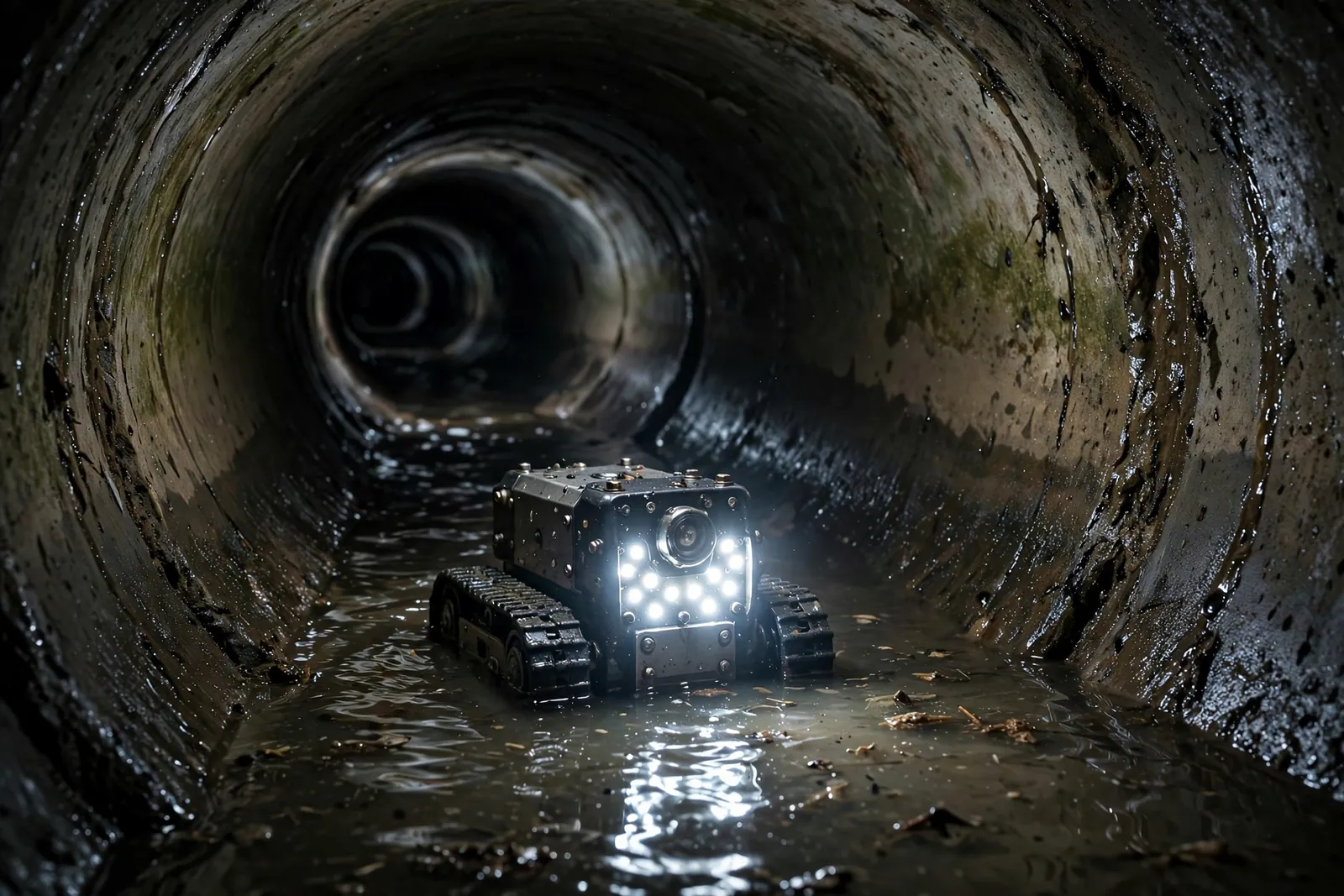
A belly is a sag in the pipe where the line dips and then rises again. On camera it is unmistakable: the camera enters standing water, and debris floats in the pool instead of washing through. The picture goes murky until the camera climbs out the other side.
Bellies form when sandy Naples soil settles unevenly under the pipe, often after heavy rain. A shallow belly may cause slow drains and repeat clogs. A deep belly holds paper and waste, and it will keep backing up until the sag is corrected. The depth of the standing water and the length of the sag tell you how serious it is. Our blog on sewer line bellies walks through the repair options, and a belly found after a storm is covered in our guide to checking a Naples sewer line after a hurricane or flood.
Cracks, Breaks, and Collapsed Sections
Cracks show on camera as dark lines across the pipe wall, sometimes with a rough edge where one side has shifted. A hairline crack in an otherwise sound pipe is worth noting and watching. A crack with soil showing through or water seeping in is a break, and breaks let sand and groundwater into the line. In pre-1972 Naples homes the pipe is often cast iron, and the camera shows a rough, scaled interior with flaking and thinning. Our guide to cast iron sewer pipe repair explains how that thinning progresses.
A collapse is the finding that stops the camera. The lens meets a wall of soil or a folded section of pipe, and the camera cannot pass. The distance counter at that point is the location of the collapse, and the locator marks it in the yard. If the camera cannot complete the run, the footage is still valuable: it proves where the line ends and what condition the reachable part is in. The early warning signs are covered in our guide to spotting a sewer line collapse in a Naples home.
Offsets and Separated Joints
An offset is a joint where one pipe section has shifted relative to the next, leaving a lip inside the line. On camera it looks like a ledge across part of the pipe, and paper catches on the ledge instead of sliding past. Small offsets cause slow drains and repeat clogs. Large offsets catch nearly everything and can block the camera itself.
Offsets happen when soil settles, roots push joints apart, or nearby digging shifts the ground. In Naples sand, a joint that has opened slightly also lets groundwater in, which shows on camera as a thin stream entering at the joint. A separated joint, where the gap is visible all the way around, needs repair: cleaning will not close it. One bad joint can often be handled with a targeted spot repair, while several offset joints usually point to pipe lining or sewer line replacement.
What Clean Footage Looks Like
Clean footage is almost boring, and boring is good. The pipe walls look smooth, the joints sit tight with no lips or gaps, and water flows through in a thin steady stream with no standing pools. The camera travels the full run to the city main without stopping. In an older cast iron line, some roughness and scale are normal, and the question is whether the wall is intact and the bore is open.
Watch for what the camera does not show, too. If the footage ends well short of the main with no explanation, ask why. If the picture is murky for long stretches, the line may need cleaning and a second pass before anyone calls it clean.
What to Ask For Before You Close
The inspection is only as useful as what you take away from it. Ask for these before the visit ends:
- The full video file, not just still pictures.
- A written report with the distance of each finding from the cleanout.
- Confirmation that the camera reached the city main, or where it stopped and why.
- Whether the line was cleaned before filming, and if a second pass is needed.
- A plain language summary of what needs repair now and what needs watching.
Share the report with your agent while the inspection period is still open. Keep the video file with your closing records: it is the baseline for the line, and any future problem can be compared against it. If the footage shows a belly, a break, or several bad joints, get the repair scoped before closing. Most Naples repairs are trenchless: trenchless sewer repair in Naples covers lining and pipe bursting options that leave the yard alone. A silted line gets cleaned with hydro jetting so the camera reads the pipe wall, not the silt. That holds from Old Naples to Marco Island.
Frequently Asked Questions
Should I get a sewer camera inspection before buying a Naples home?
Yes, especially for a pre-1972 home with cast iron pipe, a home with large trees near the pipe path, or any home where drains were slow during showings. The footage shows roots, bellies, cracks, and offsets that a general inspection cannot see.
What does a belly in a sewer line mean for a homebuyer?
A belly is a sag that holds standing water and debris, and it causes repeat clogs until the sag is corrected. A shallow belly may be manageable with monitoring, while a deep belly holding paper and waste means repair work is coming.
Are tree roots in a sewer line a deal breaker?
Not always. Fine root strands at one joint are common in Naples and often manageable. A root mat at several joints, or roots paired with a cracked joint, means the line needs repair, because roots grow back after cutting until the joint itself is fixed.
How do I know if the camera inspected the whole line?
The report should confirm the camera reached the city main, with a distance reading for the full run. If the camera stopped early, the report should say where and why, such as a collapse or a blockage.
What should I ask for after a camera inspection?
Ask for the full video file, a written report with the distance of each finding, confirmation the camera reached the main, and a plain language summary of what needs repair now and what needs watching. Keep the video with your closing records.
Get the Footage Before You Sign
If you are buying a home in Naples, do not let the sewer line be the one part nobody looked at. Call Trenchless Sewer Pros at (239) 448-0271 for a camera inspection, and we will show you the footage and give you a straight answer about what it means before you close.