Sewer Line Odors in Naples Homes: Where the Smell Comes From
You walk into the guest bathroom and catch a whiff of sewer. An hour later it is gone. By dinner it is back. That coming and going is the clue: the smell has a source, and the pattern tells you where to look.
The Short Answer on Sewer Smells
Most sewer odors in Naples homes come from a dry drain trap, a blocked roof vent, or a crack in the line. A dry trap smells worst in a bathroom nobody uses. A vent problem smells worst when the wind shifts or a toilet flushes. A cracked line smells worst near the floor, and it does not go away.
You walk into the guest bathroom and catch a whiff of sewer. An hour later it is gone. By dinner it is back, stronger near the floor drain in the laundry room. That coming and going is the clue. Sewer smells in a Naples home almost always have a specific source, and the pattern, where you smell it, when it shows up, and what makes it worse, tells you where to look.
Naples homes are especially good at producing sewer smells. We have a lot of slab-on-grade houses with plumbing buried in concrete, a lot of guest bathrooms that sit unused for months while owners are up north, and a lot of older cast iron lines that have spent decades in sandy, shifting soil. Add the summer rains, which can push sewer gas around in ways dry weather does not, and you have a city where a mysterious smell is a routine call. The good news is that most of the causes are easy to find, and a few of them you can fix yourself.
Start With the Smell Itself
Before you touch a wrench, do a little detective work. The smell itself tells you a lot. A rotten egg smell is sewer gas, the mix of gases that comes from waste breaking down in the line. A musty, damp smell near a wall is more likely a leak. A smell that appears only when a toilet flushes or a tub drains points at a vent or a trap. Write down where you smell it, when it is strongest, and what was running at the time. A plumber will ask exactly those questions, and the answers cut the search in half.
Also note which drains are involved. A smell at one fixture is a local problem, probably a trap or a seal at that fixture. A smell at every drain in the house is a system problem, a vent or a break in the main line. And a smell that comes and goes with the weather is worth noting too. In Naples, a smell that appears after a heavy rain and fades in dry weather usually means water is moving in the ground around the line, and that points at a crack.
Dry Traps: The Most Common Culprit
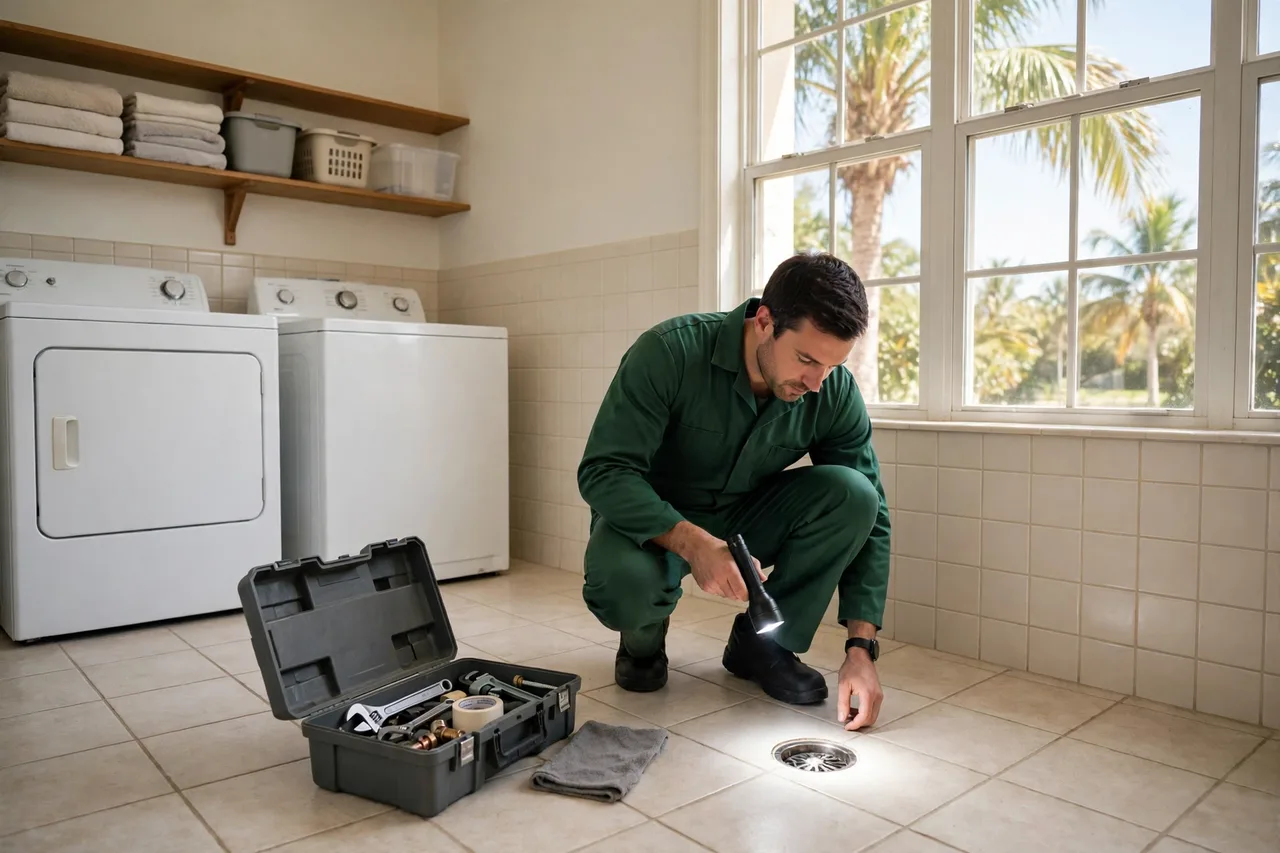
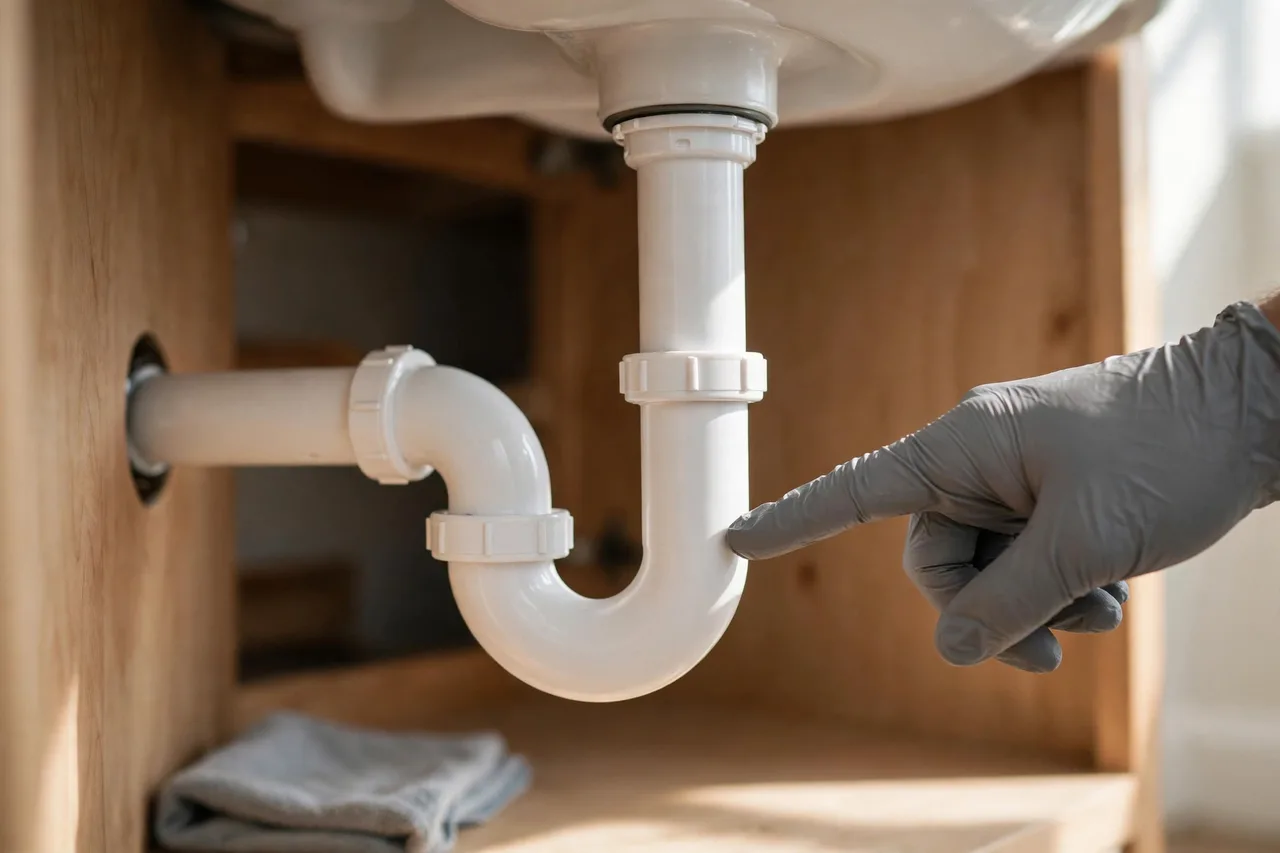
The most common source of sewer smell in a Naples home is also the simplest: a dry trap. Every drain has a U-shaped bend, the trap, that holds a little water. That water is a seal. It blocks sewer gas from rising out of the drain and into the room. But water evaporates, and in a bathroom nobody uses, the trap can dry out in a matter of weeks. Naples makes it worse. Snowbird homes sit empty for months, guest bathrooms go unused all summer, and the air conditioning keeps the house dry, which speeds evaporation.
The test is simple. If the smell is strongest in a bathroom that rarely gets used, run the taps and flush the toilet, then wait an hour. If the smell fades, you found it. The trap refilled, and the seal is back. The fix is a habit, not a repair: run water in every drain once a week, even the ones you do not use, and pour a cup of water down floor drains in the laundry room and garage. If the smell comes back within days of refilling the trap, the trap may have a crack or a bad seal, and that needs a closer look. For a full rundown on the access point that matters when things go wrong, our guide on finding your sewer cleanout is worth reading before an emergency.
A Blocked or Broken Vent Stack
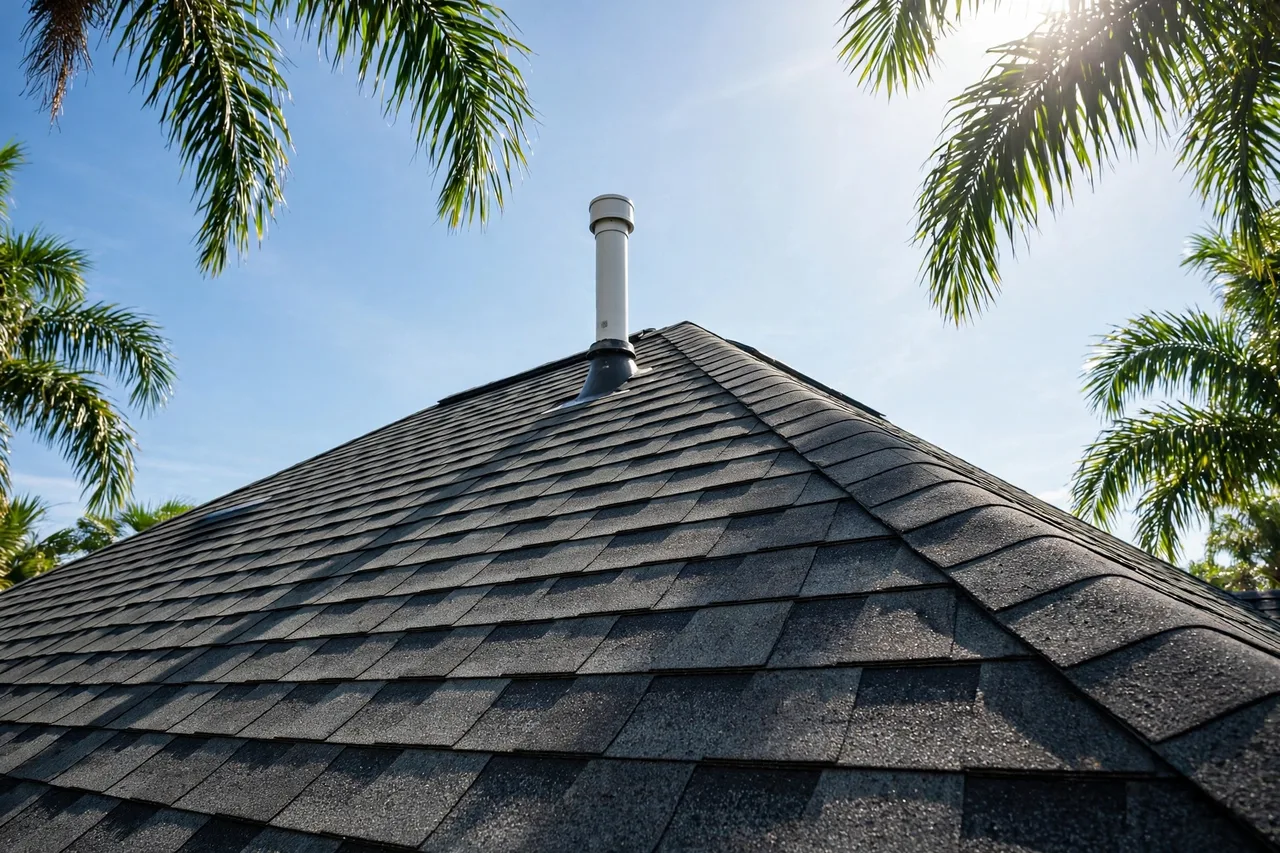
Every plumbing system has a vent stack, a pipe that runs up through the roof and lets sewer gas escape above the house instead of into the rooms. It also lets air into the drains so water flows smoothly. When the vent is blocked, the system cannot breathe. Flushing a toilet pulls air through the nearest trap instead, which siphons the water out of the trap and leaves the drain open to sewer gas. That is why a vent problem often shows up as a smell right after a flush, along with gurgling drains.
In Naples, vent stacks get blocked more than you would think. Palm fronds, leaves, and bird nests find their way in, and after a storm the debris can pack tight. A cracked vent pipe in the attic does the same thing in a different way: gas leaks into the attic and drifts down into the house. You cannot see a vent blockage from the ground, and you should not climb on the roof to check it. A camera inspection can confirm whether the vent is clear, and it can also show whether the smell has a second source further down the line.
Cracks in the Line Under the Slab
The cause nobody wants to hear about is a crack in the sewer line itself. Naples has miles of older cast iron pipe, and cast iron corrodes from the inside out. Sandy soil shifts after heavy rain, tree roots push against joints, and a slab foundation hides everything. A crack lets sewer gas seep into the soil under the house, and from there it finds its way up through the slab, usually near a floor drain or along the base of a wall. The smell is steady, it is worst near the floor, and it does not go away when you run water.
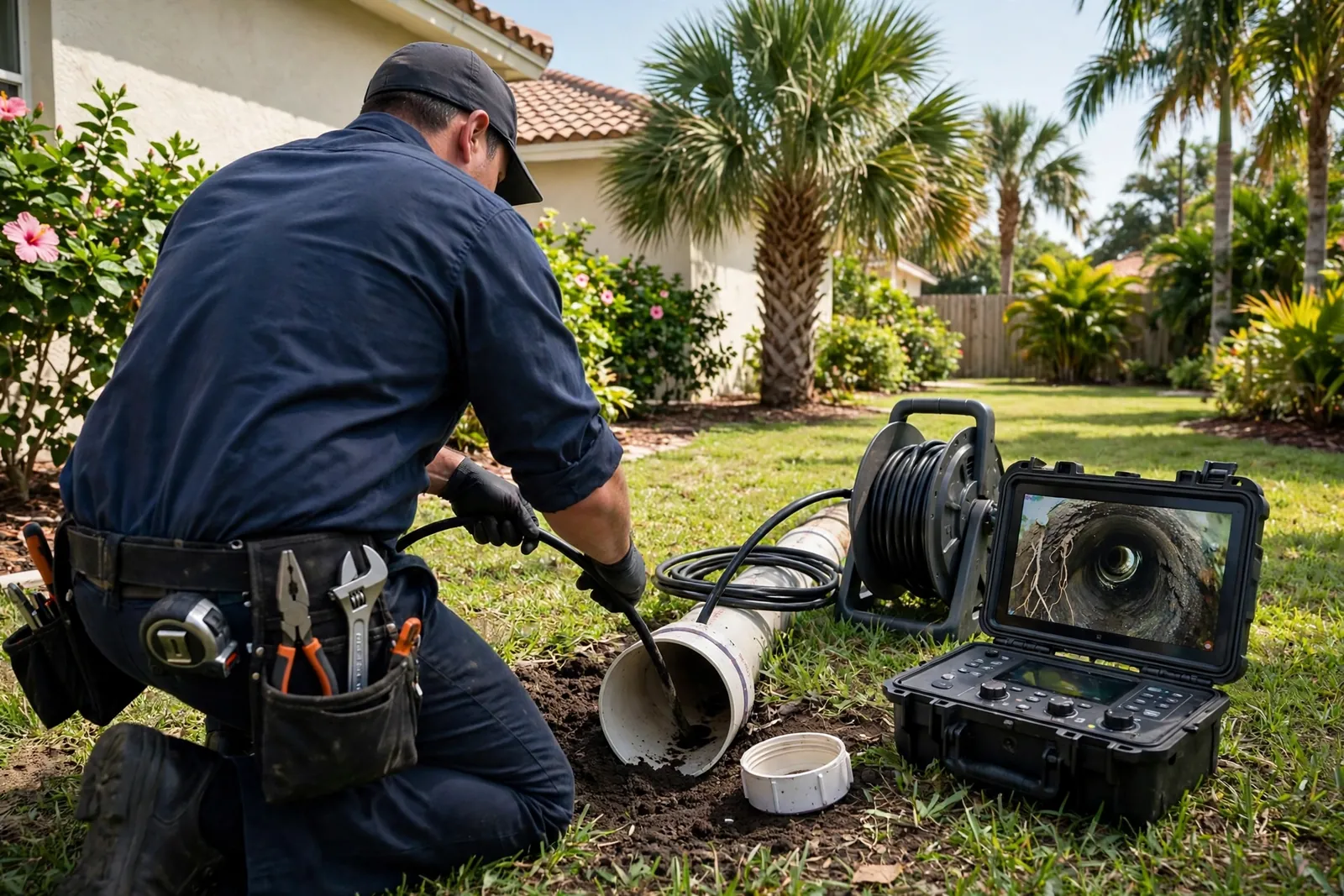
This is the one you cannot diagnose by smell alone. A camera inspection is the only way to see what is happening in the line, and it is the step that separates a guess from an answer. If the camera finds a crack, the repair is usually trenchless, which means no digging up the yard, and our emergency sewer repair page explains how a camera visit works when the smell is bad enough that you do not want to wait. The earlier you find a crack, the smaller the repair. A crack that only leaks gas today can leak water tomorrow, and water under a slab is a much bigger problem.
When the Smell Follows the Rain
Naples rain changes the plumbing in ways that surprise people. Heavy rain raises the water table, and a high water table pushes on the sewer line and the soil around it. If the line has a crack, rain can force gas out of it and into the house. If the municipal system is overwhelmed, pressure can push gas back through traps. And after a storm, a roof vent that was partly blocked can become fully blocked, which siphons traps dry just when the house is closed up against the weather.
If your smell appears after rain and fades in dry weather, say so when you call. It is a useful clue, and it points the camera in the right direction. Our guide on why Naples sewer lines flood in heavy rain explains the rain connection in more detail, and it is worth reading if your street ponds every summer.
Tracing the Smell, Step by Step
Here is the order to work in. First, run water in every drain, including the ones you never use, and wait an hour. If the smell fades, it was a dry trap, and you have your answer. Second, flush the toilets one at a time and listen for gurgling in nearby drains. Gurgling plus smell means a vent problem. Third, check the fixtures themselves: a toilet that rocks slightly on its base may have a failed wax ring, which lets gas in around the bottom, and a loose drain connection under a sink does the same.
If none of that finds it, or if the smell is at every drain and will not quit, stop guessing and get a camera in the line. A hydro jetting visit can clear a blockage that is trapping gas, and a camera shows cracks, bellies, and roots that no amount of sniffing will find. Sewer gas is not just unpleasant. In a closed-up house it is a health concern, and a smell that will not go away is a problem to solve, not a quirk to live with.
Related guide: What Causes Sewer Backups in Naples, FL?