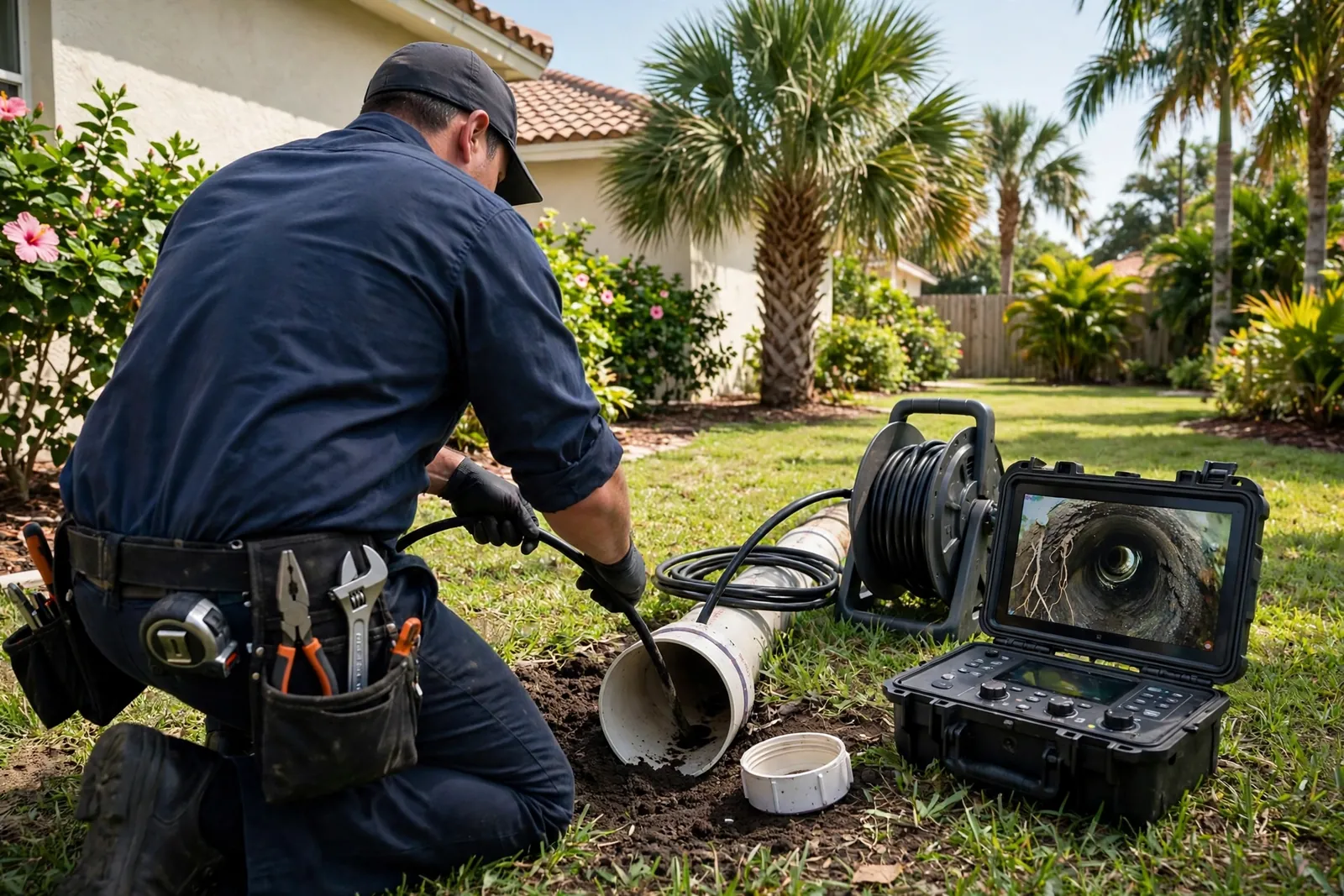
Naples Sewer Line Repair Permits: What Homeowners Need to Know Before Work Starts
A sewer repair in Naples is not just a crew and a pipe. The city wants a permit, an inspector wants to see the work, and many neighborhoods want HOA approval too. Homeowners who plan for the paperwork wait less and worry less. Here is what to expect before work starts.
The Short Answer on Sewer Repair Permits
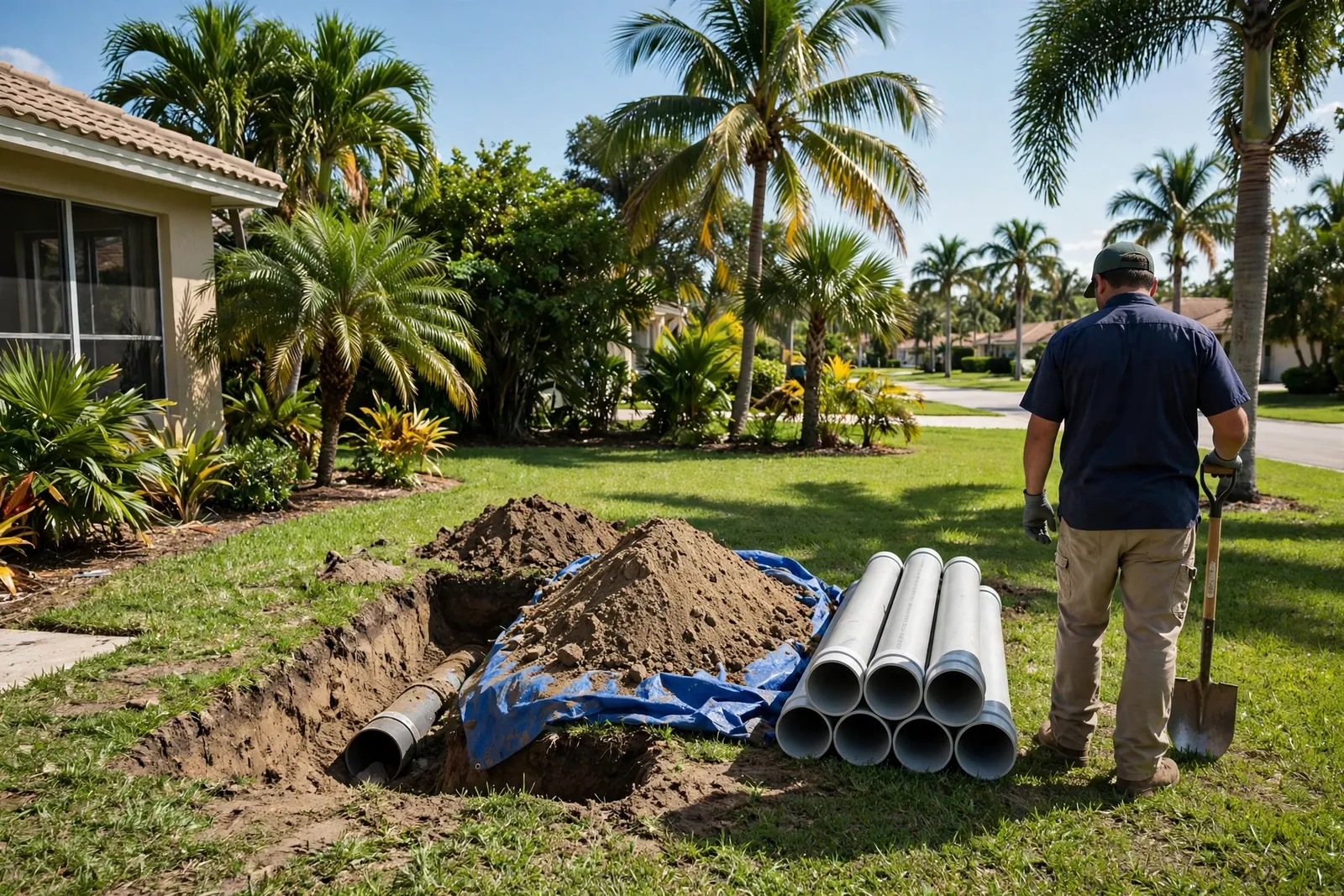
Most sewer line repairs in Naples need a city permit, and the work needs an inspection before the trench or the access pit is closed up. The permit application describes the repair, the pipe material, and the method, and the city reviews it before issuing. Many HOAs want their own approval as well, and that can take longer than the city permit. Work that starts without a permit can be stopped, fined, and torn out for inspection, and it can stall a home sale later. Ask who pulls the permit before you agree to the work.
Nobody plans a sewer repair around paperwork. A line backs up, a camera finds a break, and the homeowner wants the crew in the yard tomorrow. Then someone mentions the permit, and the schedule slips by days or weeks. That delay surprises people, but it should not: the sewer line connects a private home to a public system, and the city has a say in how that connection is repaired.
Permits are not a hurdle for its own sake. The city reviews the repair to confirm the pipe, the slope, and the connection meet code, and the inspector checks the work before it is buried. This blog covers when a permit is needed, what the city reviews, what inspections look like, how HOAs fit in, and what happens if work starts without one.
Why a Sewer Repair Needs a Permit in Naples
A sewer line repair changes the plumbing that leaves the house and joins the city main. That makes it regulated work in Naples, like electrical or structural work. The permit creates a record: what was repaired, what material was used, how the pipe was laid, and who did the work.
Most full repairs need a permit. A spot repair on a single joint, a lining job, a pipe bursting replacement, and a full excavation all change the line, and the city reviews them. A simple cleaning, a camera inspection, and a hydro jetting visit do not change the pipe, so they do not need one. The safe question to ask is whether the work changes the pipe itself. If it does, plan on a permit. Our guide to what sewer camera footage reveals explains how a repair gets scoped in the first place.
What the City Reviews Before Approving
The permit application describes the repair in plain terms: where the line runs, what is wrong with it, what method will fix it, and what pipe material will go in the ground. The city checks that the method suits the site, that the pipe and the fittings meet code, and that the connection to the main is done right. A repair near a water main or a protected tree gets extra attention.

The application usually includes the camera footage or the written report that found the problem. That is one reason to keep the video file from a sewer camera inspection: it is the evidence the repair is needed, and it shows the city exactly what is wrong. A belly holding water, a cracked section, or a collapsed pipe all read clearly on camera, and our guide to sewer line bellies walks through the repair options. If the line runs under a pool deck or a driveway, the application should say so. Our guide to sewer repair under a Naples pool deck covers what that work looks like.
Inspections: What Gets Checked and When
A permit is not a single approval. It is a sequence, and the inspection is the step homeowners forget. The inspector checks the open trench or the access pit before it is backfilled, looking at the pipe, the slope, the joints, and the bedding underneath. Then the work is covered, and a final inspection confirms the site is restored and the line is connected.
The timing matters because the trench cannot be closed until the inspector has seen it. A crew that backfills before the inspection has to dig it open again, and that costs a day. Ask when the inspection is scheduled and who is responsible for being there. A repair that fails on slope or bedding waits for a correction and a second visit. In pre-1972 homes the pipe is often cast iron, and our guide to cast iron sewer pipe repair explains how that pipe fails and what replaces it.
HOA Approvals and Why They Add Time
Many Naples neighborhoods have a homeowners association, and most HOAs want to approve exterior work before it starts. A sewer repair means a trench or an access pit in the yard, equipment on the lawn, and a pile of soil for a day or two, and the HOA reviews the plan, the restoration, and the schedule. Some HOAs meet monthly, so an application filed just after a meeting can wait weeks.
Start the HOA approval at the same time as the city permit, not after it. The two reviews run in parallel, and the repair can start when both are in hand. Ask the HOA what it needs: usually the scope of work, the restoration plan, and the dates. Keep the approval in writing. If the HOA has an approved contractor list or a preferred restoration standard, find out before the crew arrives. The early warning signs are covered in our guide to spotting a sewer line collapse in a Naples home.
How Long Permits Take, and How to Plan Around Them
Permit timing varies with the job. A straightforward spot repair with a complete application can move in days. A full replacement, a repair near a protected tree, or a job that needs a right of way review takes longer. HOA approval adds its own timeline on top.
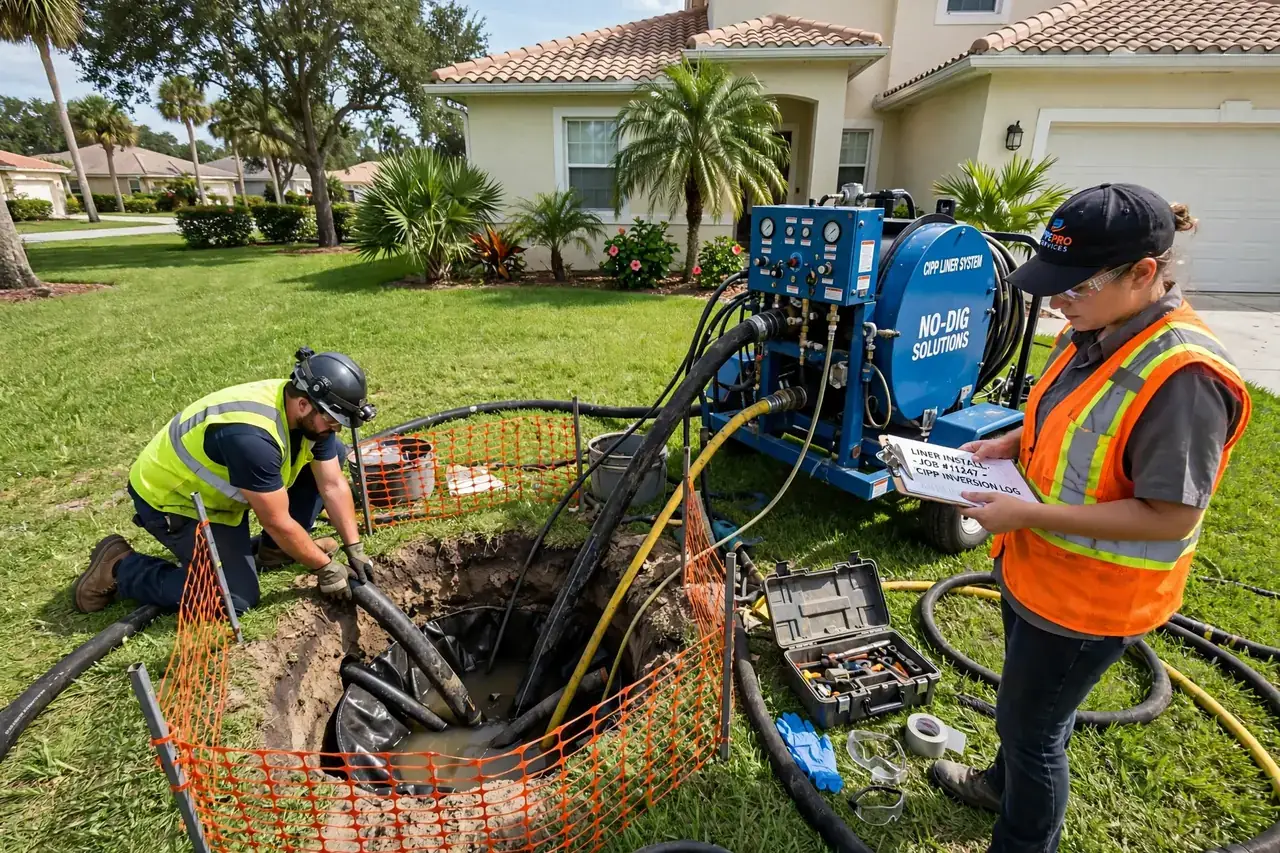
Plan around the wait. If the line is backing up, the repair is urgent, and the permit should be filed at once. If the line is damaged but still draining, the wait is an annoyance, not a crisis, and the time is best spent getting the HOA approval and the restoration plan sorted. Ask for a written timeline before you agree to the work: when the permit is filed, when the inspection is expected, and when the crew arrives. Our snowbird sewer check covers the pre-departure checks that catch a failing line before it becomes urgent.
What Happens If Work Starts Without a Permit
Work that starts without a permit can be stopped. A code officer who sees an open trench without a posted permit can issue a stop work order, and the crew leaves until the paperwork is filed. Fines can follow, and the city can require the work to be uncovered for inspection. The homeowner pays for that twice.
The longer cost shows up at sale time. A buyer, a title company, or an insurer can ask for the permit record of a sewer repair, and an unpermitted repair is a disclosure problem. Our guide to whether homeowners insurance covers sewer line repair in Florida covers how insurers view repair records. An unpermitted repair can also void a warranty on the work. The permit costs time up front. Skipping it costs more later.
Permits for Trenchless vs Traditional Repairs
Trenchless repairs still need permits. Lining and pipe bursting change the pipe, and the city reviews them like any other repair. The difference is the footprint: a trenchless job needs small access pits instead of a long open trench, so the restoration is smaller and the HOA review is usually simpler. Trenchless sewer repair in Naples covers lining and bursting options, and pipe lining covers the lining method in detail.
A traditional repair, a full excavation and sewer line replacement, needs the same permit and the same inspection, plus a restoration plan for the yard, the driveway, or the pool deck. A bad joint can often be handled with a targeted spot repair, which is the smallest job that still needs a permit. Whichever method fits the line, the paperwork is the same shape: application, review, inspection, closeout. That holds from Old Naples to Marco Island and Bonita Springs.
Frequently Asked Questions
Does a sewer line repair in Naples need a permit?
Most repairs do. Any work that changes the pipe, including a spot repair, lining, pipe bursting, or a full replacement, needs a city permit and an inspection before the trench or access pit is closed. Cleaning and a camera inspection do not change the pipe, so they do not need one.
How long does a Naples sewer repair permit take?
A straightforward spot repair with a complete application can move in days. A full replacement, a repair near a protected tree, or a job needing a right of way review takes longer. HOA approval adds its own timeline on top, and the two together can stretch a repair by weeks.
What does the inspector check during a sewer repair?
The inspector checks the open trench or access pit before it is backfilled, looking at the pipe, the slope, the joints, and the bedding underneath. A final inspection confirms the site is restored and the line is connected. The trench cannot be closed until the inspection has happened.
What happens if a sewer repair is done without a permit?
The city can issue a stop work order, fine the homeowner, and require the work to be uncovered for inspection, which means digging open a finished repair. An unpermitted repair can also stall a home sale, complicate an insurance claim, and void the warranty on the work.
Do trenchless sewer repairs need permits too?
Yes. Lining and pipe bursting change the pipe, and the city reviews them like any other repair. The footprint is smaller, with access pits instead of a long open trench, so the restoration is smaller and the HOA review is usually simpler, but the permit and inspection are still required.
Get the Paperwork Sorted Before Work Starts
If you are planning a sewer repair in Naples, do not let the permit be the surprise that delays it. Call Trenchless Sewer Pros at (239) 448-0271 before work starts, and we will walk you through the permit, the inspections, and the HOA approvals, and get your repair done right.