Cast Iron vs PVC Sewer Lines in Naples: Which Holds Up in Florida Soil
Cast iron vs PVC sewer lines in Naples: how Florida soil, salt air, and a high water table wear down old iron, and why PVC holds up longer.
The Short Answer on Cast Iron vs PVC
Cast iron vs PVC in Naples is not a close call. Cast iron rusts from the inside and the outside at once in our warm, wet, sandy soil, and many pre-1972 lines under slabs are failing in the 40 to 60 year range. PVC does not corrode, its fused joints stay sealed, and it is the standard for new sewer lines in Florida. If your home still has cast iron, a camera inspection shows whether yours has years left or is living on borrowed time. Call (239) 448-0271 and we will show you the footage and give you a straight answer.
Walk any street in Old Naples and you are walking over two generations of sewer pipe. The homes built before 1972 usually have cast iron under the slab. The homes built after that usually have PVC. Both carry the same wastewater to the same street, but they age in completely different ways, and Florida soil is the reason why.
This is not a close call in our climate. Cast iron is a strong pipe that rusts. PVC is a lighter pipe that does not. Put both in warm, wet, sandy ground and the difference shows up fast.
Two Very Different Pipes
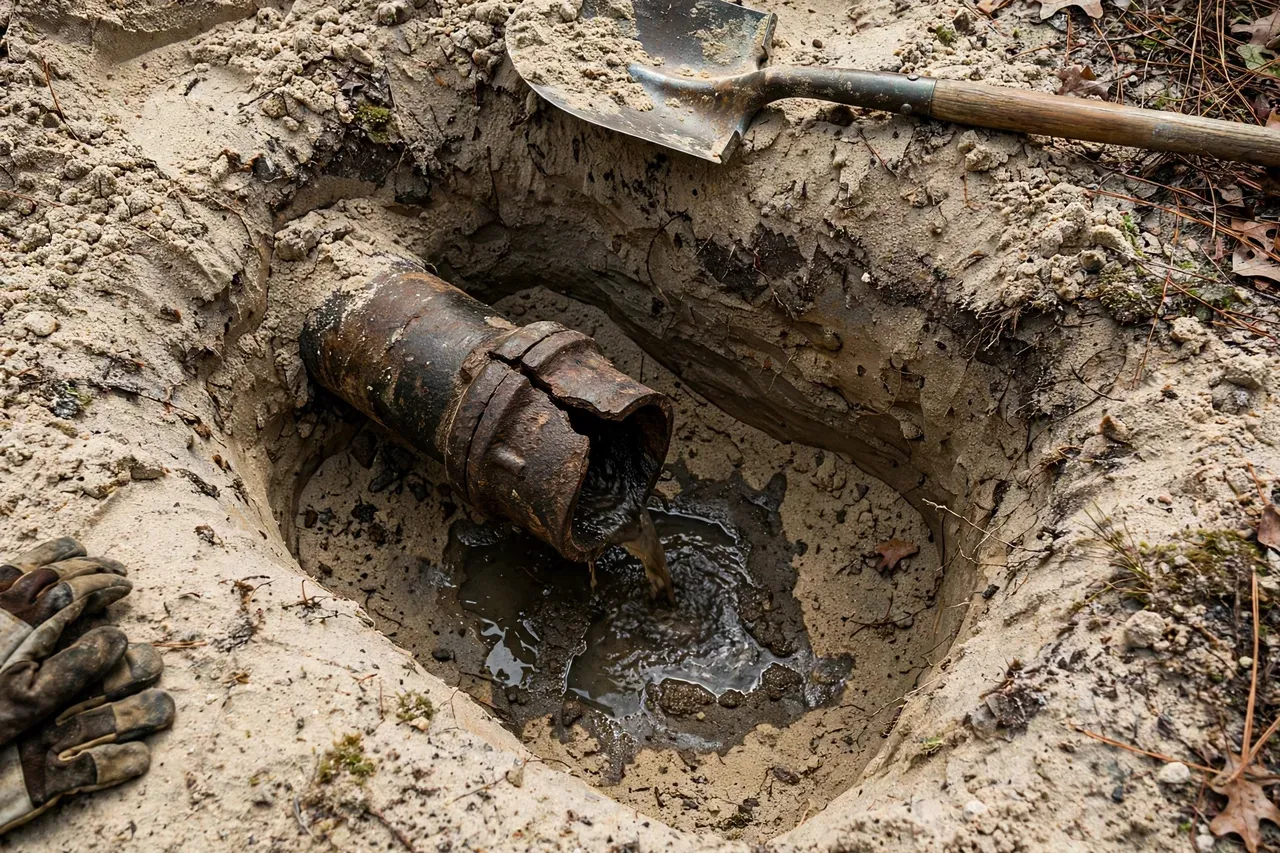
Cast iron sewer pipe is heavy and rigid, built in short sections joined with hub and spigot connections packed with oakum and lead. Its weakness is the metal itself. Iron rusts, and a sewer line gives rust plenty to work with: wastewater inside, damp soil outside, and decades of time.
PVC is a different animal. It is light and smooth, joined with solvent welds that fuse each connection into one continuous piece. Water slides through it instead of catching on scale, and the wall does not thin out year after year. The short version is simple. Cast iron fails by rusting away. PVC fails, when it fails at all, by cracking or sagging, not by corroding.
What Florida Soil Does to Cast Iron
Naples soil is a hard place to be a metal pipe. It is mostly sand mixed with shell fragments and limestone, warm all year, and holding salt from the air and the groundwater. Corrosion needs moisture, oxygen, and something to react with, and our ground supplies all three without a break. In colder states, frozen ground slows corrosion for months at a time. Naples soil never really rests.
Cast iron gets attacked from both sides at once. Outside, damp corrosive soil eats the pipe wall. Inside, hydrogen sulfide gas from wastewater turns into sulfuric acid on the crown of the pipe and eats it from the top down. Scale builds up and the opening shrinks.
The water table makes it worse. In much of Collier County it sits only a few feet down, so a buried sewer line spends much of the year wet or submerged. Constant wetness keeps corrosion active, and lines in well drained, higher ground outlast identical lines in low, wet spots.
Why PVC Holds Up Better in Naples Ground
PVC does not rust, so soil chemistry mostly leaves it alone. Salt, moisture, and acidic groundwater do not eat the wall. The smooth interior stays smooth, so grease and scale have little to grab onto and waste keeps flowing at full diameter for decades.
The joints are the other advantage. Solvent welded PVC joints fuse into a single run of pipe with no lead and oakum packing to wash out. Fewer weak joints means fewer entry points for tree roots. Roots still matter in Naples and will exploit a bad joint or a crack in any material, but a properly installed PVC line gives them almost nothing to work with. Our guide on tree roots in sewer lines explains how roots get in and what keeps them out.
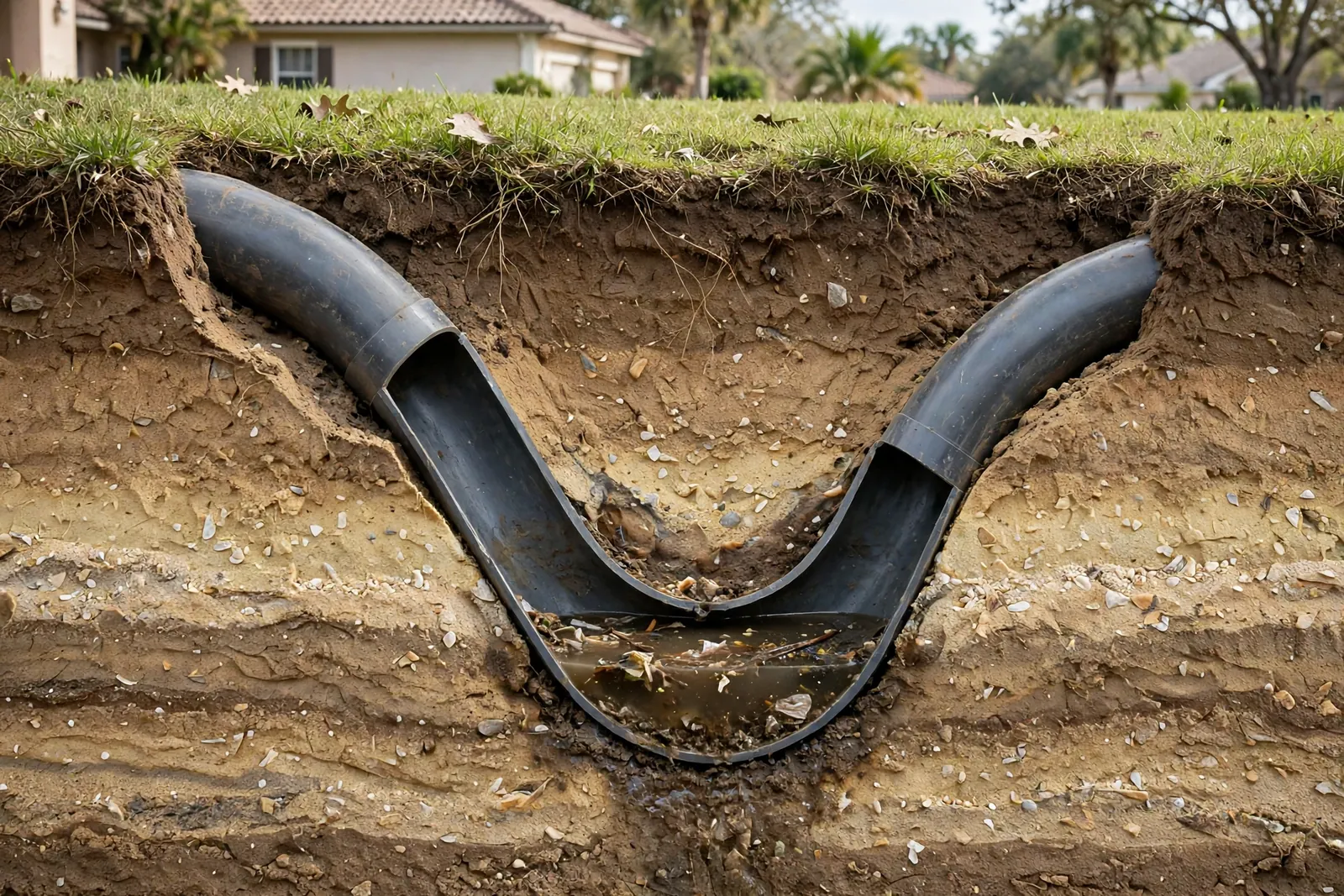
PVC is not invincible. It can crack under a heavy load or sag into a belly if the bedding underneath it washes out. But these are installation problems, not a chemical clock ticking on every foot of pipe. A sagging sewer line can happen to either material, but only one of them is also rusting while it sags.
Lifespan Side by Side in Naples Conditions
Cast iron in Florida has a textbook lifespan of 50 to 75 years in kind soil. Under a Naples slab in corrosive ground, many lines start failing in the 40 to 60 year range instead. A house built in 1965 has a sewer line about 61 years old in 2026, squarely in the failure window. Our guide on how long cast iron sewer pipes last in Florida covers the factors.
PVC is commonly rated for 100 years of service life, and in practice the pipe itself usually outlasts the house around it. What matters more than the wall is the installation: the bedding under the pipe, the slope of the run, and the joints. A well installed PVC line is a fit and forget asset. A badly installed one can give trouble in its first decade.
- Corrosion: cast iron rusts inside and out. PVC does not corrode at all.
- Joints: cast iron uses packed hub joints that loosen and leak. PVC joints fuse and stay sealed.
- Roots: aging cast iron joints invite roots in. PVC gives roots far fewer openings.
- Flow: cast iron scales up and narrows with age. PVC stays smooth at full diameter.
- Lifespan here: cast iron often fails in the 40 to 60 year range under a Naples slab. PVC is rated for 100 years.
The Under-Slab Problem in Older Naples Homes
The material question gets sharper when the pipe runs under the slab, and that is the norm in pre-1972 Naples homes. Neighborhoods like Old Naples and Park Shore are full of cast iron under concrete, and so are many homes in Naples Park and East Naples. Under a slab, the pipe sits in trapped moisture with no way to inspect it without breaking the floor. A yard line that cracks leaks into soil. An under-slab line leaks under your home, where you cannot see it until the symptoms show up inside.
In Old Naples, many owners replace the line during a remodel, when the slab is already open. In Golden Gate and East Naples, trenchless methods often win because they avoid tearing up the slab and the driveway.
What Replacement Looks Like for Each Material
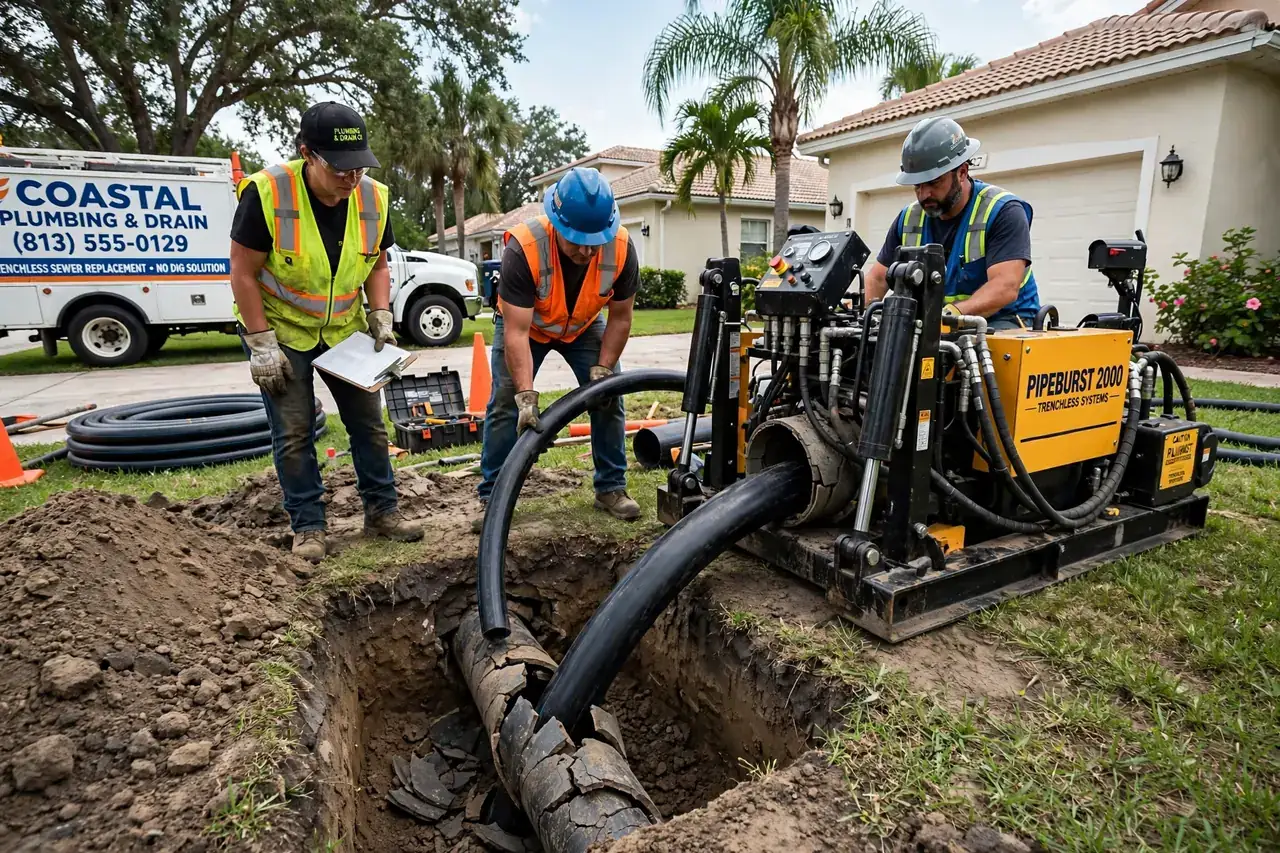
If you have cast iron and the camera shows widespread failure, you have three real options. CIPP pipe lining cures a new pipe inside the old one, seals the cracks, and stops further corrosion without digging. Pipe bursting pulls a new HDPE line through while breaking the old iron apart. Open trench replacement lays new PVC in a dug trench and makes sense when the line is shallow. Our comparison of trenchless repair vs traditional digging lays out when each approach fits.
If you already have PVC, replacement is rarely the conversation. The conversation is a spot repair at a bad joint or a sagging section, and a camera inspection shows exactly where the problem sits.
How to Tell Which Pipe You Have
Build year is the fastest clue. Before 1972, assume cast iron until proven otherwise. After the mid 1970s, it is usually PVC. You can also look at the pipe at the cleanout: black, heavy iron versus white or cream plastic.
The sure answer is a camera inspection, which shows the material and the condition in the same visit. The material alone does not condemn a line: we have footage of 60 year old cast iron with years of life left, and of 45 year old lines already failing. If you are buying an older home, our guide on sewer camera inspection for Naples homebuyers explains how to use those findings before you close.
Frequently Asked Questions
Is cast iron or PVC better for a sewer line in Naples?
PVC, for new work. It does not corrode in Florida soil, its joints stay sealed, and it typically outlasts cast iron by decades here.
Should I replace my cast iron sewer line before it fails?
Not on age alone. Get a camera inspection first. If the footage shows heavy pitting or cracks through most of the line, planned replacement beats an emergency. If the line is sound, keep it and inspect it again in a few years.
Can you line a cast iron sewer line instead of replacing it?
Yes, in many cases. CIPP lining cures a new pipe inside the old one, seals the cracks, and stops further corrosion. A collapsed section usually needs bursting or digging instead.
Does PVC crack in Florida heat?
Buried PVC does not see the heat people worry about. A few feet underground, the soil stays cool and steady all year. Sunlight degrades PVC, but a buried sewer line is not exposed to sun.
How do I know which pipe is under my house?
Start with the build year, then look at the pipe at the cleanout. The certain answer is a camera inspection, which shows the material and the condition in the same visit.
Get Help With Cast Iron or PVC in Naples
If your home still has cast iron, stop wondering and look inside it. Call Trenchless Sewer Pros at (239) 448-0271 for a camera inspection, and we will show you the footage and give you a straight answer about what comes next.